
12 Most Expensive Fruits in the World
Welcome back to Stellar Eureka! Today, we’re embarking on a journey into the world of luxury fruits, that redefine the boundaries of taste and opulence. While Japan is renowned for its pursuit of perfection in art, fashion, a nd culture, it’s no surprise that this extends to their fruit as well. But we’re not stopping there; we’re also exploring rare and precious fruits from the UK and China. Get ready to be amazed with the most expensive fruits in the world.
Number 1: Yubari King Melon
Starting at the top of our list is the Yubari King Melon, probably the most famous among Japanese luxury fruits.
The story of the Yubari King Melon begins in the charming city of Yubari, nestled in the heart of Hokkaido, Japan. While Yubari might seem like an ordinary town, it’s the birthplace of an extraordinary fruit. The Yubari King Melon is a result of meticulous cultivation, a true symbol of Japanese precision.
These melons, known for their vibrant orange hue, honeyed notes, and sweetness, have a rich history. While the exact origin is somewhat shrouded in mystery, what’s clear is that they put Yubari on the map. The cultivation of these melons involves the artful hybridization of two other cantaloupe varieties: Burpee’s spicy cantaloupe from Europe and the Earl’s Favorite muskmelon.
What’s remarkable is that Yubari King melons reach their perfect ripeness in just over 100 days. What truly sets them apart is the intricate and delicate netting that adorns their exterior. This netting is one of the reasons why these melons are so revered.
Now, let’s get to the burning question: how much does a Yubari King Melon cost? Well, the price can fluctuate dramatically depending on the growing season and market conditions. On average, you can expect to pay anywhere from $50 to $100 for a single melon.
At a recent auction, a pair of Yubari King melons fetched an astronomical sum of just under $30,000! These melons are not just fruits; they’re works of art, coveted by collectors and connoisseurs alike.
But why they are so expensive? The answer lies in the meticulous care and standards that go into their cultivation. These melons are nurtured with unparalleled attention.
Dedicated attendants meticulously tend to these melons, pampering them with daily cleanings and inspections. These fruits are the epitome of perfection, and any melon that doesn’t develop the coveted netting on its rind simply won’t make the cut.
In Japan, fruits are often exchanged as luxurious gifts, and Yubari King Melons are no exception. This tradition further elevates their price, as they are seen as status symbols and cherished tokens of appreciation.
It can be quite hard for you to get your hands in one outside Japan. Even in Tokyo these melons are rare gems, often found only in the most exclusive and upscale grocers. Your best bet is to keep an eye on specialized websites that might offer these coveted melons. However, be prepared to part with a few hundred dollars. These melons sell out swiftly, and they have a short shelf life. If you are lucky enough to get your hands on one, don’t wait too long to eat it!

Number 2: Japanese Ruby Roman Grapes
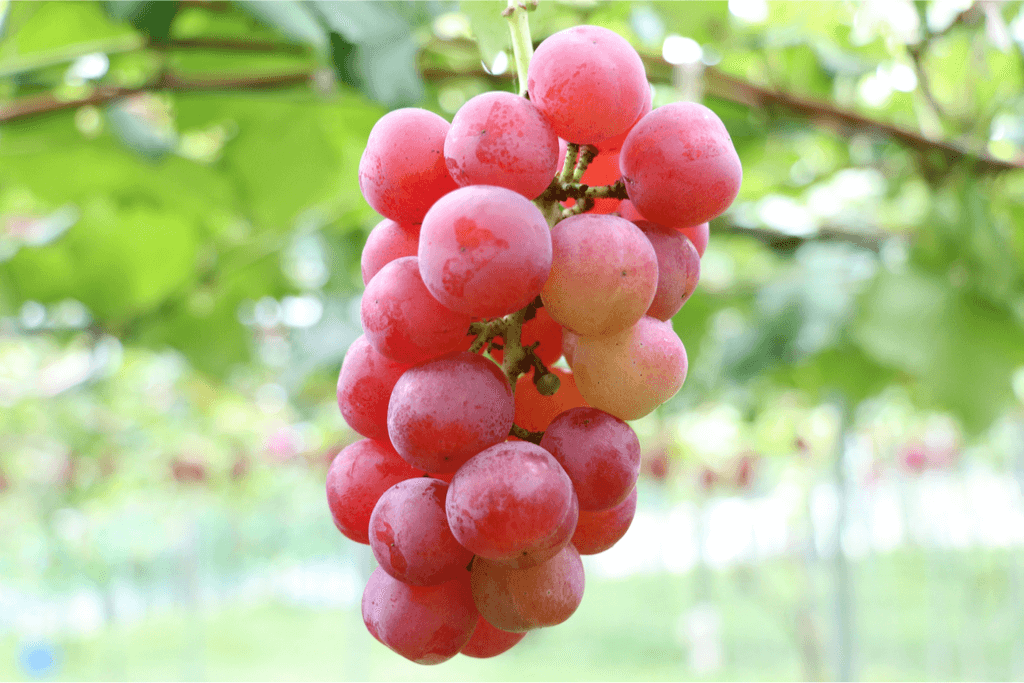
Picture this: a cross between red grapes and the enormous Fujiminori black grape, occurring naturally in a research center in Japan. It was a magical, albeit accidental, creation. Despite earlier attempts at artificial pollination, nature took its course, giving birth to the exquisite Ruby Roman grape.
In 2005, a mother vine of Ruby Roman grapes was carefully chosen, and cuttings were distributed to select locations. A dedicated Ruby Roman research group was formed, establishing the rigorous standards for these grapes, including size, color, and sugar content.
Ruby Roman Grapes are expensive though! On average, a bunch of Ruby Roman grapes starts at a hefty $300. In fact, during their debut auction in 2008, a single bunch sold for nearly $700!
As the years passed, their price continued to climb. In 2020, a solitary bunch of Ruby Roman grapes fetched an astonishing $12,000, making each grape worth roughly $400. Their limited supply, coupled with strict size and sugar content standards, further elevate their cost.
So why they are so expensive? Rarity, of course, plays a significant role. These grapes are grown in just one location globally, and strict regulations protect them from theft or unauthorized cultivation.
But it doesn’t stop there. The meticulous care given to these grapes is astonishing. Cutting-edge technology monitors their sunlight exposure, and vineyard attendants tend to them daily. To the point where even each grapevine is pruned with precision to ensure the grapes receive the perfect amount of sunlight.
According to the fortunate few who have savored Ruby Roman Grapes, they offer a sweetness and juiciness beyond compare. Their strict growing practices ensures that’s the case in every bite of these delicious but expensive grapes.
To make the cut and be sold, each grape must boast at least 18% sugar content. They also need to meet specific weight and size criteria. It’s not just about their flavor; it’s about their size, sweetness, and unparalleled quality.
Now, the ultimate question: where can you find Ruby Roman Grapes? Well, it’s no easy task. You might stumble upon them in select specialty produce markets in Japan or on specialized websites that offer rare produce. Some of these websites even deliver to the United States and other parts of the world.
But remember, the rarity of Ruby Roman Grapes is precisely what makes them so precious. Perhaps one day, they’ll become a global sensation, but for now, they remain an exclusive treasure from Japan. If you ever get the chance to taste these extraordinary grapes, consider it a once-in-a-lifetime experience!
Number 3: Densuke Watermelon
Let’s dive now into the enigmatic world of the Densuke Watermelon. Its unique combination of appearance and taste, has made it one of the world’s most sought-after delicacies.
One reason why the Densuke Watermelon has such a staggering price tag is its scarcity. These remarkable watermelons are cultivated exclusively on the island of Hokkaido in northern Japan. Specifically, the town of Tohma serves as their epicenter, thanks to the island’s unique climate and mineral-rich volcanic soil.
Originally introduced in 1981 as a new crop outside the traditional rice paddies, the Densuke Watermelon quickly gained fame. The name ‘Densuke’ was trademarked in 1989, and only watermelons meeting rigorous inspection criteria can bear this prestigious label.
However, cultivating Densuke Watermelons is no easy feat. It’s a labor-intensive process that demands substantial lan d space, meticulous care, and copious amounts of water.
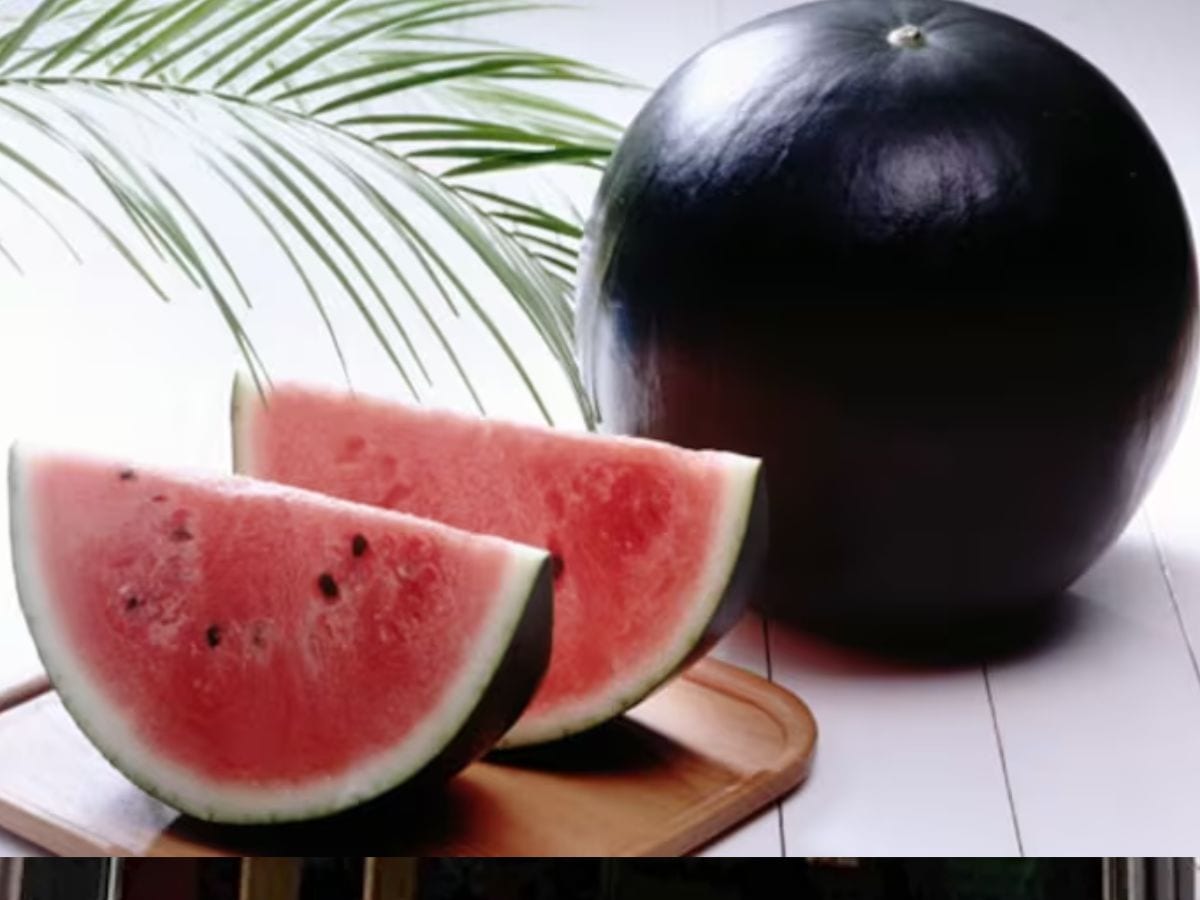
These melons, resembling engorged bowling balls, receive the royal treatment. While still on the vine, they are hand-turned repeatedly to ensure even growth and prevent blemishes. Once harvested, each melon undergoes a meticulous polishing process, resulting in a glossy black sheen.
In 2008, a record was set when a 17-pound Densuke Watermelon sold at auction for a jaw-dropping 650,000 yen, equivalent to $6,100 USD at the time. Such prices are not unusual for these rare treasures.
So, where can you find these dusky luxury fruits? Well, it’s not as easy as picking them up at your local grocery store. You might stumble upon them in certain high-end fruit parlors in Japan, which are akin to jewelry stores in the West.
If you’re not in Hokkaido and still dream of savoring the Densuke Watermelon’s unparalleled sweetness, you can try growing your own. While conditions might not be optimal, it’s a possibility. Just remember, only fruits grown in the Hokkaido region are recognized as legitimate Densuke Watermelons.
Number 4: Taiyo No Tamago Mango (Miyazaki Mango)
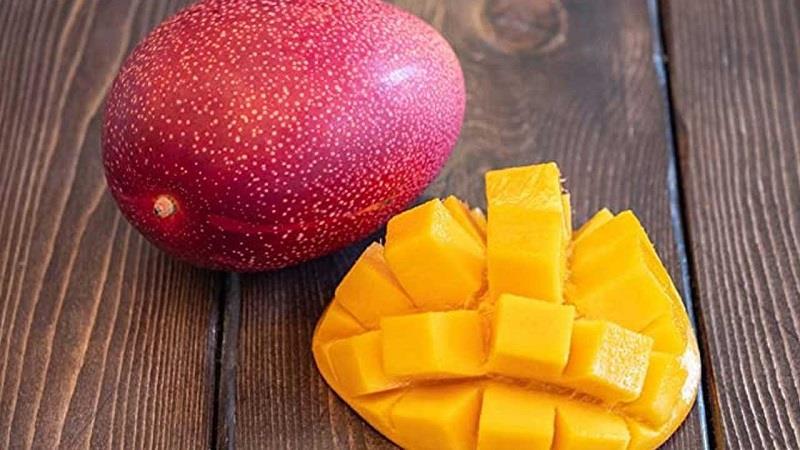
As you probably guessed, we are still in Japan for our next fruit, we are now in the sun-kissed island of Kyushu. Where we discover the legendary Miyazaki Mangoes, often referred to as the ‘Egg of the Sun.’ These mangoes are renowned for their extraordinary sweetness and captivating color variations, ranging from vibrant orange to regal purple.
Mango farming in Japan is relatively new, with roots stretching back to the mid-1980s. These mangoes trace their lineage to the Irwin mangoes, originally imported from sunny Florida to flourish in Japan’s warm and welcoming climates.
What sets the Miyazaki Mangoes apart is the meticulous control over their growth. These mangoes are celebrated for their exceptional sweetness and flavor, a result of stringent quality control standards. To earn the Miyazaki label, each mango must boast a minimum sugar content of 15% and weigh no less than 350 grams. Their striking deep red color is another hallmark.
These mangoes are nurtured under very specific conditions. When they are still small fruits, each one is carefully placed in a net and suspended from wires inside the greenhouse. This method ensures that the mangoes receive optimal nutrition from the plant.
When the mangoes reach their peak ripeness, they naturally fall from the plant, landing safely in the waiting nets. This unique cultivation technique has an added advantage: it bathes the mangoes in ample sunlight, resulting in their iconic uniform red hue.
But what makes these particular mangoes so remarkably expensive? In many cases, buyers at mango auctions bid on behalf of large distributors, like supermarkets. When a massive sum is offered for a single mango, it serves as an incentive, encouraging farmers to continue producing exceptional produce. In essence, it’s a bonus for the farmers’ dedication and hard work.
While not every Miyazaki Mangoes mango breaks records, they still come with a significant price tag, often fetching around $50 for a pair. It might sound like a hefty sum for fruit, but these mangoes are more than a casual snack; they are exclusive gifts, appreciated for their rarity and uniqueness.
The Miyazaki Mangoes is an extraordinary fruit, nurtured under rigorous conditions that justify its premium price. And its taste? It’s exceptionally sweet and delicious. If you ever find yourself in Japan, keep an eye out for these remarkable mangoes in specialty fruit stores or gift shops!
Number 5: Square Watermelon
Now, let’s delve into the curious world of square watermelons, a unique and modern marvel that originated in Zentsuji, Kagawa Prefecture, Japan. These extraordinary watermelons challenge the conventions of fruit shape, making them both a culinary curiosity and an artful creation.
The story of square watermelons begins in 1975 when they were first successfully cultivated. However, this was no coincidence; it involved meticulous research, experimentation, and dedication. Zentsuji, a city in the Kagawa Prefecture, embraced the challenge of growing square watermelons as a symbol of local identity and resilience during a time of change.
Geographically, Zentsuji boasts ideal conditions for watermelon cultivation, with its hot, relatively dry summers. Capitalizing on this, the city aimed to create a unique product that would distinguish it and fit neatly into consumers’ refrigerators, thanks to its square shape.
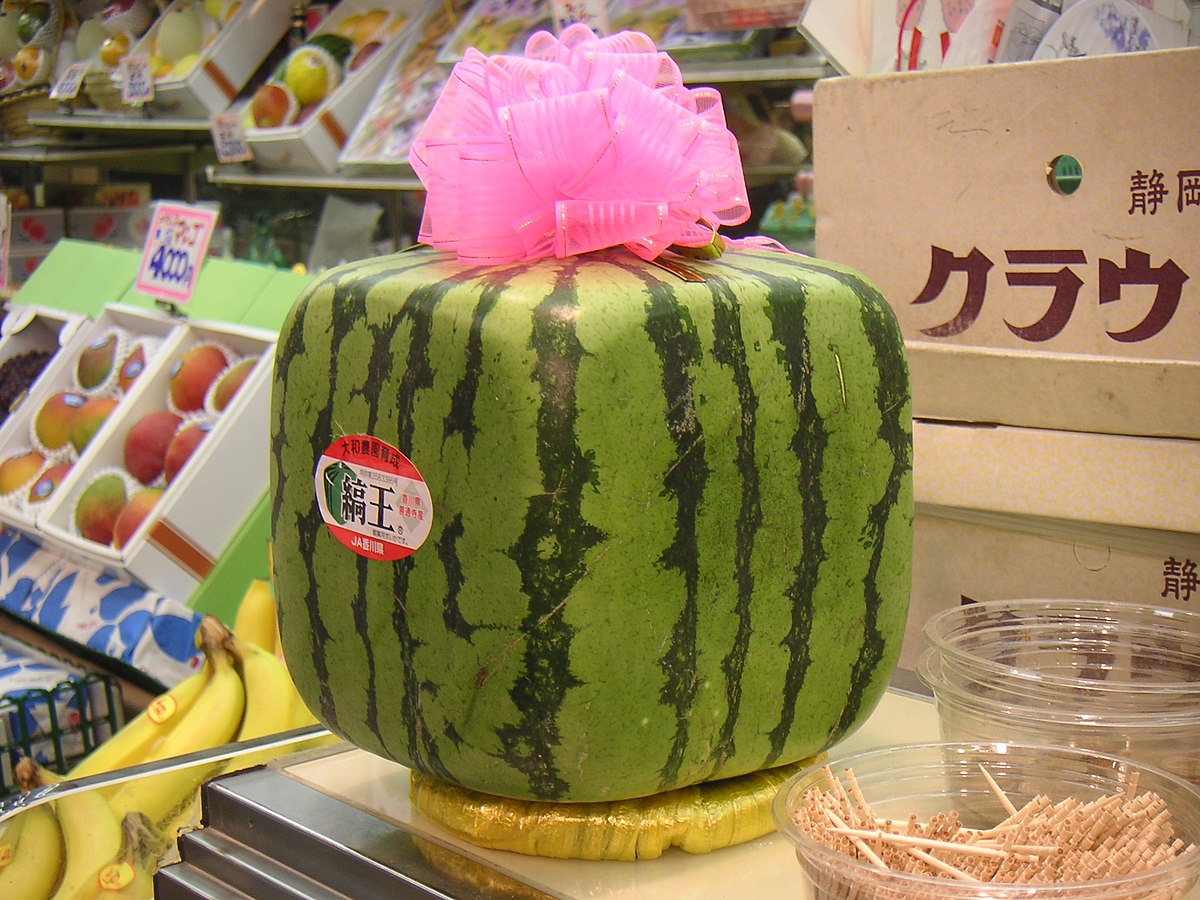
The process of cultivating square watermelons is more straightforward than you might imagine. Skilled growers fashion transparent boxes for these fruits. These boxes are slightly smaller than the anticipated size of a typical watermelon. As the melon grows, it takes on the shape of the container, resulting in the iconic square form. And it’s not just squares; you can find triangular and heart-shaped watermelons too, adding to the intrigue.
One might expect these square watermelons to taste radically different, given their unique appearance, but the truth is less dramatic. The square watermelons are harvested before reaching full ripeness, resulting in a pale, yellowish interior that isn’t particularly appetizing. However, this method extends their shelf life, keeping them in pristine condition for longer.
Opinions on their taste vary; some find them bland, while others assert that square watermelons are no different from their round counterparts. Modern square watermelons are often more about aesthetics than culinary delight. They are typically purchased as decorative gifts or novelties.
The price of a square watermelon can vary significantly based on multiple factors. In Japan, these unique fruits can cost anywhere from $100 to over $500, depending on the season, quality, and size. If you’re in the United States and desire a square watermelon from Japan, it’s possible, but the price may soar well above $800, shipping though.
Aesthetics reign supreme in Japan’s specialty fruit industry. While square watermelons were once grown for consumption, modern ones are cultivated to be ornamental. They are plucked from the vine prematurely, ensuring they remain display-worthy rather than edible.
Number 6: White Jewel Strawberry
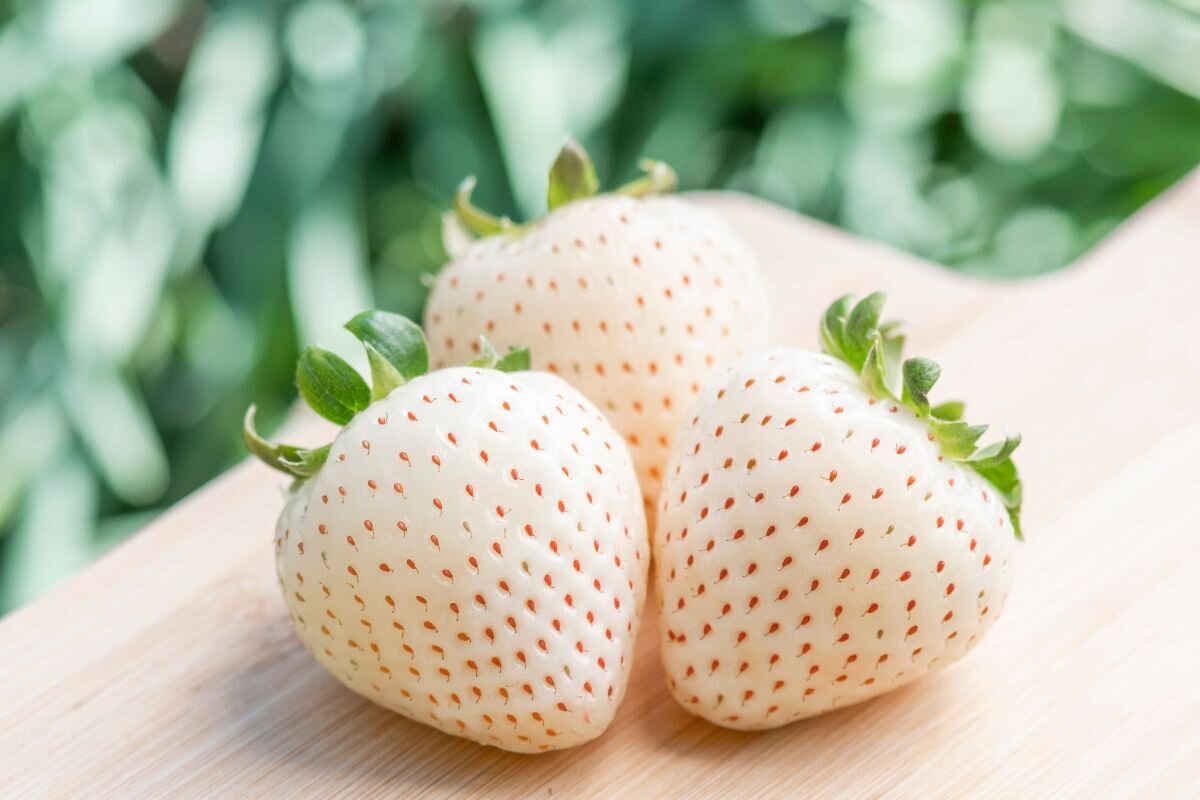
Let’s embark on a delightful journey into the world of the White Jewel Strawberry, known as ‘Shiroi Houseki’ in Japan. These remarkable strawberries have a fascinating twist: their skin is pure white, yet they have a hidden secret that makes them a treasure worth savoring.
In fact, the whiter the skin, the riper and more delicious they are. The mature White Jewel Strawberry can be as sweet, or even sweeter, than its red counterparts. But the most remarkable difference, apart from their color, is their fragrance.
White strawberries exude a gentle aroma, distinct from the more robust scents of fruits like pears and peaches. However, their pristine appearance comes at a price. The whiter the strawberry, the more noticeable any blemishes or scratches become. As a result, farmers typically sell only 10% of what they produce, with the ‘less perfect’ strawberries being transformed into delicious strawberry jam, syrups, or even ice cream!
Japan’s most renowned White Jewel Strawberry hails from Saga Prefecture, specifically from Teshima Farm in Karatsu City. Teshima Farm holds the distinction of being the first to offer this unique strawberry variety. These remarkable strawberries didn’t appear overnight; they were the result of painstaking cross-breeding and extensive testing before finally making their debut in 2012.
White Jewel Strawberries are a symbol of luxury and are not commonly found in supermarkets. In fact, a single strawberry can cost up to $10, making a standard pack of 10 strawberries fetch around $100 or more. Given their high price, these strawberries make for exquisite gifts, particularly during the winter season when they are often exchanged as Christmas or Valentine’s Day presents.
If you ever find yourself in Japan, be sure to explore the world of white strawberries in unique desserts like cakes and parfaits. Some cafes and restaurants even offer strawberry courses where you can savor up to 20 different strawberry varieties! Would you be willing to pay $10 for a white strawberry if you knew it would taste like heaven? Let’s us know in the comment section below.
Number 7: Dekopon Citrus
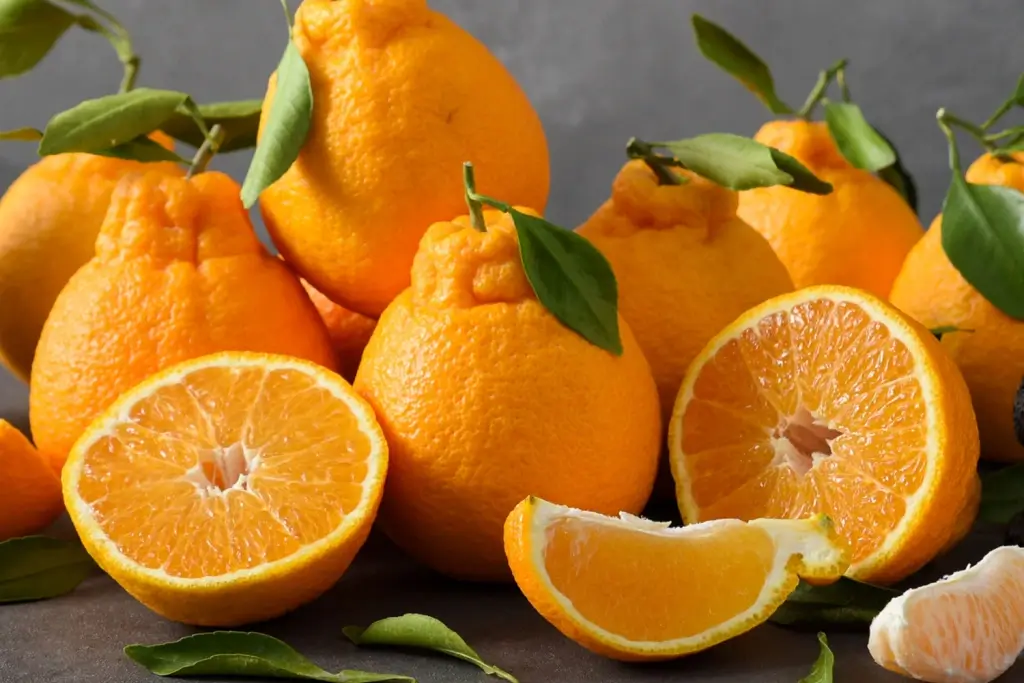
Our next fruity contender, the Dekopon Citrus, famously known as the ‘Sumo Citrus’ for its distinctive top-knot shape. These citrus marvels are about to take you on a flavorful journey.
Dekopon Citrus, often affectionately called ‘Sumo Citrus,’ a unique hybrid citrus fruit. They’re the result of a delightful cross-breeding between Navel, Pomelo, and Mandarin oranges. This fascinating fusion of flavors and qualities creates a citrus experience like no other.
Originally developed in Japan back in 1972 using traditional plant-breeding techniques, these treasures didn’t find their way to the public until around 2011. You see, these citrus trees take their time, years in fact, to start bearing fruit.
You might wonder, why the name ‘Sumo Citrus’? Well, when California farmers began cultivating these seedless wonders, they decided to trademark the name ‘Sumo Citrus.’ And it’s not hard to see why.
The name playfully nods to the famed sumo wrestlers of Japan. Just like those hefty athletes, Sumo Citrus are larger in size, round in shape, and instantly recognizable by their signature top knot.
But here’s where the real magic happens – the taste. According to the brand’s website, SumoCitrus.com, these citrus gems are described as having ‘an intense sweetness balanced by refreshing acidity, and a complex, lingering mandarin orange aroma.’
In simpler terms, it’s like an orange, but cranked up to eleven! The flavor profile is truly a citrus lover’s dream, making them a must-try for anyone seeking a delightful taste experience.
And here’s the kicker – one Sumo Citrus is equivalent to enjoying several mandarin oranges. So, not only do they offer an extraordinary taste, but they also pack a healthy punch. You’ll get a substantial serving of fiber, calcium, and vitamin C all in one fruit.
So, why are Sumo Citrus so expensive? Well, their unique nature plays a significant role. These citrus trees are notoriously challenging to grow and require a painstaking four years before they bear fruit.
Despite their rugged appearance, these fruits demand expert care and gentle handling, more so than any other citrus. Each tree receives meticulous attention, and even after harvest, special trailers are used to transport them, ensuring a smooth journey without any harm to the fruit.
That’s why Sumo Citrus isn’t around for long, and you’ll typically find them in markets from January to the end of April, depending on supplies. The average cost hovers around $3.99 per pound at stores like Whole Foods.
Number 8: Sekai-Ichi Apple
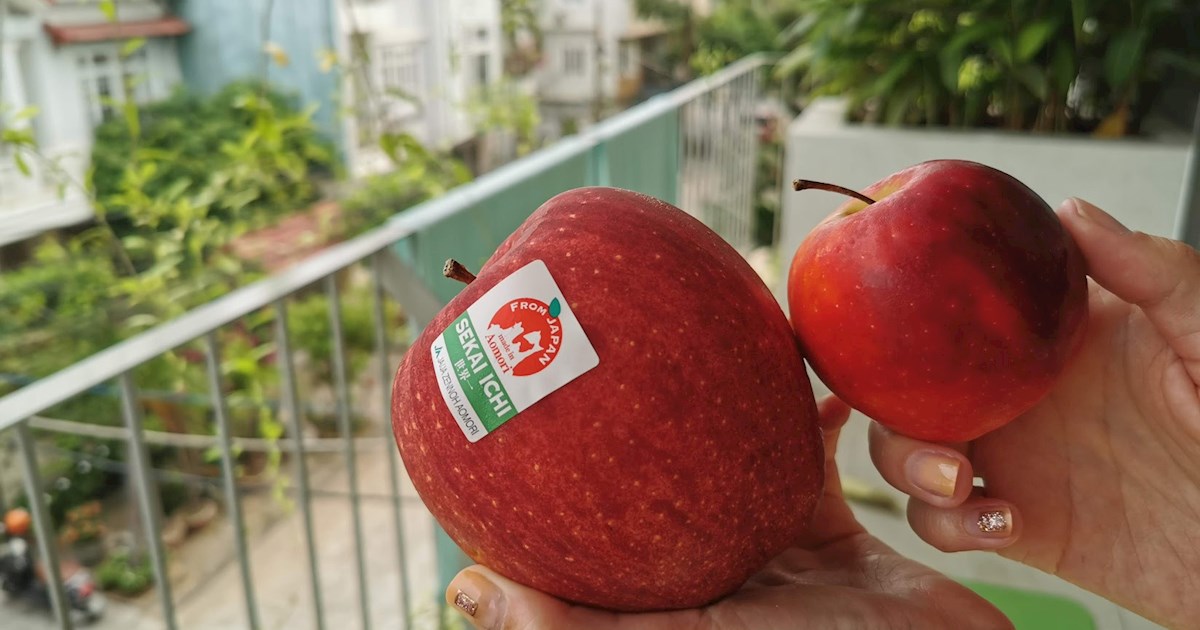
And now, let’s dive into the intriguing world of the Sekai-Ichi Apple. Imagine an apple that defies the norms of size. The Sekai-Ichi Apple, which translates to ‘best in the world’ in Japanese, lives up to its name. These apples can be enormous, weighing between 1 and 2 pounds each. That’s more than three times the weight of an average apple!
What sets the Sekai-Ichi Apple apart is not just its size, but its appearance. These apples are a visual feast. Their skin is semi-thick, chewy, and matte, with a yellow-green base almost entirely covered in a rich pink, red, to crimson blush. This vibrant red hue isn’t just for show; it’s determined by the amount of sunlight the apple receives during cultivation.
Now, you might wonder, what does the Sekai-Ichi Apple taste like? While it might not be the most flavor-packed apple out there, it offers a subtly sweet and delicate taste. The skin can occasionally introduce a hint of bitterness, depending on how it’s cultivated, but overall, it’s low in acidity, creating a mild and enjoyable eating experience.
Now, the million-dollar question, what makes Sekai-Ichi Apples so expensive? The answer lies in their exceptional size and appearance. These apples are not your run-of-the-mill fruit. They’re meticulously grown, primarily in Japan, where each apple tree is hand-pollinated to ensure the purest lineage.
Be prepared to pay a premium for these exclusive apples, sometimes up to $21 for a single apple!
So, Where can you find Sekai-Ichi Apples? Well, the truth is, they’re not easy to come by. In Japan, they’re considered a status symbol and delicacy. So, finding them in local markets can be challenging. However, luxury resorts and hotels in cities like Tokyo, Hong Kong, and Shanghai offer them as gifts to their guests, or even as complimentary refreshments.
Number 9: Sembikiya Queen Strawberries
Our next contender, the Sembikiya Queen Strawberries, offers a taste of Japan’s rich cultural tradition of gift-giving, where expressions of gratitude are shared through meticulously chosen offerings.
These delectable gems are not your everyday strawberries; they’re a treat reserved for a limited time in Japan. They are named after Sembikiya, a venerable fruit shop in Tokyo with roots dating back to 1834. Sembikiya holds the distinction of being Japan’s oldest fruit shop, and its legacy is now carried forward through 14 stores, many of which are located in Tokyo.
Sold in elegant boxes of twelve, each pack of Sembikiya Queen Strawberries commands a price of approximately $85. But what truly sets them apart is their impeccable quality.
Every Sembikiya Queen Strawberry is hand-selected with utmost precision, ensuring that each fruit boasts a uniform shape, a lustrous crimson hue, and an appearance akin to a precious gem. These strawberries are nothing short of stunning.
But it’s not just about appearances; these strawberries are incredibly sweet, surpassing the ordinary strawberry in flavor and quality.
What elevates the Sembikiya Queen Strawberries to such heights? It’s their unique cultivation method known as ‘elevated cultivation.’ This means that these strawberries never touch the soil during their growth.
Elevated cultivation isn’t just about aesthetics; it also offers hygienic benefits. Without soil contact, there are fewer shaded areas on the fruit, resulting in an even, glossy red color. This method, combined with Japanese ingenuity, ensures that these strawberries thrive in a stress-free environment.

Number 10: Pineapples from the Lost Gardens of Heligan
We’re delving now into the fascinating world of pineapples from the Lost Gardens of Heligan. These aren’t your everyday pineapples; they’re a symbol of history, patience, and a touch of Victorian luxury.
In Victorian times, pineapples weren’t just a fruit; they were a symbol of great status and wealth. Having a pineapple on your dining table was a statement of discernment, style, and affluence.
The Lost Gardens of Heligan hold a remarkable secret – a working, manure-heated pineapple pit, possibly the only one of its kind in Britain today. This historical treasure was unearthed in 1991, sparking extensive research into its construction and technology.
The roots of this pineapple pit likely date back to the eighteenth century. It took three years of dedicated care and anticipation before the first flower bud appeared. And in October 1997, the momentous first harvest was celebrated, with HRH Prince Charles (now King) himself admiring this horticultural marvel.
The second pineapple from the pit had the honor of being delivered to none other than Her Majesty Queen Elizabeth II on her 50th wedding anniversary. But before that, the gardeners at Heligan sampled the first one to ensure it didn’t taste like manure. Fortunately, it was delicious.
The art of pit management had been lost over time, and without written instructions, the dedicated staff at Heligan had to learn through trial and error. Maintaining precise temperature and humidity levels is crucial, and overwatering is a no-go. Fresh horse manure is essential to keep the pit warm during colder periods.
With the era of horse-drawn transportation long gone, finding high-quality, decomposing horse manure has become increasingly difficult and costly. This prized manure is the lifeblood of the pineapple pit, recreating a tropical paradise for these unique pineapples.
Growing pineapples at Heligan is a labor of love. The current variegated variety, ready for harvest, took five years before it bore fruit. When you factor in the hours of care, transport costs of manure, and pit maintenance, each pineapple could cost over £1000.
However, Heligan doesn’t sell these precious pineapples; instead, they’re shared among the staff as a token of appreciation for their hard work. If one were to be auctioned for charity, it’s estimated that the bidding could reach up to £10,000.
These pineapples are among the best-tasting outside of the Tropics. It’s a costly and time-consuming process, but the results are incredibly rewarding. By preserving the Victorian techniques, they offer visitors a glimpse into the past and honor the Tremayne family’s legacy.
Number 11: Buddha Shaped Pear
Picture biting into a pear and discovering more than just juicy sweetness – a Buddha figure sculpted within. These remarkable creations are the brainchild of Mr. Xianzhang Hao, a true fruit artist.
The inspiration for these divine creations springs from an age-old Chinese myth. Legend has it that a mystical tree in the shape of Buddha bore fruits of enlightenment, offering wisdom and tranquility to those who tasted them. Now, Mr. Hao has breathed life into this myth.
But how are these pear sculptures crafted, you might wonder? Well, it’s no simple task. Mr. Hao employs a meticulous molding process that turns ordinary pears into serene Buddhas. The result is nothing short of astonishing.
So, what about the taste? For just $9, you can experience the divine fusion of flavors and artistry. These Buddha Pears have left fruit enthusiasts around the world in awe.
But the world of fruit shaping doesn’t stop at pears. In China’s Fruit Mould Company, they’re molding watermelons into hearts, cucumbers into stars, apples into whimsical faces, and peaches into sultry human-like behinds. It’s a captivating blend of art and agriculture.
In today’s world, consumers often spurn oddly shaped produce. Stringent regulations even dictate the ‘perfection’ of fruits and vegetables, leading to massive food waste.
In a world where food sustainability and affordability are pressing concerns, it’s high time we reconsider our obsession with picture-perfect produce. Remember, when it comes to eating, beauty isn’t everything.
Number 12: Sembikiya Cherry
We’ve reached the pinnacle of our list with the Sembikiya Cherry. These aren’t your ordinary cherries; they’re a symbol of luxury and culinary excellence.
Imagine biting into a cherry that’s not only visually stunning but bursts with extraordinary flavor. That’s precisely what the Sembikiya Cherry offers. Originating in Japan, this rare fruit is a cherished delicacy.
These cherries are the epitome of perfection, featuring a deep red hue, firm flesh, and a harmonious blend of sweetness and delicate tartness. Their medium-sized stature, coupled with a glossy exterior, adds to their aesthetic allure.
What makes Sembikiya Cherries truly exceptional is the meticulous care that goes into their cultivation. Grown in small glasshouses, each cherry is closely monitored for size, color, and quality. Only the finest cherries make the cut.
Luxury often comes with a price tag, and Sembikiya Cherries are no exception. Sold in meticulously arranged boxes of 40, these cherries can command a premium price of around $160. But their uniformity and exquisite appearance make them worth every penny. Would you go ahead on spend this much money in a box of 40 cherries? Let us know in the comments section below.
Sembikiya Cherries have a short harvesting season, typically in late spring or early summer. Their limited availability adds to their allure, making them a rare and treasured find for cherry enthusiasts.
These cherries aren’t just confined to Japan; they’ve gained international recognition as a premium cherry variety. Their unmatched taste experience leaves a lasting impact, whether enjoyed on their own, in sweet treats, or as part of culinary creations.
Conclusion
These fruits are not just food; they’re a testament to the art of cultivation, the pursuit of perfection, and the extraordinary lengths people go to create nature’s finest.