
25 Stunning Flowers You’ve Never Seen Before
Introduction
Imagine a world where colors pulse like neon lights, and flowers bloom in shapes so unusual they seem to defy reality. These aren’t your everyday flowers; they’re rare, mysterious, and, in some cases, nearly impossible to find.
Today, we’re diving into nature’s most extraordinary creations, discovering the 25 most beautiful and unique flowers in the world.
From a flower that only blooms in moonlight to one that smells like a rotting corpse, these blooms aren’t just beautiful—they’re captivating, mysterious, and unlike anything you’ve seen before. Are you ready to uncover the secrets of nature’s most breathtaking flowers?
Shampoo Ginger
Our journey begins in the heart of the tropics, where an extraordinary flower stands out not only for its striking looks but also for its unexpected uses. Known as the Shampoo Ginger—or Zingiber zerumbet—this fascinating plant has earned its name thanks to the fragrant, sudsy liquid stored within its vibrant red bracts. Imagine a flower that doesn’t just captivate with its beauty but also serves as a natural shampoo and conditioner. It’s so intriguing that you might be tempted to reach out and test it yourself!
Originally from Southeast Asia and cherished in Hawaiian culture under the name ‘Awapuhi, the Shampoo Ginger has been used for centuries to care for skin and hair. The liquid within its bracts has a gentle, soothing quality, perfect for hair and body care and even as a natural remedy for sunburns. It’s easy to see why this tropical flower is prized not only for its looks but for its unique benefits.
As the bracts mature, they shift from green to a brilliant red, creating a bold, layered display that feels almost otherworldly. Growing in the shady, damp parts of tropical forests, often near streams, Shampoo Ginger’s ability to thrive in these conditions has made it a popular choice in gardens worldwide, adding a lush, exotic touch with its tall green stalks and unmistakable red cones.
Symbolizing renewal and vitality, Shampoo Ginger sets the stage for our journey through the world’s most beautiful and unique flowers.

Ghost Orchid
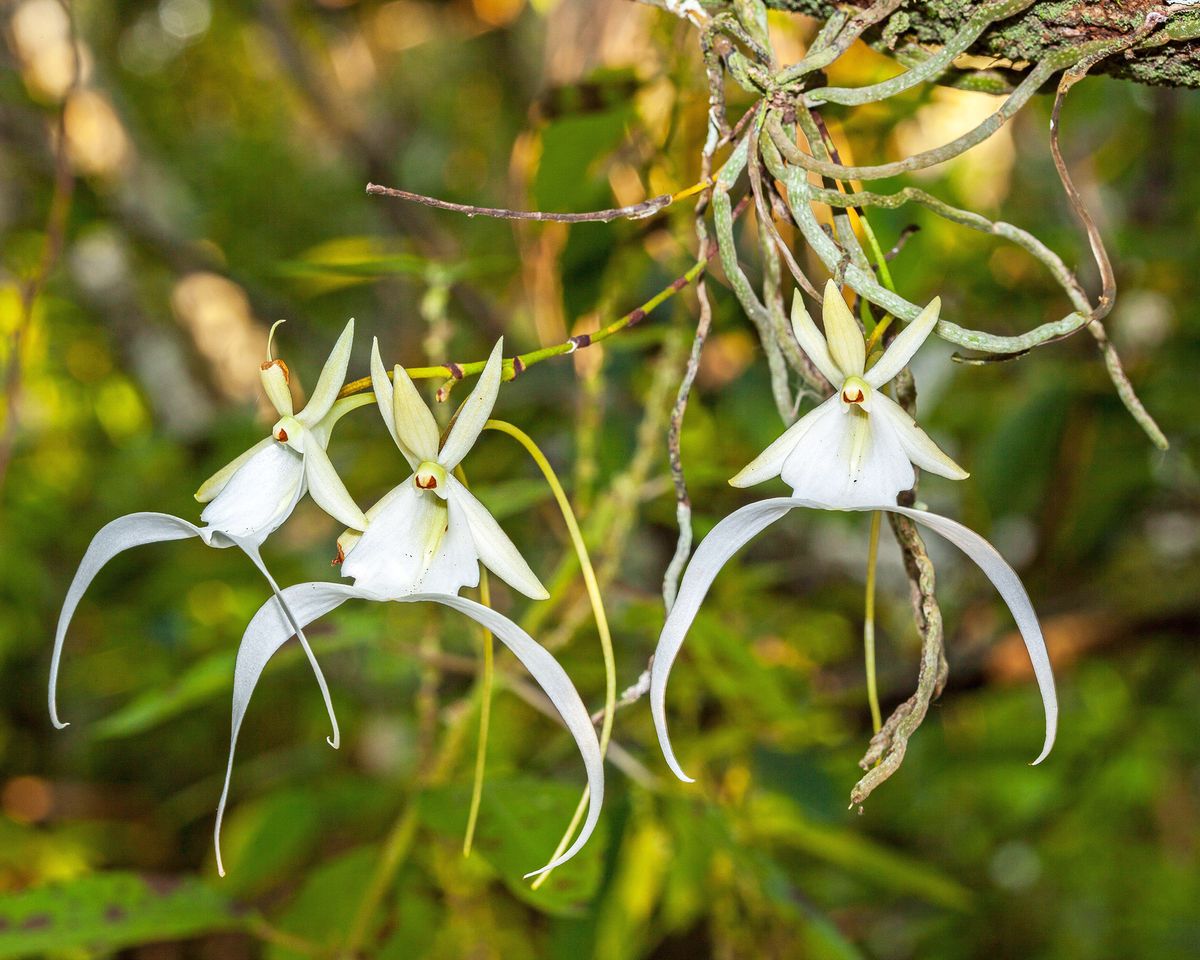
Next, we travel deep into the shadowed, humid realms of Florida’s swamps—a landscape shrouded in mystery and rich in secrets. Almost invisible to the untrained eye, this botanical ghost lingers quietly among the cypress trees. Known as the Ghost Orchid, it’s a flower so rare and mysterious it seems to belong to another world.
Unlike its leafy orchid cousins, the Ghost Orchid has no leaves at all. Instead, it relies solely on pale, photosynthetic roots that blend seamlessly with the bark it clings to. This delicate orchid is a master of camouflage, revealing itself only when it blooms. Its spectral white flowers seem to float, suspended in midair, creating an almost otherworldly display.
Cultivating this plant is an endeavor for only the most dedicated. It demands the purest of water, either rain or distilled, and thrives only in high humidity, requiring careful misting and precise light conditions. The Ghost Orchid is a true diva, flourishing only under exacting care, almost as if it’s set on remaining out of reach.
To see a Ghost Orchid in bloom is a rare privilege, a quiet reminder of the hidden wonders that live in the wildest, least accessible corners of our world.
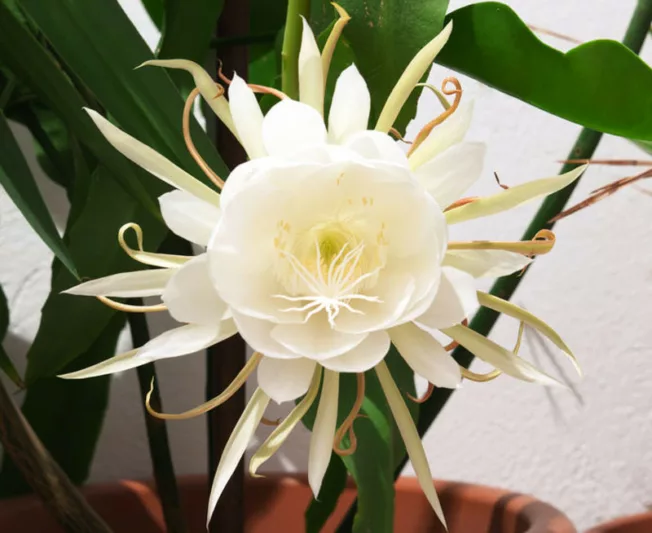
Queen of the Night (Epiphyllum oxypetalum)
From Florida’s hidden swamps, we journey now into a realm of moonlit mystery, where yet another botanical marvel lies waiting to enchant. Known as the “Queen of the Night,” the Kadupul Flower is as fleeting as it is beautiful, its life measured in mere hours under the cover of darkness.
As a type of cactus, the Kadupul Flower thrives in quiet, moonlit surroundings. This beautiful flower blooms only at night, it appears for just a few hours before fading away with the first light of dawn. This nighttime marvel produces large, delicate flowers up to 12 inches long, resting on sprawling stems that create a beautiful display of sight and scent.
Native to Southern Mexico, the Kadupul’s beauty is as rare as it is brief, showing up like a vision in the night sky, only to disappear with the sunrise.
Growing the Kadupul Flower is a process that requires both patience and care. This flower rewards its grower with fragrant blooms from late spring through summer, but it has specific needs, flourishing best in a calm, moonlit setting. In many Asian cultures, the Kadupul is valued not only for its beauty but also for its believed healing properties, as it has traditionally been used to help with breathing issues and to ease pain.
Surrounded by myths and legends, the Queen of the Night symbolizes life’s fleeting beauty, capturing rare moments that don’t last forever. Seeing it bloom feels like catching a glimpse of nature’s secrets—a midnight show that disappears with the sunrise, leaving only a memory of its beauty.
African Starfish Flower
Leaving behind the fleeting beauty of the Kadupul flower, we find ourselves in the arid landscapes of Southern Africa, where a flower known for its unique form and survival tactics has earned a place in the spotlight. This is the African Starfish Flower, also called Stapelia grandiflora, a flower that’s just as beautiful as it is unique.
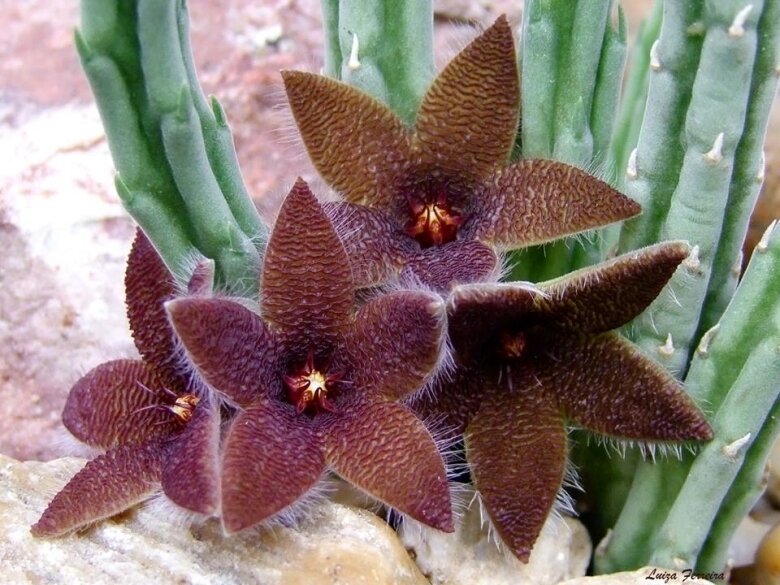
Unlike the delicate, fragrant Kadupul, the African Starfish Flower takes a completely different approach. Its thick, fleshy petals, often covered with fine hairs, resemble the limbs of a starfish, a visual adaptation meant to attract its main pollinators: flies. But here’s where it gets even stranger. This flower releases a distinct, somewhat unpleasant odor reminiscent of rotting flesh. To the human nose, it’s far from appealing, but for flies, it’s an irresistible invitation, drawing them in to pollinate the plant.
Known to survive in the harshest, driest conditions, the African Starfish Flower is a master of resilience, thriving where other plants might not. Despite its unusual scent, it’s become a popular choice among plant enthusiasts for its striking, star-like appearance and low-maintenance care.
Corpse Lily
After the star-shaped African Starfish Flower, with its surprising scent that attracts pollinators over admirers, we encounter a bloom that takes this strategy to new extremes. Meet the Corpse Lily, or Rafflesia arnoldii—a flower as famous for its massive size as for its notorious aroma.
Deep in the rainforests of Southeast Asia, this colossal bloom defies what we usually expect from a flower. Its fleshy, reddish-brown petals span nearly a meter across, earning it the title of the largest individual flower on Earth.
But the Corpse Lily’s appeal doesn’t stop with its size. When it blooms, it emits a powerful smell of rotting flesh—an aroma even stronger than the Starfish Flower. This intensified scent is nature’s clever way of attracting essential pollinators like flies and beetles, perfectly suited to its survival needs.
Unlike most plants, the Rafflesia arnoldii leads a hidden life as a parasite. It spends most of its time nestled within the vines of a host plant, drawing water and nutrients in secret until it’s ready for a brief, dramatic appearance. When it finally blooms, it emerges from the bark like something from a fairytale—a five-lobed, spotted flower that is both mesmerizing and monstrous.
During its short flowering period, the Corpse Lily fills the air with its decaying scent, luring pollinators with remarkable precision. It’s a floral spectacle that’s difficult to forget, reminding us that nature’s survival tactics can be as captivating as they are unexpected.
Today, Rafflesia arnoldii has become an icon of Southeast Asia’s biodiversity, celebrated on Malaysian postage stamps and woven into local folklore. But despite its incredible adaptations, this flower faces significant threats from habitat loss and tourism. Each bloom reminds us of the delicate balance in nature and the importance of preserving these extraordinary wonders for future generations.
Glory of the Snow
After the striking presence and intense aroma of the Corpse Lily, we step into a gentler world. High up in the mountains, where the winter’s snow has barely begun to melt, a delicate bloom known as Glory of the Snow makes its quiet entrance. In stark contrast to the dense rainforests of Southeast Asia, this flower thrives in the cool, open alpine slopes, where its star-shaped petals create a stunning carpet of blue and white against the lingering patches of snow.
The Glory of the Snow is one of the first flowers to break through the snow in early spring, a symbol of resilience and beauty. Its soft blue, pink, or white flowers appear like little stars, with each petal bearing a darker center that adds depth and vibrancy to the blossom. Native to mountainous regions of Turkey, this small but hardy plant only grows about six inches tall, yet its impact on the landscape is profound. Each bloom marks the return of life to the mountains, emerging with the first rays of spring sunshine.
Unlike many of its springtime peers, Glory of the Snow is easy to cultivate and remarkably resilient, capable of withstanding the harsh conditions of alpine environments. It’s become a favorite among gardeners for its low maintenance and ability to spread naturally, creating a stunning ground cover.
Pincushion Protea
After the cool mountain air and gentle colors of the Glory of the Snow, we venture into the sunlit, arid landscapes of South Africa, where another resilient bloom takes center stage—the captivating Pincushion Protea, also known as the Pinwheel Protea. Unlike the soft pastels of the mountain flowers, this vibrant bloom adds a bold splash of fiery color and intricate design to the protea family.
The Pincushion Protea’s spherical form, often covered in fiery red to orange spindles, creates a mesmerizing display. What’s especially fascinating is that this structure follows a design principle seen across nature: a spiral pattern similar to the Fibonacci sequence. This arrangement, found in sunflowers, pinecones, and seashells, maximizes space and sunlight exposure, giving the Pincushion Protea its intricate, captivating form.
Native to South Africa’s fynbos region, a unique area filled with hardy, scrubby plants and rich biodiversity, the Pincushion Protea thrives in sunny, dry conditions and has adapted to nutrient-poor soils. Its deep roots allow it to survive wildfires, which clear out competing vegetation and create ideal conditions for new growth.
With its showy blooms and adaptability, the Pincushion Protea has become a popular addition to gardens worldwide, bringing a touch of exotic beauty where function and form come together in remarkable ways.
Spider Lily
Shifting from the intense, structured beauty of the Pincushion Protea, we now encounter a flower that exudes an airy, almost ethereal elegance This delicate yet resilient flower has made its mark across continents, captivating hearts with its airy, almost otherworldly beauty.
Known as the Spider Lily, this bloom features long, slender petals that spread out like the legs of a spider, creating a mesmerizing display.
Celebrated worldwide for its unique charm, the Spider Lily shines in different regions. In Japan, the Kinchakuda fields come alive each year with vibrant red spider lilies, drawing thousands to witness this breathtaking sight. In the United States, the Rocky Shoals Spider Lily graces the Catawba River, where it’s celebrated at the annual Lily Fest, honoring its striking presence in the landscape.
The Spider Lily’s name comes from its ‘spider-like’ petals, which encircle a central cup of nectar to attract pollinators essential for its reproduction. Each bloom opens in crisp white or soft yellow, adding a touch of elegance against its deep green leaves.
Though delicate in appearance, this flower thrives in marshy areas and riversides, where its roots help prevent erosion, making it valuable in both natural habitats and gardens.
Peacock Flower
Leaving the serene, otherworldly appearance of the Spider Lily behind, we journey into the warm, vibrant tropics, where a dazzling bloom takes the spotlight. Known as the Peacock Flower, this tropical beauty truly lives up to its name.
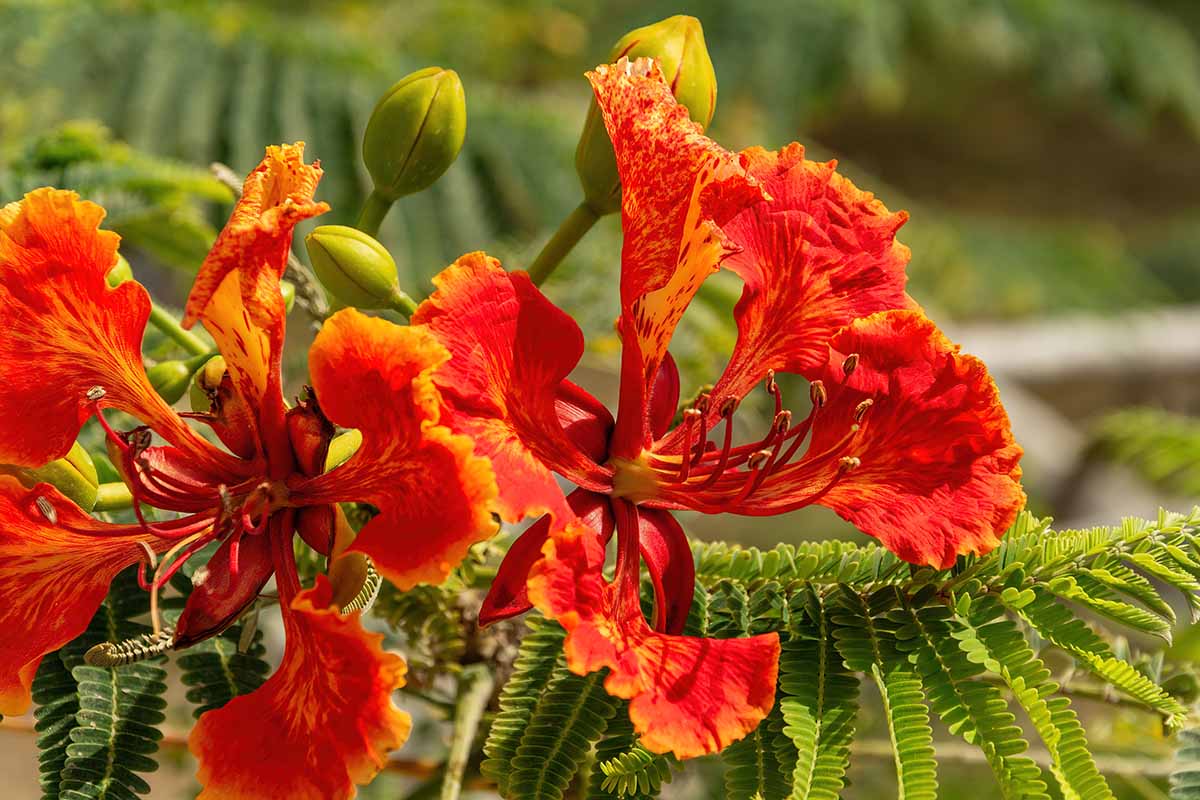
The Peacock Flower dazzles with clusters of bright red, orange, and yellow blooms, each petal extending outward like a fan of feathers. This tropical beauty isn’t just eye-catching—it’s tough, thriving in full sun and well-drained soils even under the harshest conditions.
Native to the Americas and widely grown in tropical regions around the world, it’s become a symbol of resilience and adaptability. In fact, it’s known to attract a range of pollinators, from butterflies to hummingbirds, who can’t resist its vivid colors and sweet nectar.
In addition to its visual appeal, the Peacock Flower holds a special place in traditional medicine, where it has been used to address various health concerns, from respiratory issues to skin conditions. Its uses vary across cultures, adding another layer to its charm and significance.
Blue Puya
We travel now to the rugged hillsides of the Andes, where one of the world’s most unique flower awaits. This is the Blue Puya, or Puya berteroniana, a plant with blossoms so unique that they seem almost surreal.
The Blue Puya is famous for its stunning turquoise flowers, a rare shade in the natural world. Each bloom is adorned with bright orange stamens, creating a dramatic contrast that catches the eye from afar. Towering up to 6 feet tall, these blooms are irresistible to pollinators like hummingbirds, who flock to the vibrant display for its rich nectar.
What’s even more impressive is the Blue Puya’s resilience. It thrives in rocky, poor soils where few other plants can survive, and its spiky, silver-green leaves are well-suited to the dry, challenging conditions of its Andean home. But these defenses serve more than one purpose; in its native habitat, the Blue Puya is known to trap small animals in its thorny base, a natural strategy that some believe helps it gather nutrients from decomposing organic matter.
Rarely found outside its native region, the Blue Puya is a marvel of adaptation, blending breathtaking beauty with rugged survival.
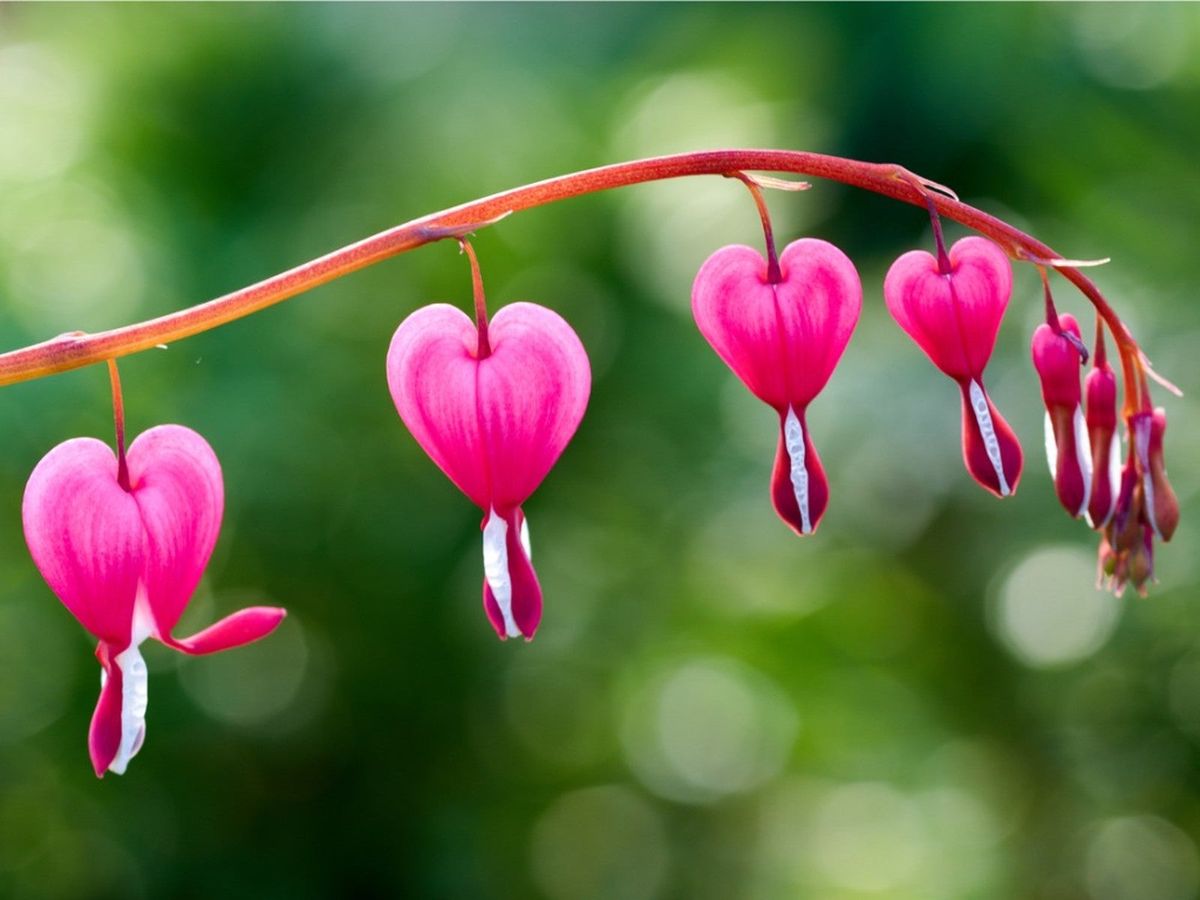
Bleeding Heart
Continuing in our journey through the world’s most beautiful and unique flowers, we arrive in the serene, shaded woodlands, where one of nature’s most delicate and sentimental blooms quietly graces the greenery. The Bleeding Heart enchants with its elegant, heart-shaped blossoms that hang gracefully from arching stems.
The Bleeding Heart’s unique blooms, often pink with a soft white tip, resemble tiny hearts with a single drop falling beneath, giving it a poetic appearance that has inspired admiration across cultures. Native to the forests of East Asia, this flower thrives in cool, shaded areas, making it a favorite in gardens where it provides a striking contrast to the surrounding greenery.
Beyond its beauty, the Bleeding Heart is admired for its hardiness. Despite its delicate appearance, this plant is remarkably tough, thriving even in colder climates. Its blooms grace gardens from early spring to summer, adding a quiet charm with each arching branch.
The Bleeding Heart is more than just a beautiful flower; it’s a symbol of empathy and enduring love, cherished for its sentimental shape and enduring beauty.
Bat Flower
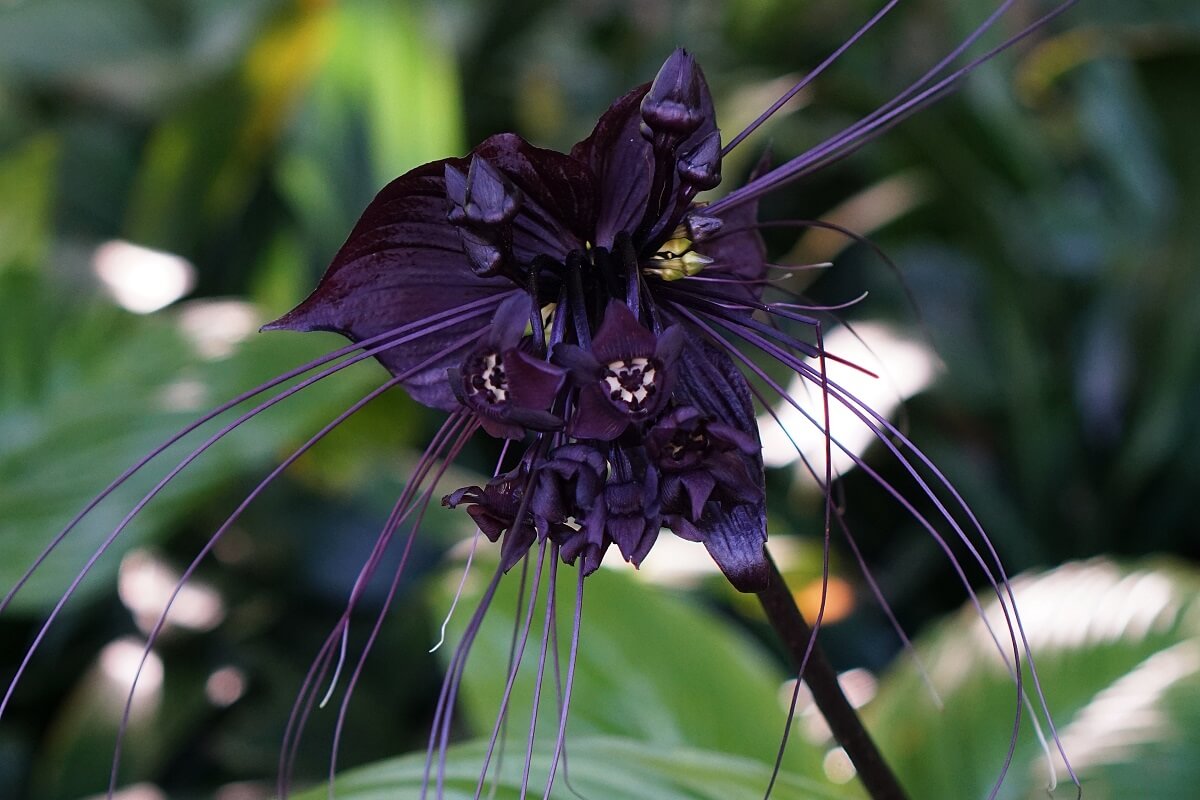
After the delicate charm of the Bleeding Heart, with its soft, heart-shaped blooms, we dive into something far darker and more mysterious. Enter the Bat Flower, also known as the ‘Devil Flower’ for its almost otherworldly appearance or Tacca chantrieri going by its scientific name.
This bloom, straight out of a tropical fantasy, has deep, velvety petals that resemble bat wings and long, flowing strands, giving it a haunting allure that feels plucked from the shadows.
In addition to the commonly seen dark Bat Flower, there’s also a rare white variant that adds an even more ethereal touch to this plant’s mystique. Both varieties thrive in the humid forests of Southeast Asia, where they’ve adapted to live in deep shade. With dramatic petals that blend into the shadows, the Bat Flower can self-pollinate, an adaptation that allows it to reproduce without relying on insects—a clear advantage on the densely packed forest floor.
With its striking shape and solitary nature, the Bat Flower feels like a character from a dark fairytale. It’s a reminder that nature’s creativity knows no bounds, even in the dimmest corners of the forest.
Middlemist Red
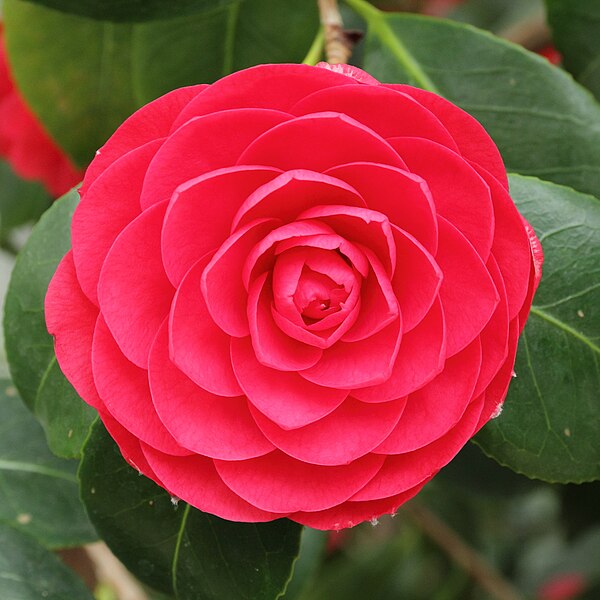
In our journey through the world’s most beautiful and unique flowers, the Middlemist Red stands out as one of the rarest. This remarkable bloom, with its deep pink petals, is found in only two known locations on Earth, a botanical garden in New Zealand and the historic Chiswick House in England.
Originally from China, this rose-like flower was brought to England over 200 years ago by John Middlemist, a nurseryman who discovered it in 1804. Despite its name, the Middlemist Red isn’t actually red but a captivating shade of pink, nestled among lush green leaves that add a striking visual contrast. Its journey from the rich gardens of China to near-extinction and survival is a tale of resilience, surviving even the upheaval of World War II and decades of neglect in its English home.
But what makes the Middlemist Red so elusive? It belongs to the camellia family, known for its adaptability and ease of propagation, yet this particular bloom remains nearly impossible to cultivate. Botanists continue to puzzle over why it hasn’t spread like others in its family, heightening the allure of this flower as a symbol of nature’s mystery.
Beyond its beauty, the Middlemist Red is prized for its health benefits. Known for its antioxidant properties, it’s believed to aid in cardiovascular health and may have anti-cancer properties. The flower is also used in skincare, offering natural moisturizing qualities and potential anti-aging effects. It’s a rare bloom whose beauty is matched by its valuable medicinal uses, making it a truly unique addition to the natural world, clearly deserving the spot on the list of the most beautiful and unique flowers.
Koki’o
From one flower once believed to be lost to another. Our journey now brings us to the lush islands of Hawaii, where the Koki’o blooms as a testament to survival against the odds.
This rare red flower is a unique type of hibiscus, a plant family that thrives across Hawaii in many vibrant varieties. But the Koki’o stands apart as the most endangered of them all, its bright red blooms making it one of the world’s rarest flowers.
The Koki’o was thought to be extinct until a single plant was rediscovered in the early 1900s, sparking dedicated conservation efforts. Known for its vivid red flowers that spread out in clusters, each bloom has a prominent center, creating a stunning contrast against Hawaii’s lush, green landscape. With a short but dramatic bloom that lasts just a few days, the Koki’o is truly a standout in Hawaii’s extraordinary ecosystem.
Beyond its visual appeal, the Koki’o has deep roots in Hawaiian culture, symbolizing courage, endurance, and respect for nature. Hawaiian legends hold that this flower embodies the spirit of warriors and leaders, infusing it with symbolic strength that mirrors its own fight for survival. As an endemic species, found nowhere else in the world, it reminds us of Hawaii’s unique biodiversity.
Yet despite conservation efforts, the Koki’o’s future remains uncertain, with fewer than a few dozen individuals surviving in carefully protected environments. This rare hibiscus is a powerful symbol of both beauty and fragility—a vivid reminder of the delicate balance in nature and our responsibility to protect these wonders.

Yellow & Purple Lady Slipper Orchid
We are now in front of another endangered marvel—one that’s captivated botanists and enthusiasts alike for centuries. Meet the Yellow & Purple Lady Slipper Orchid, a flower whose unique appearance and delicate nature have made it one of the most sought-after and rare blooms in the orchid family.
The Yellow & Purple Lady Slipper Orchid is distinguished by its vibrant yellow pouch, which resembles a delicate slipper, and purple-brown petals that extend gracefully from its sides. Native to Europe and parts of North America, it thrives in shaded woodlands and moist, rich soils. However, it’s incredibly sensitive to environmental changes, which has contributed to its status as one of the rarest wildflowers in Britain and many other parts of the world.
Historically, the Lady Slipper Orchid was highly prized, with collectors once paying a fortune for a single plant. This over-collection, along with habitat loss, pushed the orchid to the brink of extinction. Today, conservation efforts are underway to protect the few remaining populations, making it illegal to pick or disturb this delicate flower in many regions.
For those lucky enough to see it in bloom, the Yellow & Purple Lady Slipper Orchid is a vivid reminder of the beauty found in nature’s rarities and the responsibility we hold in preserving them.
Urn Plant
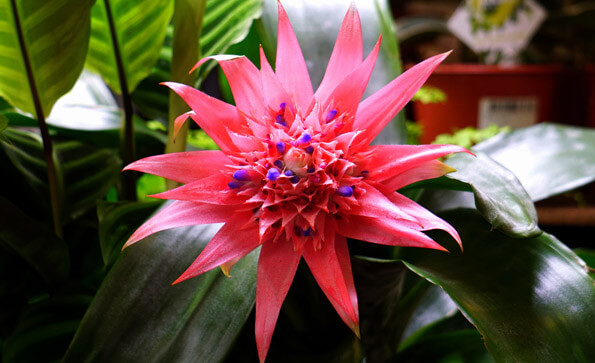
Leaving behind the rare and intricate beauty of the Lady Slipper Orchid, we now encounter a flower that brings a touch of the exotic indoors—known for its distinctive shape and vibrant color. Meet the Urn Plant, or Aechmea fasciata, a tropical flower that has become a favorite among plant enthusiasts for its unique look and surprising resilience.
The Urn Plant, a member of the bromeliad family, is recognizable by its rosette of silvery-green leaves that form a water-holding ‘urn’ at its center. From this natural reservoir, a pink, spiky inflorescence emerges, giving the plant a bold, architectural appearance. Native to the rainforests of Brazil, the Urn Plant is specially adapted to thrive in warm, humid environments, making it an ideal houseplant that can bring a slice of the tropics into homes across the world.
What makes the Urn Plant particularly fascinating is its adaptability. In the wild, it clings to trees as an epiphyte, absorbing moisture from the air and storing rainwater in its central cup to withstand dry spells. Its striking pink flower bracts can last for months, and though each plant blooms just once, its “pups”— creating small offsets that grow around the base—allowing it to propagate and passing on its beauty to a new generation.
Naked Man Orchid
From the striking elegance of the Urn Plant, our journey takes us to the sun-soaked landscapes of the Mediterranean, where an unusual flower adds a touch of humor to the list of the most beautiful and unique plants. This is the Naked Man Orchid, or Orchis italica, a flower that looks like it was made for fun, with each bloom resembling a tiny, playful figure.
The Naked Man Orchid stands out with clusters of vibrant pink and lavender flowers, each shaped like a miniature man with arms, legs, and even a cheeky smile. Growing wild in Italy, Greece, and surrounding regions, these orchids bring color to rocky meadows and open woodlands, where their distinctive shape never fails to surprise and delight those who stumble upon them.
Despite its lighthearted appearance, the Naked Man Orchid is a hardy species, well-suited to the dry, sunlit habitats of the Mediterranean. It has long been used in traditional medicine, with remedies derived from its tubers believed to soothe digestion and offer other health benefits.
Jade Vine
Amidst the vibrant greens of the Philippines’ tropical forests, a vine like no other climbs skyward, weaving its way through towering trees with both strength and grace. This is the Jade Vine, a marvel of the plant kingdom and one of nature’s most striking displays of color and form.
With stems up to 1 inch thick and lengths that can reach 60 feet, the Jade Vine twists through the forest canopy in pursuit of sunlight, creating a lush backdrop in its native habitat. But it’s the flower clusters—long chains of turquoise to emerald-green blooms—that truly captivate. Resembling clusters of grapes, these blossoms hang in elegant cascades, each flower shaped in a delicate crescent. The vine’s color is a rare phenomenon called copigmentation, where natural pigments blend to create a unique greenish-blue hue that stands out, even in dense forests.
The Jade Vine’s story of survival depends largely on an unusual partnership. Its blooms are adapted to attract nocturnal bats, which hang upside down to drink its nectar, unknowingly transferring pollen from flower to flower. Outside its native range, in greenhouses and botanical gardens, human hands often take on the role of the bats, hand-pollinating the flowers to encourage the vine to produce its large, melon-sized fruits. This careful cultivation has been honed at places like the Royal Botanic Gardens at Kew in England, where conservationists work tirelessly to preserve the Jade Vine’s seeds, especially as rainforest habitat declines.
Today, the Jade Vine faces growing threats from deforestation, as the rainforests of the Philippines shrink and the vine’s unique ecosystem becomes increasingly fragile. This extraordinary plant, with its captivating colors and intricate pollination dance, is more than just a beautiful sight—it’s a vivid reminder of the delicate connections within nature and the urgent need to protect them.
Chocolate Cosmos
After the breathtaking hues of the Jade Vine, we venture into the world of rich colors and scents with a flower that teases the senses in an entirely different way. Meet the Chocolate Cosmos, or Cosmos atrosanguineus, a bloom whose beauty is rivaled only by its irresistible aroma.
Discovered in the mid-1800s, the Chocolate Cosmos enchants with its deep red petals and velvety texture, but it’s the flower’s chocolate-like fragrance that truly captivates. On warm, sunny days, the surrounding air fills with a scent reminiscent of vanilla and chocolate, creating an experience that’s both visual and aromatic.
Native to Mexico, these flowers thrive as sun-lovers, happiest in warm, sheltered spots where they can soak up sunlight all day. In cooler climates, however, gardeners often bring the tubers indoors during winter, treating them as tender perennials that need a bit of extra care.
Reaching heights of 23 to 30 inches, the Chocolate Cosmos displays an upright yet spreading form, its daisy-like blooms standing 1 to 2 inches across. For those growing this delightful flower, the Chocolate Cosmos is more than just a garden addition—it’s an experience.
:max_bytes(150000):strip_icc()/GettyImages-1950073759-8b8affa7b2b344b89d7fbf56d1437b8a.jpg)
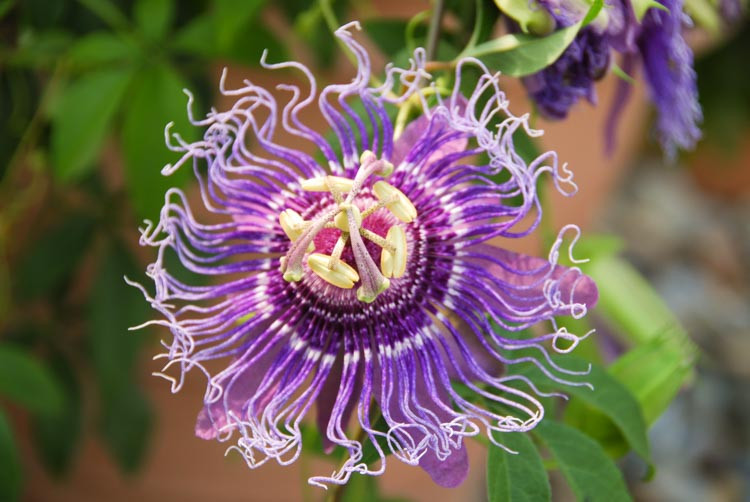
Passiflora incarnata
From the decadent allure of chocolate-scented blooms, we move into the exotic realm of intricate floral architecture. Enter the Passionflower—a plant whose complex structure and soothing properties make it both a visual wonder and a staple in natural medicine.
The Passionflower is native to the southeastern United States, where it sprawls across fields and woodlands. Its delicate vines adorned with showy blossoms seem to defy the ordinary. Each bloom is a masterpiece of design, with layers of frilly, crown-like petals in shades of lavender and white, encircling a unique central structure. This intricate arrangement not only attracts pollinators like bees and butterflies, but captivates anyone lucky enough to come across it.
But Passiflora incarnata is more than a botanical marvel; it has a long history as a medicinal plant, used traditionally to calm the nerves and promote restful sleep. Recent studies suggest it contains compounds that may support relaxation, highlighting its continued use in natural medicine today. For many, the Passionflower isn’t just a beautiful addition to the garden, it’s a plant with deep cultural and medicinal significance.
Parrot’s Beak
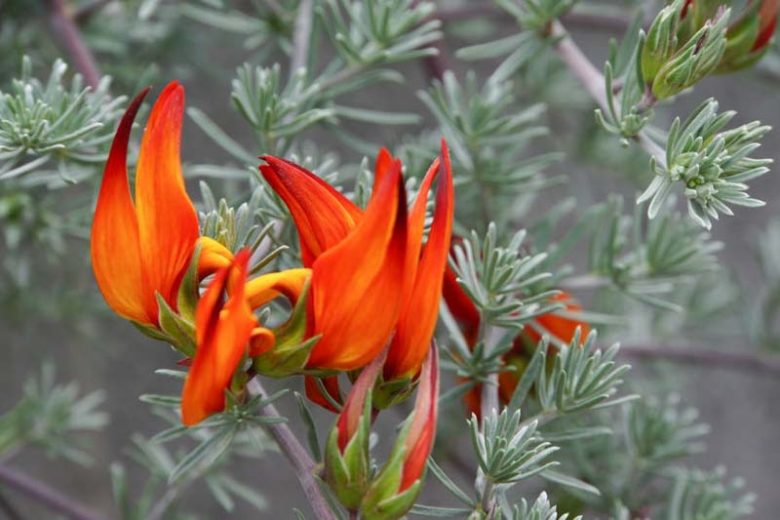
Prepare to be dazzled by the fiery display of the Parrot’s Beak, a plant that seems almost sculpted for drama and intrigue. Officially known as Lotus berthelotii, this botanical marvel captures attention with its vibrant orange-red to red blooms, each shaped like a parrot’s beak poised to call out from the lush green foliage.
Native to the Canary Islands, the Parrot’s Beak grows as a low-lying shrub, reaching about 8 inches in height, yet spreading outward with trailing branches covered in fine, silvery hairs. These dense, delicate leaflets only enhance the plant’s allure, adding a soft, shimmering texture that contrasts with its bold, beak-like flowers.
But this plant holds more than just visual appeal—it conceals a fascinating pollination mystery. Long believed to have been pollinated by sunbirds, which are now extinct in the Canary Islands, the Parrot’s Beak has adapted, relying on non-specialist birds like the Canary Islands chiffchaff. This shift in pollination, and the flower’s ability to prolong its bloom period, reveal its impressive adaptability in the face of environmental changes.
Despite its striking appearance, the Parrot’s Beak faces a precarious future in the wild, with habitat loss and climate change posing serious threats to its survival. However, as a popular ornamental plant, it finds a second life in gardens around the world, offering hope that we might yet preserve this unique flower for future generations.
Desert Pea
Imagine a flash of red amidst the vast, sun-scorched plains of Australia. This is the Desert Pea, a flower that seems to embody the land’s intensity and resilience with every vivid bloom.
With petals in a rich scarlet hue and a dark, central “eye” at its heart, the Desert Pea looks almost otherworldly against the stark Australian landscape. Native to the arid regions of central and northern Australia, it thrives in dry riverbeds and open plains, where few plants dare to grow. Its unusual shape and colors make it instantly recognizable, capturing the spirit of survival in one of the world’s harshest environments.
As the floral emblem of South Australia, the Desert Pea holds cultural significance as well, symbolizing resilience and strength. Indigenous communities have long revered its beauty, and its deep root system and drought tolerance showcase its remarkable adaptability. Although growing it outside its native range can be challenging, those who do are rewarded with a truly unique, iconic bloom that brings a slice of Australia’s wild beauty into their gardens.
Palicourea elata
After witnessing the Desert Pea’s struggle for survival in Australia’s arid landscapes, we move from the heat of the desert to the depths of the rainforests of Central and South America, where an eye-catching flower awaits.
Known as the ‘Hot Lips Plant,’ this vibrant bloom catches the eye with its bright, red ‘lips.’ However, these “lips” aren’t actually petals—they’re bracts, which are colorful leaves that protect the plant’s small, hidden flowers. This vivid display acts as a natural lure, drawing in hummingbirds and butterflies that help pollinate the plant.
Native to countries like Colombia, Costa Rica, and Ecuador, Palicourea elata thrives in humid, shaded rainforests, its bold colors standing out against the deep greens of the jungle. The plant’s unique appearance serves an important purpose. By attracting pollinators with its bright bracts, the Hot Lips Plant supports the intricate balance of rainforest life. Sadly, due to habitat loss, this species has become increasingly rare, making its conservation even more urgent.
Titan Arum
Our journey through the world’s most beautiful and unique flowers now leads us to the tropical rainforests of Sumatra, Indonesia, where one of the largest and most mysterious blooms on Earth resides—the Titan Arum, also known as the ‘Corpse Flower’ for reasons that quickly become clear.
Discovered in 1878 by Italian botanist Odoardo Beccari, the Titan Arum has fascinated botanists and plant lovers alike for over a century. Beccari’s discovery began with seeds sent to Florence, where one eventually flowered at the Royal Botanic Gardens in Kew. Today, these towering plants are grown in greenhouses worldwide, an achievement that showcases both our curiosity and our determination to understand nature.
The Titan Arum’s life cycle is truly unique. For years, it alternates between growing a single leaf and resting, storing up energy before it can produce its famous flower. When it finally reaches the flowering stage—usually every 4 to 5 years—the plant opens up a large, petal-like structure to reveal an enormous bloom that only lasts a couple of days. Like the African Starfish Flower and Rafflesia arnoldii we saw earlier, the Titan Arum releases a strong smell, similar to rotting flesh, which helps attract pollinators like flies and beetles.
If pollination is successful, the Titan Arum will produce up to 400 small fruits that change from golden to red as they ripen. Although these fruits are toxic to humans, they provide a vital food source for the Rhinoceros Hornbill, a bird native to the region. The sheer energy required for this fruiting process means the Titan Arum will take several more years to bloom again, making each flowering event a rare spectacle.
Holding the Guinness World Record for the tallest bloom—reaching over 10 feet—the Titan Arum stands as a true giant in the plant world. Today, these botanical marvels can be found in conservatories and botanical gardens around the globe, where visitors gather to witness one of nature’s most astonishing performances
Camellia Reticulata
Arriving at the final bloom on our journey through the world’s most beautiful and unique flowers, we find ourselves in the presence of a true classic—the bold and graceful Camellia Reticulata. Revered for centuries in its native China, this final bloom on our list has earned its place with its striking, timeless beauty and rich cultural significance.
The Camellia Reticulata is renowned for its large, ruffled petals in shades of pink, red, and sometimes even white. Each bloom opens like a delicate, layered rose, with a lush texture that has made it a favorite in ornamental gardens. Growing on small trees or shrubs, these flowers can reach up to six inches across, their vibrant colors creating a stunning contrast against deep green, glossy foliage.
More than just admired for its beauty, this camellia holds a special place in Chinese culture, symbolizing luck and prosperity. Historically cultivated in the gardens of Chinese emperors, it was cherished for both its elegance and resilience. Today, the Camellia Reticulata continues to thrive in gardens worldwide, adding a touch of timeless charm to mild landscapes.
Despite its impressive blooms, this camellia is relatively low-maintenance, needing only well-drained soil and partial shade to flourish.
Conclusion
Our journey through the world’s most beautiful and unique flowers comes to a close, but the wonder they inspire lives on. From the mysterious scent of the Corpse Lily to the captivating elegance of the Camellia Reticulata, each flower has shown us the surprising, resilient, and diverse forms life can take. Which flower amazed you the most? Let us know in the comments section!