
Top 25 Most Rare and Exotic Fruits in the World
Welcome back to Stellar Eureka, where we uncover the marvels of nature and technology. Today, we’re embarking on a global tour to discover 25 of the world’s most unique fruits in the world. Get ready to expand your palate and your mind!
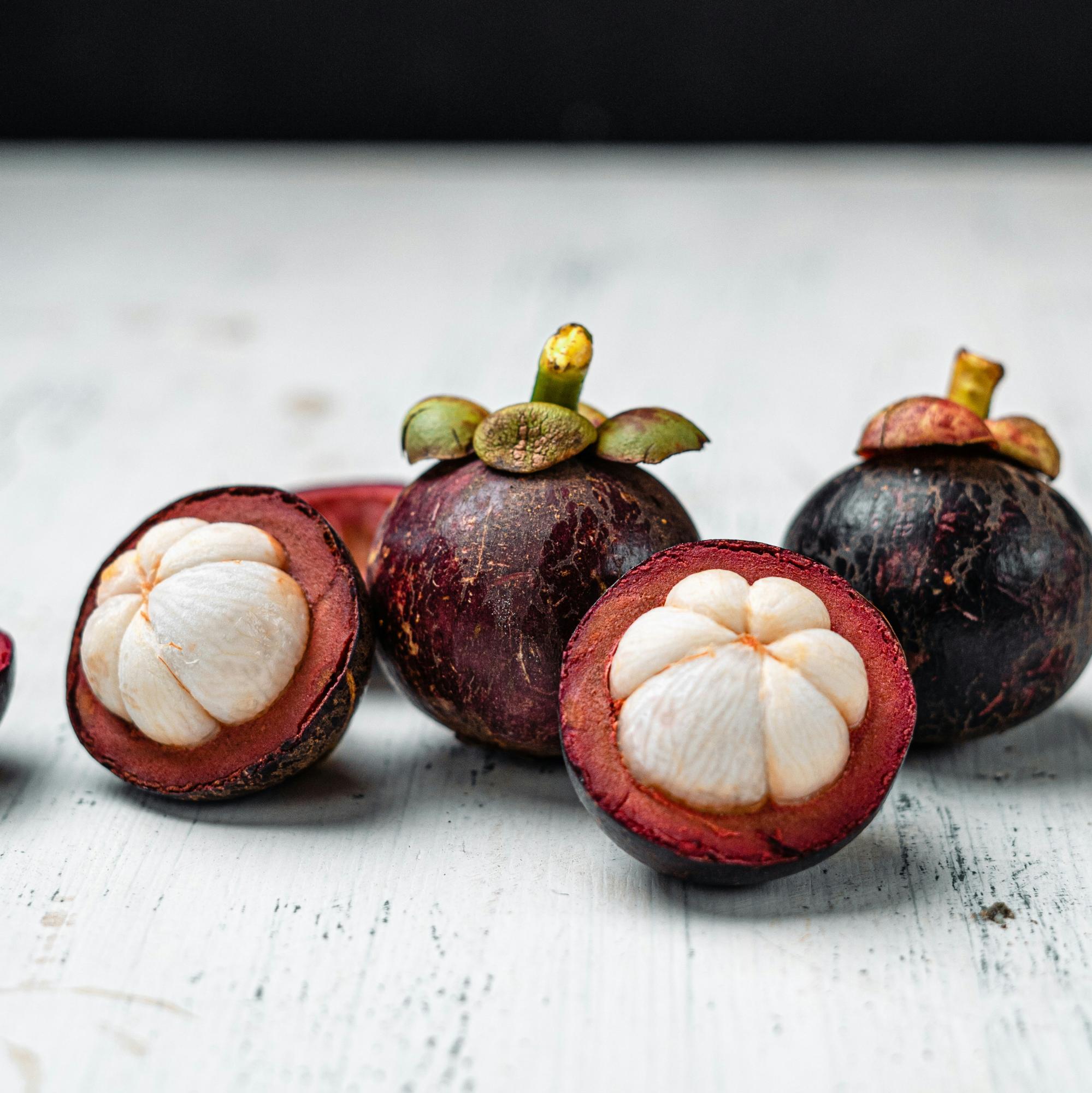
Mangosteen
From the lush tropics of Southeast Asia, the mangosteen is a gem among fruits, often revered as the ‘queen.’ With its thick, purple rind encasing snow-white segments, the mangosteen offers a burst of sweet and tangy flavors with a delicate, juicy texture that’s second to none. This slow-growing tree bears fruit that’s not only a treat to the taste buds but also a marvel of nature.
The mangosteen’s journey from tree to table is a testament to its desirability. It takes a seedling up to 15 years to bear its first fruits, but the wait is worthwhile. In a good season, a single tree can produce over a thousand fruits, each one a perfect orb of deliciousness. The fruit’s slightly astringent flavor and medicinal properties have made it a staple in traditional medicine, and its recent introduction to Western markets has been met with enthusiasm by fruit connoisseurs seeking its unique taste.
Despite its royal status, the mangosteen was once elusive in the United States, with importation banned until 2007 due to concerns over the Asian fruit fly. Now, irradiated to ensure safety, the mangosteen has found its way into the hearts and markets of America, still a rare find but treasured by those who know its worth.
Gac (Baby Jackfruit)
We stay in the greens realms of Southeast Asia, for our next unique fruit, the vibrant Gac also known as Baby Jackfruit. A local secret that’s just starting to get global attention. Nicknamed the ‘fruit from heaven,’ Gac might look a bit intimidating with its spiky skin, but inside, it’s packed with good stuff that can really boost your health.
Gac doesn’t grow on trees like apples or oranges; it climbs up, showing off its bright colors only once a year. When it’s time to pick them, the fruit’s deep orange color tells you it’s full of nutrients, like beta-carotene, which is great for your eyes, and lycopene, which is good for your heart.
People in Southeast Asia look forward to Gac season because it’s not just about finding the fruit in markets; it’s a big part of their celebrations, especially during the Vietnamese New Year. They believe the fruit brings good luck because of its red color. Taste-wise, Gac is pretty mild, kind of like if you mixed an avocado with a tomato, but it’s usually mixed into foods rather than eaten on its own.
One popular dish is xôi gấc, where the fruit’s seeds and the soft part around them are cooked with sticky rice, turning the rice a bright red color. It’s as pretty as it is tasty. Gac’s also known for its health benefits, and has been used in traditional medicine to help with everything from seeing better to keeping skin smooth.
Now, as more people around the world are looking for natural ways to stay healthy, Gac is popping up far from its home. It’s being turned into juices and supplements, so even if you can’t find the actual fruit, you can still get some of its ‘superfruit’ benefits. Gac might not be as well-known as some other fruits yet, but it’s definitely worth a try for anyone interested in keeping healthy.

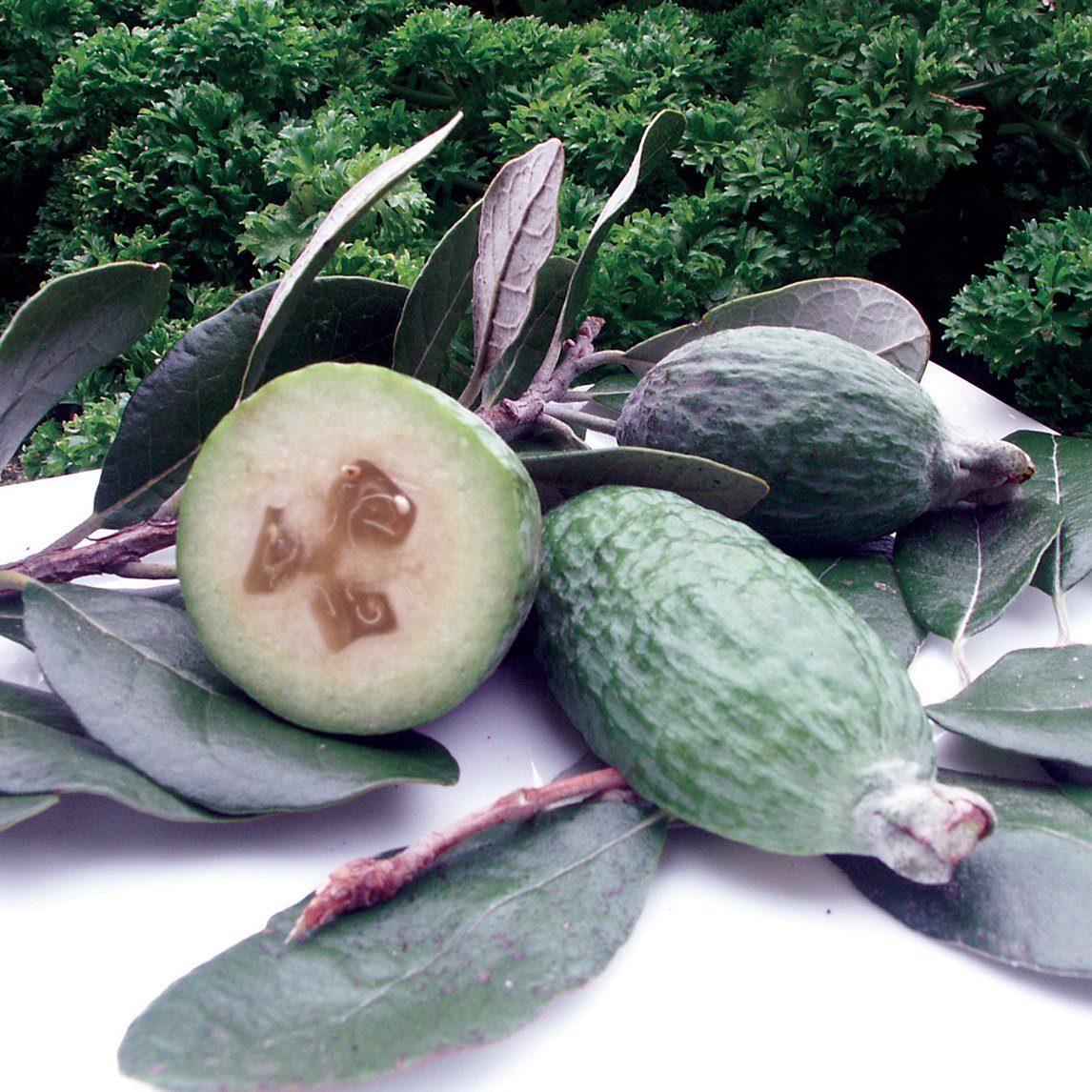
Feijoa (Pineapple Guava)
Native to the highlands of southern Brazil, you might stumble upon the feijoa, affectionately known as the ‘pineapple guava.’ This small, elliptical wonder is quietly making waves in culinary circles, far from its South American roots.
The feijoa stands out in the fruit aisle. It’s a connoisseur’s choice, a hidden gem in the realm of taste. Imagine a concoction that marries the tropical zest of pineapple with the lush sweetness of strawberries. That’s the feijoa for you—a fruit that dances on the palate with a flavor that’s entirely its own.
Unlike fruits that are plucked, the feijoa humbly falls to the earth when it’s at its peak, a subtle invitation to indulge in its ripe splendor. Crack open its jade-like shell, and you’re greeted by a fragrant, creamy interior, speckled with seeds that pop delightfully in each bite.
In New Zealand, the feijoa has become something of a cultural icon. The advent of feijoa season is met with a fervor that sweeps across the country. These fruits, packed with vitamin C, take center stage at community feasts and market stalls. They’re as versatile as they are delicious—equally delightful whether savored fresh or blended into a zesty smoothie.
The feijoa may not boast the widespread acclaim of an apple or the tropical allure of a mango, but it has carved out a niche in the hearts of those lucky enough to try it. And with the advent of feijoa-infused confections and drinks, this once-secret delight is stepping into the limelight, ready to tantalize new taste buds across the globe.
Dragon Fruit (White Pitaya)
We dive now into the exotic world of the White Pitaya, also known as Dragon Fruit. This fruit is not just a feast for the eyes with its vibrant pink skin and green scales, but it’s also a treasure trove of nutrients.
Imagine you’re wandering through a tropical paradise, and you stumble upon a fruit that looks like it’s straight out of a fantasy novel. That’s the White Pitaya for you! It’s like Mother Nature decided to have a little fun and created a fruit that’s as visually stunning as it is delicious.
The inside is like a starry night sky. The flesh is white with tiny black seeds scattered throughout, giving it an out-of-this-world appearance. It’s not just about looks, though; this fruit packs a punch of sweetness with a flavor that’s a cross between a kiwi and a pear.
The White Pitaya is not just a pretty face. It’s loaded with fiber, antioxidants, and vitamins. Talk about a superfruit! It’s like nature’s candy that’s actually good for you.
And here’s a fun fact for you: the White Pitaya is actually a type of cactus! That’s right, it’s the belle of the cactus ball, showing off its gorgeous flowers that bloom at night. These flowers are not only beautiful but they’re also quite the night owls, blooming under the moonlight.

Salak
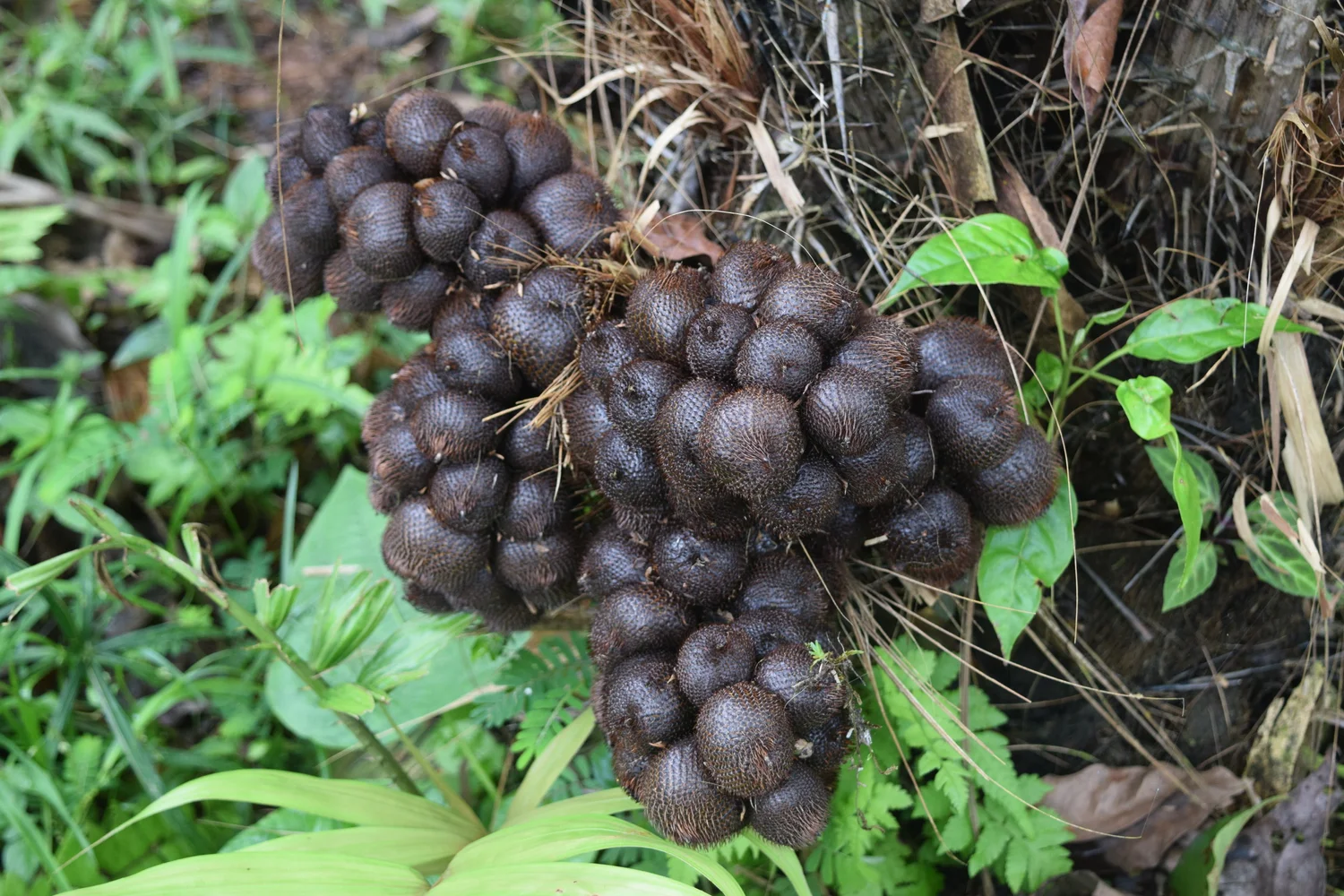
Often found in the bustling local markets of Thailand, Malaysia, and Indonesia. The Salak Palm is a unique species, a stemless clumping palm with long, erect leaves that can reach up to 6 meters in height. This fruit, with its distinct reddish-brown, scaly exterior, is a prized delicacy.
This palm is not just a wild plant; it’s cultivated for its delectable fruit, which is highly esteemed in its native regions.
When you encounter a Salak fruit, you’re met with an acid kick that tantalizes the taste buds. It’s a fruit that’s slightly crisp, offering a delicious blend of acids and sugars with an apple-like flavor that’s exceptionally firm and crisp for a tropical fruit. When fully ripe, the Salak is quite sweet, but the unripe fruit can be sour and astringent, containing a bit of tannic acid.
The Salak fruit is not just for eating raw; in Indonesia, it’s transformed into candied delights, pickled treats, and even used in ‘rujak,’ a spicy salad of unripe fruits. The fruit itself is about 6-8 cm in diameter, with an asymmetric egg-shape that’s as intriguing as its taste.
Beyond its edible uses, the Salak Palm serves as a natural barrier. A closely-planted row of these palms forms an impregnable hedge, and the very spiny leaves are cut to construct fences.
Durian
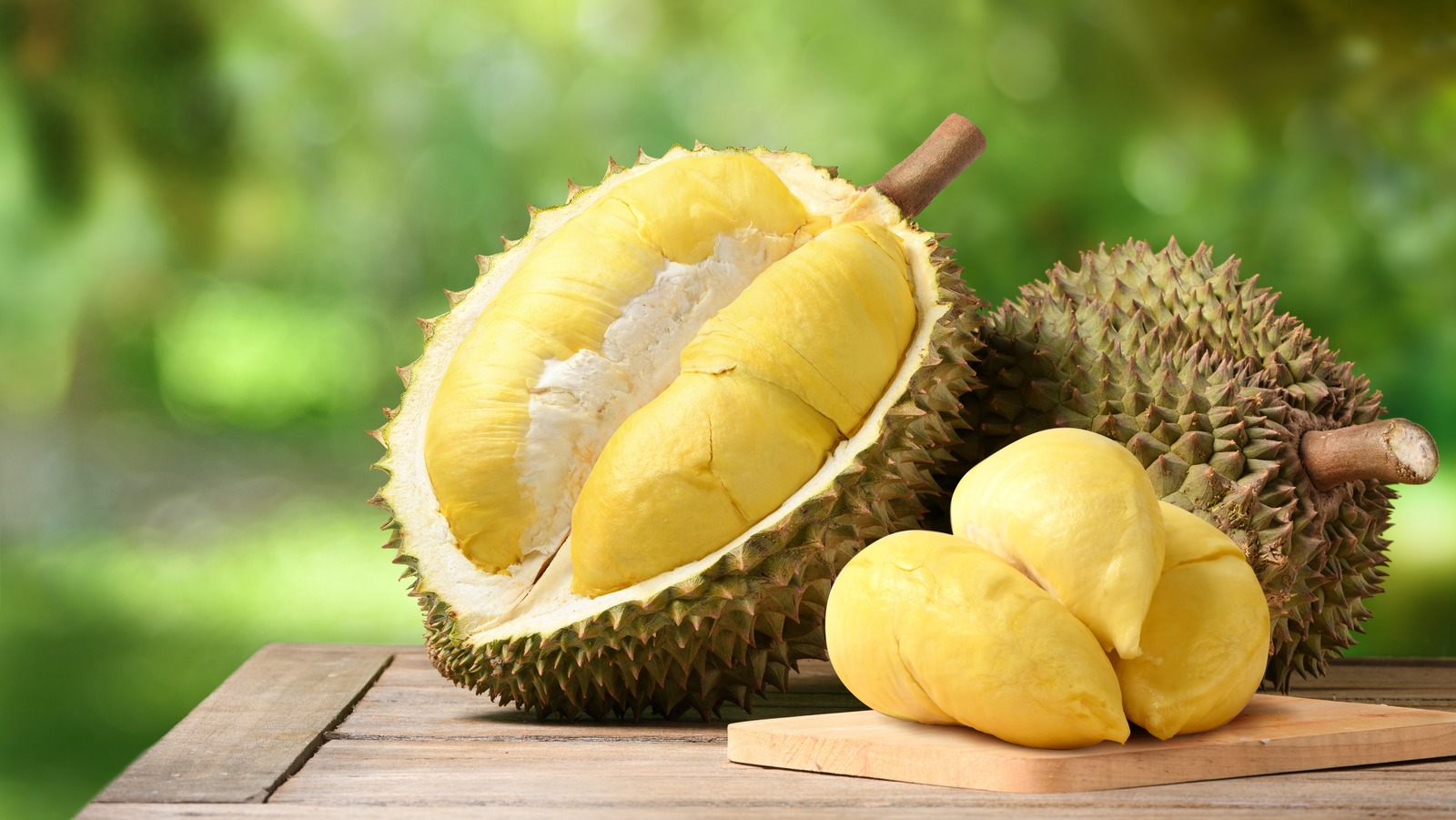
In the tropical climates of Indonesia, the Philippines, Malaysia, and southern Thailand, the Durian reigns as the undisputed ‘king of fruits.’ This spiky behemoth is as famous for its overpowering scent as it is for its rich, indulgent flavor, akin to a sweet, creamy custard.
The fruit itself is a heavyweight champion in the world of produce, tipping the scales at 6 to 8 inches in diameter. Its formidable husk, covered in thorny spikes, serves as a natural fortress, safeguarding the luscious, pale-yellow flesh within, segmented into chambers that nestle seeds as substantial as chestnuts.
But the durian is more than just a treat for the taste buds; it’s a culinary icon. Its flesh, which can be enjoyed at various stages of ripeness, is a staple in both sweet and savory dishes, infusing them with its complex flavor tapestry. Even the seeds don’t go to waste; roasted, they become a delightful, nutty snack.
The durian’s infamy is matched by its fragrance. Its robust, lingering aroma has drawn comparisons to dirty gym socks, rotten egg, cut onions, manure, and roadkill. Some describe the flesh as tasting similar, but fans of the fruit describe it as having notes of almond and with a custard-like texture. Its fragrance has lead to its exclusion from certain public spaces. Yet, this distinctive smell is an irresistible draw for the local fauna, making the durian a key species in spreading seeds throughout its habitat.
Despite its polarizing nature, the durian has a loyal following, standing as a bold emblem of nature’s wild and wonderful flavors.
Junglesop
We venture deep into the heart of Central Africa’s lush rainforests to discover the junglesop, a fruit shrouded in the mystique of the wild lands it hails from. This behemoth of the fruit world, akin to the custard apple, is a marvel, with some growing as large as a toddler—earning it the title of the world’s second-largest fruit.
Imagine a fruit so diverse in flavor that each bite takes you on a journey from the creamy sweetness of a banana to the refreshing tang of citrus. That’s the junglesop for you—a symphony of tastes wrapped in a single, magnificent package.
The junglesop thrives in the verdant expanses of countries like the Democratic Republic of the Congo and Ghana, where it’s cradled by the rainforest’s embrace. It’s a tree that’s not just surviving but flourishing along the banks of rivers, where the soil is rich and life abounds.
But the junglesop is not just a giant in size; it’s a giant in taste. Beneath its rugged, bark-like exterior lies a creamy, fibrous flesh that’s a treasure trove of tropical flavors. Each fruit is unique, making every tasting an exploration of its complex palate.
While the junglesop’s roots are firmly in Africa, attempts to grow it in new soils have sparked curiosity worldwide. From the volcanic soils of Hawaii to the tropical climes of Malaysia and even down under in Australia, this fruit’s been a tough nut to crack when it comes to growing it.
The junglesop keeps tempting fruit lovers and farming pros all the same. It’s tough to find beyond its home turf, which just makes folks want it more – like a rare treasure for anyone chasing after those wild, out-of-the-ordinary tastes.
Rambutan
Southeast Asia consistently dazzles us with its rich fruit diversity, and the rambutan is no exception. This playfully named fruit isn’t just a feast for the eyes but a delicious tropical treat. Derived from the Malay word for hair, “rambut,” the rambutan is produced by a medium-sized tropical tree.
Its fruit sports a playful, hairy exterior, distinguishing it from its close relatives, the lychee, longan, and pulasan. Beyond its captivating appearance, the rambutan offers a burst of sweet, mildly acidic flavor, reminiscent of grapes.
The rambutan tree is a versatile grower, reaching heights of up to 24 meters, with its evergreen leaves fluttering in the tropical breeze. The fruit itself is a round to oval drupe, encased in a leathery skin that’s covered in fleshy spines, giving it a somewhat alien yet endearing look. These spines play a role in the fruit’s transpiration, affecting its quality and taste.
The rambutan’s history is as rich as its flavor; it was introduced to East Africa by Arab traders during the 13th to 15th centuries and later spread to tropical Americas by the Dutch in the 19th century. Today, it’s a beloved fruit in its native Southeast Asia, often found in clusters hanging from the trees, waiting to be plucked and enjoyed.
Inside, the rambutan’s flesh is a translucent, whitish or pale pink delight, with a single glossy brown seed nestled at its heart. The fruit is not just a treat to eat, but also a nutritional powerhouse, providing hydration and a modest amount of manganese when canned.

Buddha’s Hand
In the realm of the extraordinary, the Buddha’s hand stands apart—a citrus curiosity that enchants with its otherworldly form. This fruit, with its serpentine fingers unfurling like a celestial gesture, is steeped in symbolism and intrigue.
The Buddha’s hand, or fingered citron, is a dazzling display of nature’s playful side. With no juicy interior or seeds to speak of, it’s all rind—yet this is no ordinary rind. It exudes a sweet, lemony aroma that’s more floral than fruit, a scent that has perfumed the homes and temples of Asia for centuries.
This citron variety, hailing from the gardens of India or China, is a botanical marvel. It’s as if the fruit has captured a moment of divine blessing, its fingers resembling those of a peaceful Buddha statue. In the kitchen, the Buddha’s hand is a versatile muse. Its zest imparts a delicate citrus essence to dishes and cocktails, while the pith, surprisingly non-bitter, can be candied or used in cooking.
Horned Melon (Kiwano)
Explore the depths of the African savanna, and you’ll encounter a fruit that defies imagination—the Horned Melon, also known as the Kiwano. Cloaked in vibrant orange skin and adorned with horn-like protrusions, the Kiwano is a true marvel, both in appearance and taste. With its vibrant orange skin, spiked with horn-like protrusions, the Kiwano is a visual spectacle and a culinary surprise.
Native to the Kalahari Desert, the Kiwano is a testament to nature’s creativity. Its bright, jelly-like interior, filled with a bounty of cucumber-like seeds, is a refreshing splash of color in the arid landscape. The taste? An eclectic mix of banana, lime, and cucumber, creating a tropical flavor that’s as unique as the fruit’s appearance.
The Horned Melon is not just a wild fruit; it’s a survivor, thriving where few crops can. Its hardy nature makes it a symbol of resilience and has earned it a place in the gardens and dishes of those who live alongside it. In the culinary world, the Kiwano’s versatility shines. Scooped out of its spiky shell, the fruit’s emerald-green flesh is a stunning addition to exotic salads, a zesty complement to summery drinks, or a surprising twist in sweet desserts.
The fruit’s high water content also makes it a hydrating treat, perfect for replenishing after a day under the sun.
In recent years, the Kiwano has begun to make waves beyond its African roots, intriguing chefs and foodies around the globe. Its otherworldly appearance and refreshing taste have captured the imagination of those seeking the next culinary adventure.
Ackee
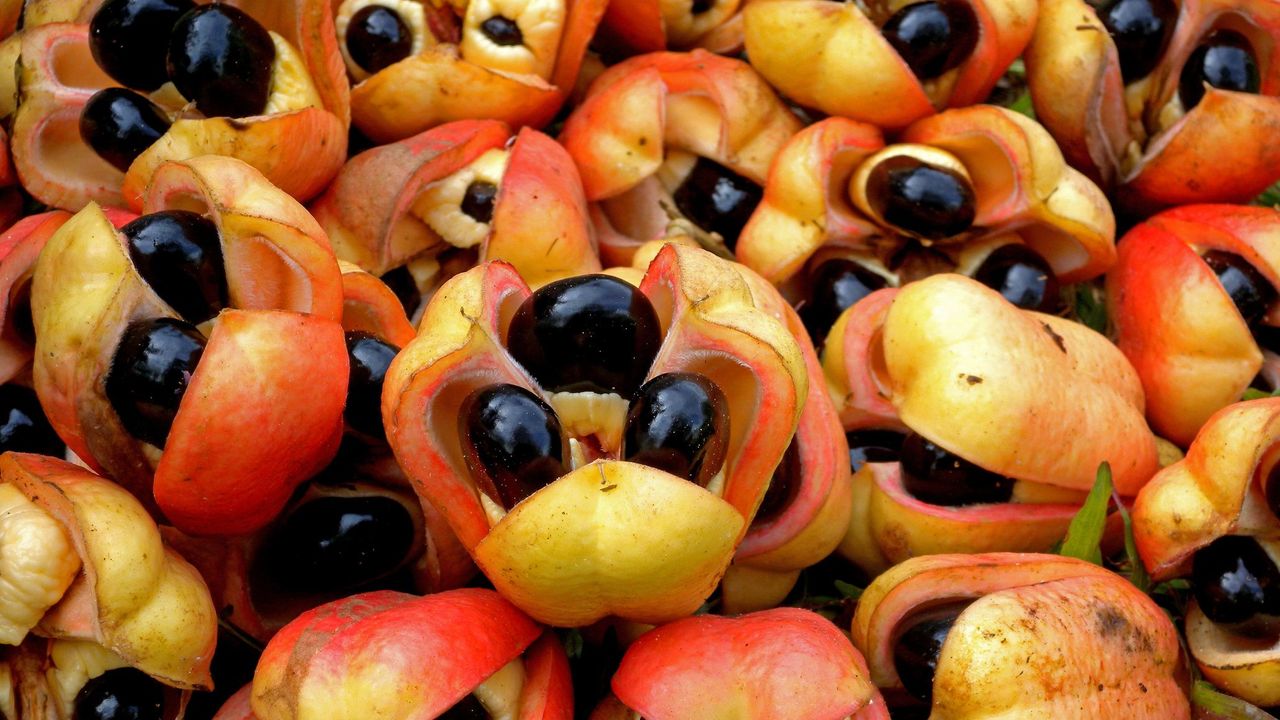
Step into the bustling markets of Jamaica, and you’ll be greeted by the ackee, the nation’s prized fruit. A fascinating fusion of fruit and vegetable in its culinary role, the ackee is a true Jamaican treasure.
Ackee, or Blighia sapida, is a member of the Sapindaceae family, which includes other exotic fruits like lychee and longan. It’s a fruit that’s steeped in history and culture, having been brought from West Africa to Jamaica, where it has become a staple in the local cuisine.
The ackee tree is a tropical evergreen that can grow up to 30 feet tall, adorned with large leaves and fragrant green flowers. But it’s the fruit that’s the real star. When ripe, the ackee’s red and yellow hues signal it’s ready to be transformed into a variety of dishes, the most famous being ackee and saltfish—a dish that’s synonymous with Jamaican identity.
However, the ackee is as notorious as it is beloved. The fruit must be fully ripe and properly prepared to be safe for consumption, as the unripened ackee contains toxins that can lead to “Jamaican vomiting sickness,” a condition that can be severe and even fatal. This duality of the ackee—both a delicious ingredient and a potential danger—adds to its mystique and allure.
Despite its risks, the ackee remains a celebrated component of Jamaican culture. Its creamy texture and unique flavor, which resembles that of scrambled eggs when cooked, make it a versatile ingredient in the Jamaican culinary repertoire. It’s a fruit that embodies the spirit of Jamaica—a blend of danger, delight, and rich tradition.
Cherimoya
In the sun-drenched valleys of South America, the cherimoya whispers tales of ancient Incan delicacies. This heart-shaped fruit, with its green, dragon-scale skin, might seem like a mythical creation, but it’s as real as the sweet, creamy flesh that lies beneath its surface. Mark Twain once hailed the cherimoya as “the most delicious fruit known to men,” and it’s easy to see why once you’ve tasted its custard-like interior.
The cherimoya tree, Annona cherimola, is a modest grower, preferring the altitudes and climates where cool mists enshroud the mountainsides. Its fruit is a treasure trove of flavor, with notes of banana, pineapple, and strawberry mingling in each succulent bite. The flesh is studded with large, glossy seeds, hidden within the segmented core, a reminder of the fruit’s natural heritage.
Fans of Cherimoya relish it in its purest form, cooled and scooped directly from its skin, indulging in the intricate blend of exotic tastes. Yet, its culinary potential stretches far beyond a simple fruit bowl; whether blended into a creamy smoothie or churned into a rich ice cream, the cherimoya’s natural sweetness elevates any sweet creation it touches.
:max_bytes(150000):strip_icc()/GettyImages-1194272165-51e7420e52c946adaf076c720650345f.jpg)
Jackfruit
The jackfruit tree, towers with its glossy green foliage, stretching up to 20 meters high, a sentinel in the landscape of Bangladesh, India, Thailand, and the Philippines.
The fruit itself is a marvel of nature, the largest tree-borne fruit in the world, with some weighing as much as 40 pounds. Its exterior is a bumpy rind, protecting the sweetly acid but subtly flavored pulp that encases the seeds. These seeds, often cooked and eaten, are just one of the many ways jackfruit is enjoyed.
In its unripe state, the greenish jackfruit is treated as a vegetable, a staple in curries and stews. When ripened to a golden brown, it’s eaten fresh, its fibrous bulbs offering a taste that’s a blend of banana, pineapple, and mango. This versatility extends to modern kitchens, where jackfruit has found a new role as a plant-based meat substitute, its texture mimicking that of pulled pork or chicken.
This fruit is a staple food crop in its native lands and is increasingly making its way across the globe, canned or processed, bringing a taste of the tropics to those far from its native soil. The jackfruit is a symbol of abundance and adaptability, a fruit that’s as much a part of the cultural fabric as it is a culinary delight.

Miracle Fruit
We dive now into the fascinating world of the miracle fruit. This evergreen shrub, hailing from the tropical West Africa, is not your average berry. It’s a taste-bud-twisting marvel that turns sour flavors into sweet delights!
Imagine popping a piece of this fruit into your mouth and then biting into a lemon. Instead of puckering up, you’re met with a burst of sweetness as if you’ve just had a spoonful of sugar. This magical transformation is thanks to a glycoprotein named miraculin. Discovered by Japanese researcher Kenzo Kurihara in 1968, miraculin is not sweet by itself, but it plays a trick on your taste buds, making acidic foods taste sweet for up to two hours!
But the miracle fruit is not just a party trick for your palate. It has been considered as a potential aid for chemotherapy patients to help with taste changes experienced during treatment. Although it’s not yet a medically approved treatment, the potential is tantalizing.
In the 1970s, there was a buzz in the United States to commercialize miraculin as a sugar substitute for diabetics and those watching their waistlines. However, the U.S. Food and Drug Administration (FDA) had other plans, classifying it as a food additive that needed more safety testing. This put a pause on the miracle fruit’s sweet dreams of commercial success.
Despite the regulatory roadblocks in the US and EU, the miracle fruit is a legal purchase in many places, and you can find it in powdered form or as whole fruits. It’s a novelty that’s sure to leave a sweet impression on anyone’s taste adventure.
Monstera Deliciosa
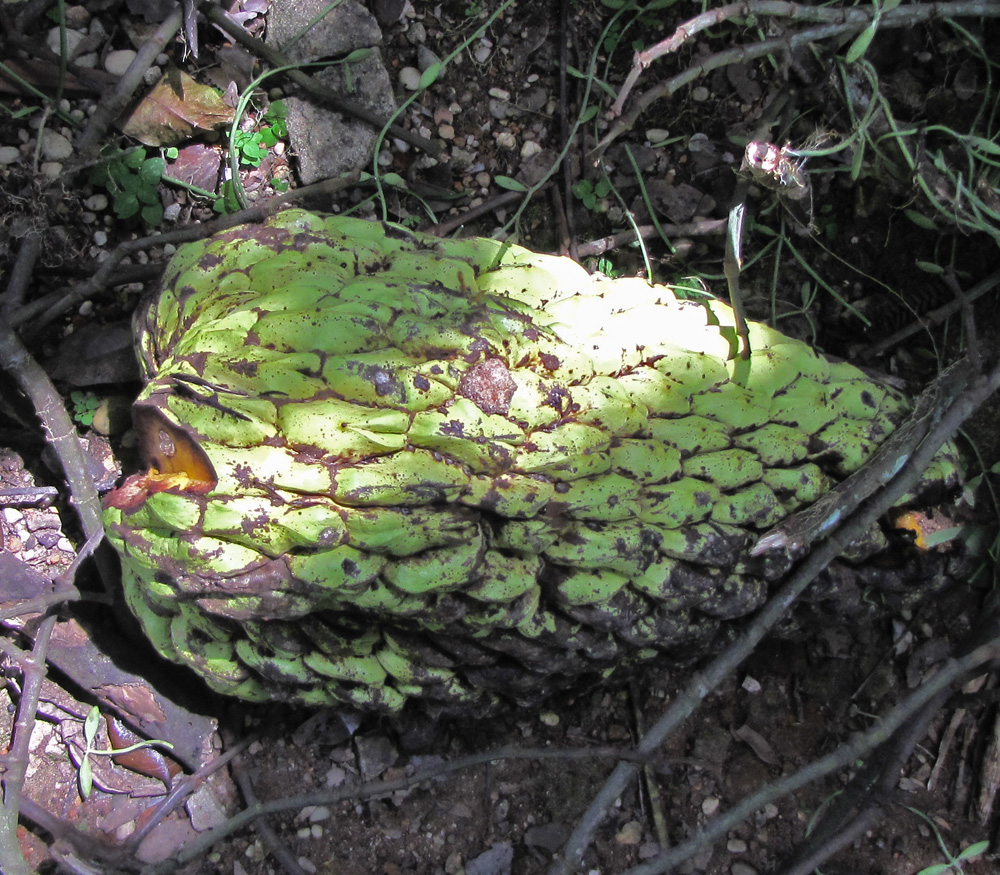
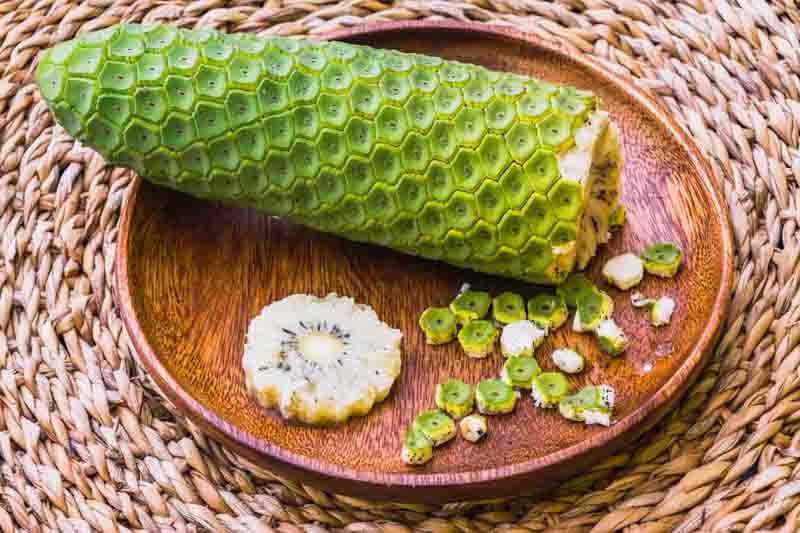
Imagine a fruit that’s a mix of the most beloved tropical flavors, that’s what the Monstera Deliciosa tastes like. Often dubbed the ‘fruit salad plant’, this exotic delicacy offers a taste that’s a mixture of banana, pineapple, and a hint of mango and passion fruit. Some even swear they catch the subtle sweetness of strawberries in every bite. It’s like a tropical vacation for your taste buds!
But don’t let its luscious flavors fool you; this fruit plays hard to get. The Monstera Deliciosa demands patience, as it’s only edible when fully ripe. If you jump the gun and bite into it too soon, you’ll be met with a mouthful of regret. The unripe fruit contains calcium oxalate crystals, which can cause a burning sensation in your mouth. So, how do you know when it’s ripe? Nature has a built-in timer—when the green scales start to lift, revealing the creamy flesh beneath, it’s showtime!
Now, growing this fruit is a bit complicated. Under the right conditions, the Monstera plant can flourish and bear fruit, but it’s a rare sight indoors. These plants are the divas of the plant world, thriving in the limelight of hot, humid climates like their native tropical rainforests from southern Mexico down to Panama.
Sapodilla
The sapodilla, a fruit that whispers the secrets of ancient civilizations while tantalizing your taste buds with its sweet, pear-like essence. Picture this: a fruit so cherished that it’s not just eaten, but also revered, its very sap once a cornerstone of the chewing-gum industry, chewed by the mighty Aztecs themselves.
The sapodilla tree, known scientifically as Manilkara zapota, is a tropical evergreen that stands as a testament to nature’s patience. It grows at a leisurely pace, its wood as hard and enduring as the Mayan ruins that still showcase sapodilla’s grandeur through elaborately carved lintels, surviving a millennium.
Now, let’s talk about the star of the show – the sapodilla fruit. It’s a rustic treasure, with a rough, rusty brown exterior that belies the luscious sweetness within. Imagine biting into the rich blend of pears and brown sugar, a flavor so divine that it’s often savored fresh in the tropical and subtropical realms where it thrives.
But beware, for the sapodilla is a fruit of two faces. When immature, its flesh is an unpalatable fortress of tannin and milky latex. Only when it’s ripe does it transform into a juicy delight, its flesh turning into a translucent, yellowish-brown haven for two to five shiny black seeds, each the size of a flattened bean.
Soursop
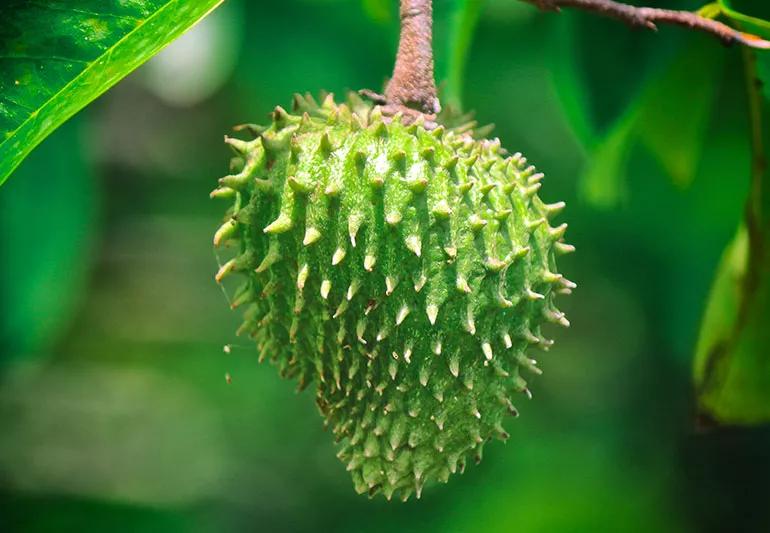
Embark on a culinary odyssey with the Soursop, a treasure trove of tropical tangs that’s as mysterious as it is mouthwatering! This green gem, also known as Graviola, is no ordinary fruit; it’s a wild concoction of flavors that might just make your taste buds do a double-take. With a taste that’s a curious cocktail of citrus, strawberry, and banana, it’s like a fruit fiesta in every bite.
But beware, this fruit is as prickly in personality as it is in appearance. The Soursop is a tease, only revealing its succulent secrets when it’s perfectly ripe. Try to indulge too early, and you’ll be greeted with a tartness that’ll pucker your mouth. Patience is key; when the spiky exterior yields to gentle pressure, it’s time to dive into its creamy, fibrous flesh.
Soursop is a versatile ingredient. It’s the secret zing in smoothies, the unexpected twist in desserts, and the tropical touch in savory dishes. And for those with a flair for the exotic, a dash of Soursop in your cocktail can whisk you away to sandy beaches and turquoise waters with just one sip.
Star Apple
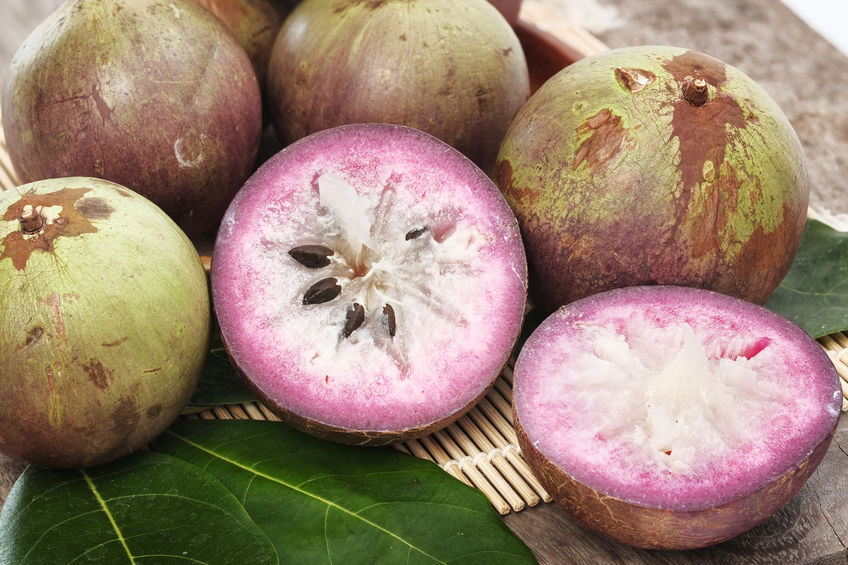
Dive into the world of the Star Apple, a fruit that’s as mysterious as it is delightful. Native to the tropical alleys of the West Indies and Central America, this fruit, known scientifically as Chrysophyllum cainito, is a hidden gem in the sapodilla family. It’s not just any ordinary fruit; it’s a star in its own right, with a star-shaped core that’s bound to catch your eye.
The Star Apple’s journey from tree to table is a spectacle of nature. Growing on trees that reach up to 50 feet tall, adorned with purplish-white flowers, this fruit is a sight to behold. Its skin, smooth to the touch, comes in a palette of colors ranging from white to a deep, mesmerizing purple. But it’s not just about looks; the flesh inside is sweet, juicy, and utterly irresistible.
Now, let’s talk about the taste. Imagine biting into a fruit that’s a blend of apple, lychee, and persimmon, with a hint of citrusy undertones. That’s the Star Apple for you. It’s a fruit that doesn’t just satisfy your sweet tooth but also takes you on a flavor journey that’s both exotic and familiar.
How do you know when it’s ready to be devoured? When the fruit gives slightly to a gentle squeeze, and the star pattern inside is perfectly defined.
Ugli Fruit
In the realm of the citrus family, there lurks an unsung hero with a rather unflattering name – the Ugli fruit. But don’t be fooled by its name, for this Jamaican tangelo is a true treasure trove of flavors. Picture this: a fruit that’s like the lovechild of a tangerine, an orange, and a grapefruit, yet it defies the expectations set by its lineage with a taste that’s uniquely its own.
The Ugli fruit’s appearance is a testament to the adage “beauty lies within.” Its rough, wrinkled, and sometimes pockmarked skin might not win any beauty contests, but it’s what’s on the inside that counts. Beneath that bumpy exterior lies a vibrant, juicy flesh that’s bursting with a sweet and tangy flavor, with just the right hint of bitterness to keep things interesting.
Now, let’s talk about the culinary escapades you can embark on with the Ugli fruit. It’s not just a fruit to be eaten out of hand, though it’s certainly delightful that way. Its juicy segments can add a zesty punch to salads, giving them a refreshing twist. But why stop there? The Ugli fruit’s bold flavor profile makes it a perfect candidate for marmalades and preserves, where its sweetness and tang can be preserved for posterity.
For the mixologists out there, the Ugli fruit is a cocktail’s best friend. Its juice, when mingled with a splash of spirits, can create concoctions that are the life of the party. Imagine a sunny beach in Jamaica, the waves lapping at your feet, and in your hand, a glass that holds the essence of the island’s vibrant spirit – that’s the magic of an Ugli fruit cocktail.
And let’s not overlook the health benefits. This fruit is not just about tantalizing your taste buds; it’s packed with vitamin C and other nutrients, making it a guilt-free indulgence that your body will thank you for.
White Sapote
The White Sapote is a hidden gem among fruits, with a lineage that traces back to the highlands of central Mexico and Central America. This fruit, with its creamy, sweet flesh, is a drupe that comes dressed in a thin, greenish-yellow to golden yellow peel. It’s not just any fruit; it’s a symphony of flavors wrapped in a package that weighs between a modest 2.5 ounces to a hefty 24.7 ounces.
Now, let’s talk about the varieties. There’s a whole spectrum of them, with names that evoke curiosity and wonder—’Reinikie’, ‘Dade’, ‘Pike’, ‘Suebelle’, ‘Smathers’, ‘Homestead’, and ‘Golden’. Each has its own story, its own flavor profile, and its own place in the White Sapote hall of fame.
Growing these trees is an adventure in itself. They thrive in subtropical climates, basking in the glory of a distinct cool or dry period. If you’re patient enough, seedlings might begin to bear fruit in 7 to 8 years—a true test of a gardener’s patience.
The White Sapote is not just for eating fresh, though that’s a delight in itself. It’s a versatile player in the culinary world, finding its way into milkshakes and desserts, and why not? With its sweet, smooth pulp, it’s a natural fit for a world of sweet indulgences.
Yuzu
Imagine a fruit that’s not just a fruit, but a passport to the far reaches of culinary delight. Enter Yuzu, the citrus jewel of Japan, a fruit that’s been causing a buzz in kitchens far and wide. Picture this: a small, bumpy, yellow globe, akin to a lemon but with a twist. It’s like the lovechild of a lemon and a grapefruit, with a tart, sour zing and an aroma that’s a symphony of herbal and floral notes. Yuzu isn’t just a fruit; it’s an experience.
But Yuzu isn’t your average citrus. It’s a globetrotter, originating from China, settling in Japan, and now taking the United States by storm. This little fruit is steeped in history, having seasoned Japanese and Korean cuisines for centuries. And now, it’s ready to add a dash of its complex charm to your dishes, from grilled meats to salads and desserts.
Now, let’s talk about Yuzu sauce. Ever had Ponzu sauce? If you nodded, you’ve been under Yuzu’s spell without even knowing it! Ponzu, with its citrusy zing, often features Yuzu as its star, mingling with soy sauce to create a marinade or dipping sauce that’s nothing short of magic.
But where does one find this elusive fruit? Yuzu likes to play hard to get. It’s not lounging around with the lemons and limes at your local grocery. No, Yuzu demands a quest to Japanese markets or specialty stores. And if you’re in luck, you might just find it fresh during its season from September through February.
When it comes to using Yuzu, think of it as you would a lemon or lime, but with a flair for the dramatic. A squeeze here, a zest there, and your culinary creations will sing with a tangy, aromatic twist.

Lucuma
Embark on a culinary journey to the highlands of South America, where the lucuma fruit, a hidden gem, has been cherished for centuries. Known as the “Gold of the Incas,” lucuma is a sublime treasure, offering a sweet flavor that’s reminiscent of maple and sweet potato, with a hint of butterscotch. It’s not just a treat for the palate; this fruit is a powerhouse of nutrients, packed with beta-carotene, iron, zinc, vitamin B3, calcium, and protein.
Lucuma’s allure isn’t just in its taste; it’s a symbol of longevity and fertility, deeply woven into the cultural fabric of the Andean people. Its image is found etched in ceramics and art of ancient Peruvian cultures, standing as a testament to its revered status.
But lucuma is a bit of a tease. It’s not a fruit you’ll encounter in a typical grocery aisle, and it’s rarely eaten fresh, even in its native land. Instead, it’s most commonly found as a powder, which is used as a natural sweetener and flavor enhancer in desserts, ice cream, and even beer! The lucuma powder is a culinary chameleon, adding a rich, creamy texture and a caramel-like sweetness to any dish it graces.
Baobab
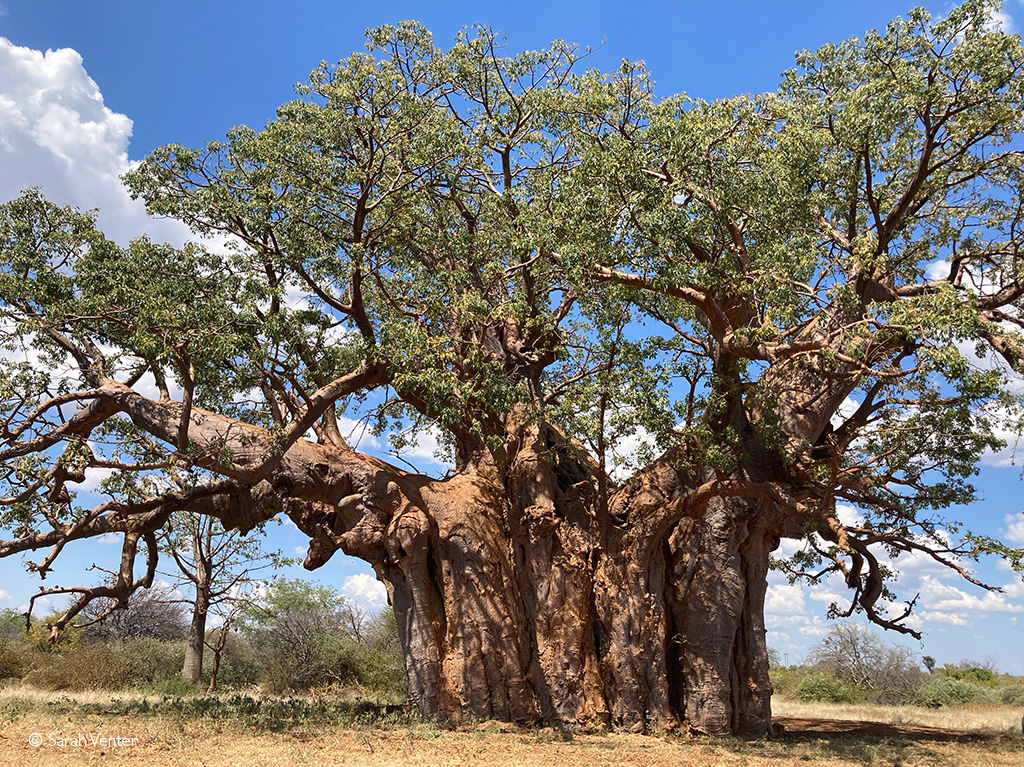
We embark now on a culinary safari to the heart of Africa, where the majestic baobab tree, known as the “Tree of Life,” offers its extraordinary fruit. The baobab fruit, encased in a hard, coconut-like shell, is a treasure trove of nutrients and flavors, a true gift from the ancient savannas.
Crack open this natural marvel, and inside you’ll find a dry, white pulp that’s tangy and slightly sweet, reminiscent of a zesty citrus fruit crossed with pear. It’s not just the taste that’s remarkable; the baobab fruit is a powerhouse of health, packed with vitamin C, calcium, potassium, thiamine, and fiber. It’s no wonder that for centuries, this fruit has been a staple for many African communities, providing sustenance and medicinal benefits.
But the baobab fruit is not just a survivor’s ration; it’s a versatile culinary star. In Africa, the pulp is often used to add a tangy twist to sauces and stews, or simply rehydrated for a refreshing drink. The seeds, rich in fats and proteins, can be roasted for a snack or pressed into nutritious oil for cooking or cosmetics.
In the Western world, baobab is emerging as a superfood sensation. Its powdered form is a fantastic addition to smoothies, oatmeal, or yogurt, giving a citrusy kick and a fiber boost. For the adventurous foodies, baobab fruit can be the secret ingredient in exotic desserts, energy bars, and even as a natural preservative due to its high vitamin C content.
The baobab tree itself is a symbol of life and resilience, often living for thousands of years. Its fruit, once a well-kept secret of the African wilderness, is now traveling across the globe, spreading its unique flavor and nutritional benefits.
Carambola (Starfruit)
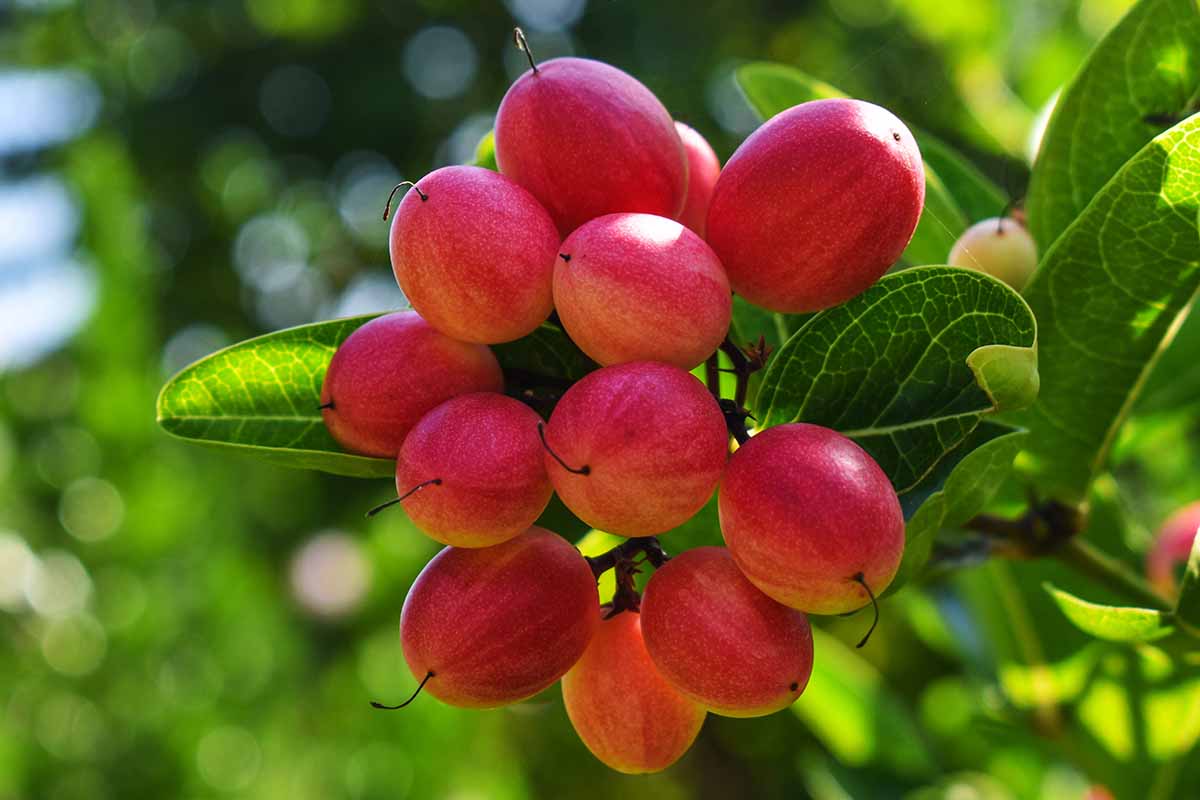
Gleaming under the tropical sun, the carambola, also known as star fruit, is a marvel of nature’s ingenuity. With its distinctive star-shaped cross section and vibrant green to golden yellow skin, this juicy delight is not just a feast for the eyes but also a burst of sweet and tangy flavors on the palate. Native to Southeast Asia and thriving in the warm embrace of the tropics, the carambola has journeyed across oceans to become a beloved treat around the globe.
This isn’t your average fruit; it’s a celestial gift that’s as intriguing to the palate as it is to the eyes. Slice it open, and voilà, a perfect star appears as if by magic. It’s like nature’s own origami, folding the flesh into perfect symmetry.
The carambola’s skin is a vibrant yellow, with a waxy sheen that glistens in the sunlight, hinting at the juicy, crisp texture inside. Take a bite, and you’re greeted with a burst of flavor that’s a playful dance between sweet and tart. It’s like the fruit version of a sweet-and-sour candy, but without the guilt, because this star is packed with vitamin C, fiber, and antioxidants.
And here’s a slice of history for you: the carambola has been a star of the culinary world for centuries, with its roots tracing back to the sun-soaked lands of Southeast Asia. It’s a fruit that has traveled the world, leaving a trail of delighted smiles in its wake.
Maracuya (Passion Fruit)
Imagine you’re navigating through a lush rainforest, and you encounter a fruit that seems to encapsulate the very essence of the word ‘tropical’. That’s Maracuya for you! It’s as if nature took a dollop of sunshine, a sprinkle of rain, and a dash of wild whimsy to create a fruit that’s as tantalizing to the taste buds as it is to the eyes.
The exterior of the Maracuya is a bit deceptive. With a tough, wrinkled skin, it’s like a treasure chest waiting to be opened. And when you do, you’re greeted with a sight to behold – the inside is filled with a juicy, seed-speckled pulp that’s golden and glistening, reminiscent of a jeweled nectar.
Diving into the taste, Maracuya is a thrilling ride of flavors. It’s sweet, it’s tart, it’s tangy – it’s like a carnival in your mouth. The flavor is an exotic blend that might remind you of guavas and peaches doing a tango on your tongue.
But the adventure doesn’t stop at the taste. Maracuya is brimming with health benefits. It’s like your body’s personal guardian, armed with vitamins A and C, fiber, and essential minerals. It’s the kind of fruit that not only delights your palate but also gives your health a boost.
And here’s a quirky tidbit: Maracuya is the fruit of a beautiful flower, often called the ‘Passion Flower’. This flower is not just a pretty face; it’s steeped in history and symbolism, with links to stories of passion and ancient myths.
From the peculiar to the profound, these 25 fruits are nature’s exquisite masterpieces. Which one would you try first? Share your choice in the comments below.
Keep your fruit bowl as diverse as the cosmos, and your appetite for discovery as boundless as the universe. There’s always a new flavor frontier to explore, and Stellar Eureka will be here to guide you through them all.