
Top 25 Unusual Trees, Strangest Plants & Most Unique Flowers in the World
Welcome back to Stellar Eureka, where we unravel the wonders of the natural world. Today, we’re on a botanical odyssey to explore 25 of the most rare and exotic plants on our planet. Prepare to be amazed by these extraordinary creations of nature!
1. Corpse Flower (Rafflesia arnoldii)
Imagine stumbling upon a botanical behemoth in the dense rainforests of Southeast Asia. Welcome to the realm of Rafflesia arnoldii, often called the corpse flower. This isn’t just any plant; it’s a real-life ‘Stranger Things’ episode unfolding in nature!
This flower is a marvel of extremes. Picture a bloom so massive it could be mistaken for a small alien spacecraft, boasting the title of the largest individual flower on Earth. But its size isn’t the only jaw-dropping feature. When it blooms, it unleashes a stench reminiscent of rotting flesh. This macabre aroma isn’t a mere quirk of nature; it’s a clever strategy to attract insects like flies and beetles, the unsung heroes in its pollination story.
Rafflesia arnoldii is a master of deception and disguise. It’s a parasitic plant, living a hidden life inside vines, sapping nutrients and water like a botanical vampire. It reveals its true form only when ready to bloom, bursting forth from the host plant’s bark as a monstrous, mesmerizing flower.
The flower itself is a spectacle. A reddish-brown, five-lobed giant with white spots, spanning up to a meter across. For about a week, it sits there, emitting its signature scent of decay. This foul odor, coupled with the heat it generates, is an elaborate ruse to attract pollinating insects.
Fans of Pokémon might have seen the Rafflesia arnoldii flower before. A Pokémon known as Vileplume features a flower on its head that is based on the Rafflesia flower. The original Japanese name for Vileplume is pronounced “Ruffresia”, paying homage to this extraordinary plant.
Despite its ghoulish nature, Rafflesia arnoldii is an iconic symbol of the Southeast Asian rainforests, celebrated on Indonesian postage stamps and in traditional medicine. However, this plant is in peril, facing threats from habitat loss and the impacts of ecotourism. While not listed as endangered, its numbers are dwindling, making every encounter with this extraordinary flower even more precious.
2. Titan Arum (Amorphophallus titanum)
Discovered in 1878 by Italian botanist Odoardo Beccari in Sumatra, Indonesia, the Titan Arum is a plant that’s as enigmatic as it is enormous. Beccari’s discovery was not just a botanical milestone; it was the beginning of a global fascination. Seeds sent to Florence resulted in a single seedling that eventually flowered at the Royal Botanic Gardens in Kew. This rare and spectacular plant now thrives in greenhouses worldwide, a testament to human curiosity and horticultural skill.
Imagine a plant that spends years in a cycle of growing a single leaf, then entering dormancy, only to repeat this process multiple times. That’s the life of a Titan Arum. But the real show starts when it enters its flower cycle, approximately every 4-5 years. The spathe, a petal-like structure, unfurls, revealing a sight to behold. But hurry, this magnificent display only lasts a couple of days!
Similar to the Corpse Flower, the Titan Arum is known for its pungent odor, which is an ingenious evolutionary strategy. By heating up, the plant synthesizes chemicals that mimic the smell of decaying meat, attracting pollinators like flies. This scent, often compared to rotting flesh or spoiled fish, is nature’s way of ensuring the continuation of the species.
After successful pollination, the Titan Arum produces over 400 round fruits, turning from gold to vibrant red upon ripening. However, these fruits are not for human consumption; they are poisonous. Instead, they are a feast for the Rhinoceros Hornbills. The energy required to bear fruit is so immense that it takes a long time for the plant to gather enough energy to flower again.
The Titan Arum holds a Guinness World Record for its size, with the tallest recorded at over 10 feet! You can find these botanical giants in various locations worldwide, from the San Francisco Conservatory of Flowers to the University of Warsaw Botanic Garden.
3.Wollemi Pine (Wollemia nobilis)
Stepping into the realm of the Wollemi Pine, or Wollemia nobilis, is like a voyage back to the dinosaur era. This living fossil, nestled in Australia’s Blue Mountains, resurfaced in 1994, shattering beliefs of its extinction for two million years. In the wild, fewer than 100 of these ancient giants remain, some aging between 500 and 1,000 years. Their evergreen boughs, changing from vibrant light green to a deeper yellowish hue over time, and distinct male and female cones, speak of a time long gone.
In 2020, a courageous act by firefighters shielded these last wild specimens from the catastrophic Gospers Mountain fire, underscoring the pine’s resilience and symbolizing hope amidst adversity. Dubbed a ‘Lazarus taxon’, the Wollemi Pine’s revival from presumed extinction echoes the biblical tale of Lazarus.
More than a historical treasure, the Wollemi Pine has found its place in gardens and conservatories, celebrated for its ornamental beauty and kinship with the monkey puzzle tree. Botanical gardens worldwide, including the esteemed Royal Botanic Gardens, Kew, have embraced this species, propagating it for future generations. Kew’s 250th anniversary was marked by planting a Wollemi Pine, cementing its place in our botanical heritage.
The journey of the Wollemi Pine doesn’t end here. Efforts extend to seed collection for the Millennium Seed Bank, safeguarding this remarkable species for those yet to come, a beacon of conservation and enduring legacy.
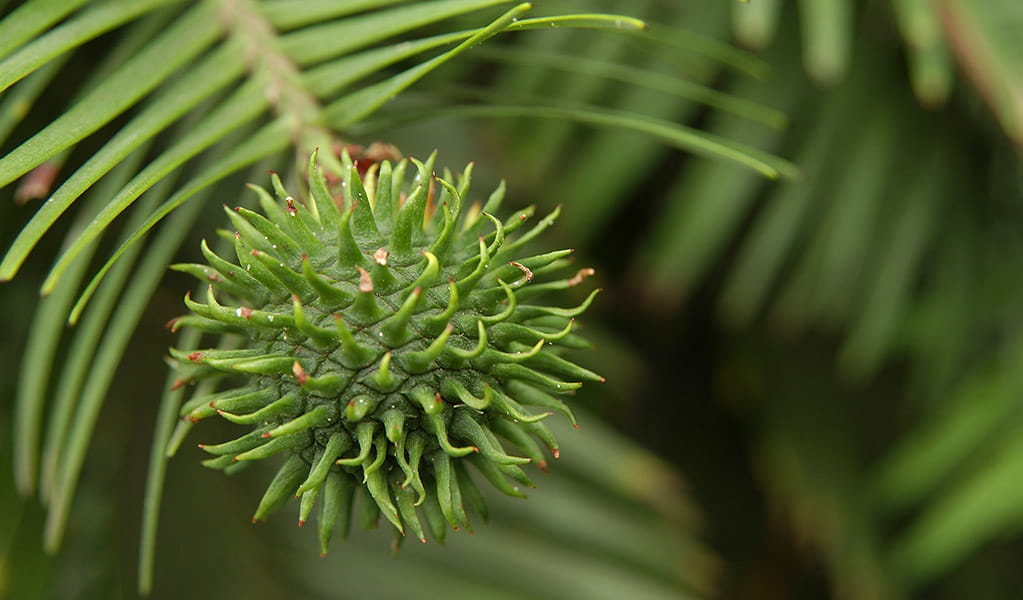
4. Wood’s cycad (Encephalartos woodii)
Discovered in 1895, the wood’s cycad is a prehistoric marvel, soaring up to 6 meters with a robust trunk and glossy, dark green foliage. This cycad’s intrigue lies in its extinction in the wild; all known specimens are clones of the original.
Dioecious by nature, Wood’s cycad lacks a female counterpart, rendering natural reproduction a dream. Its vibrant yellow-orange male cones, although striking, are a fruitless call in the absence of a female.
Spread across the globe, from Durban to Kew Gardens, each clone is a genetic echo of the original, making it omnipresent yet elusive in the wild. The hunt for a female counterpart is like chasing a botanical Holy Grail, with attempts at hybridization still falling short.
Encephalartos woodii is a symbol of both endurance and fragility, a living relic speaking to the resilience of life and the lingering mysteries of nature. It’s a poignant reminder of the critical need for conservation, standing as a testament to the unyielding spirit of life amidst adversity.

5. Jade Vine (Strongylodon macrobotrys)
Hailing from the tropical forests of the Philippines. This leguminous perennial liana, closely related to beans like the kidney bean and runner bean, is a marvel of nature’s design. The Jade vine have thick stems, up to 2 cm in diameter, stretching up to 18 meters and entwining themselves through their host trees to reach for sunlight. The vine’s appearance is a testament to both strength and grace, as it climbs skyward in its lush habitat.
The Jade Vine’s flowers are a cascade of wonder. Like clusters of grapes, these blooms dangle from inflorescences produced by mature vines. Evolved to be pollinated by bats, these blooms depend on their nocturnal visitors, who hang upside down to drink the nectar, unwittingly carrying pollen from flower to flower. The Jade Vine’s magnificent turquoise to emerald hue is not just a visual treat but a scientific marvel. This unique coloration results from copigmentation, a blend of malvin (an anthocyanin) and saponarin (a flavonoid glucoside), creating its distinctive greenish tone.
Outside of its natural setting, such as in greenhouses, these vines must be hand-pollinated to bear fruit, which can grow to melon size. This process has been mastered over the years at places like the Royal Botanic Gardens at Kew in England, where seed conservation has become an ongoing focus, especially critical given the loss of rainforest habitat.
The Jade Vine’s natural habitat and its essential pollinators face threats in the Philippines due to deforestation. Once a land of vast rainforests, today, very little remains intact, putting this extraordinary vine and its unique ecosystem at risk.
6. Giant Water Lily (Victoria Amazonica)
These aquatic behemoths, hailing from South America, are not mere lilies but nature’s grand exhibition of elegance and strength.
Envision leaves so immense, they could be mistaken for miniature boats! The species Victoria amazonica and Victoria cruziana boast colossal leaves, up to 4 to 6 feet in diameter. These aren’t just about size; they’re marvels of natural engineering. Majestically floating on water, these leaves are supported by sturdy, spongy veins, with upturned rims adding to their grandeur. Yet, their undersides and stems bear sharp spines, a clever natural deterrent to herbivores like fish and manatees.
But the grandiosity doesn’t end with their leaves. The Giant Water Lily’s flowers are a spectacle on their own. For a fleeting 2-3 days, these large, sweet pineapple-scented blossoms unfurl, initially in radiant white. Then, as if part of a botanical play, they transform both in color to pink and in sex, from female to male. This isn’t just botanical theatrics; it’s an ingenious strategy to lure and trap scarab beetles for pollination.
In a recent development that seems ripped from a botanical mystery novel, scientists unveiled a new species, Victoria boliviana. Long mistaken for a different species, this revelation at London’s Kew Gardens and in Bolivia redefined the record for the world’s largest waterlily species. Its leaves, nearly ten feet wide in the wild, can support up to 176 pounds!
Despite their spectacular presence, these water lilies confront the specter of extinction. The newly identified Victoria boliviana is particularly vulnerable, facing threats from its limited geographical distribution and the ongoing deforestation in the Amazon.

7. Middlemist Red
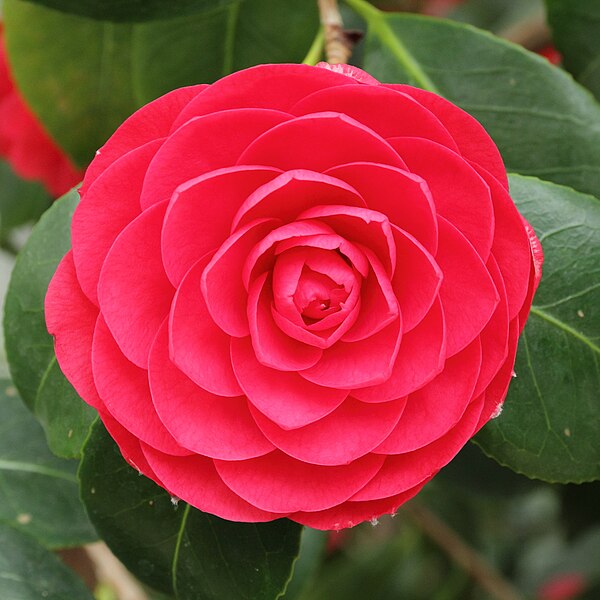
The Middlemist Red, a flower with a story as vibrant as its deep pink petals, is a botanical enigma wrapped in a historical mystery. Originally from China, this rose-like bloom was brought to England over 200 years ago by John Middlemist, a nurseryman who discovered it in 1804. Despite its name, the Middlemist Red is not actually red, but a captivating deep pink, surrounded by lush green foliage.
This rare gem, now almost extinct in its native China, survives in just two known locations worldwide: a botanical garden in New Zealand and the historic Chiswick House in England. The Middlemist Red’s journey is a tale of survival against the odds. It thrived in the conservatory at Chiswick House, even surviving the turmoil of World War II and the neglect that followed. Today, it blooms in the middle of winter, a splash of color in the cold, under the careful watch of botanists.
But why is the Middlemist Red so rare? It’s a question that puzzles many. Camellias, the family to which it belongs, are usually robust and can be propagated through cuttings or seeds. Yet, the Middlemist Red remains elusive, its propagation a challenge that has kept it on the brink of extinction. This rarity adds to its allure, making it a coveted sight for plant enthusiasts and a symbol of botanical resilience.
The Middlemist Red is not just a pretty face; it’s steeped in health benefits. Known for its antioxidant properties, it’s believed to aid in cardiovascular and cancer care. The flower is also a natural skin moisturizer, rich in oleic acid, and has potential anti-aging benefits. Its oil can rejuvenate hair and is used in treating various ailments, showcasing the flower’s versatility beyond its aesthetic appeal.
8. Ghost Orchid (Dendrophylax lindenii)
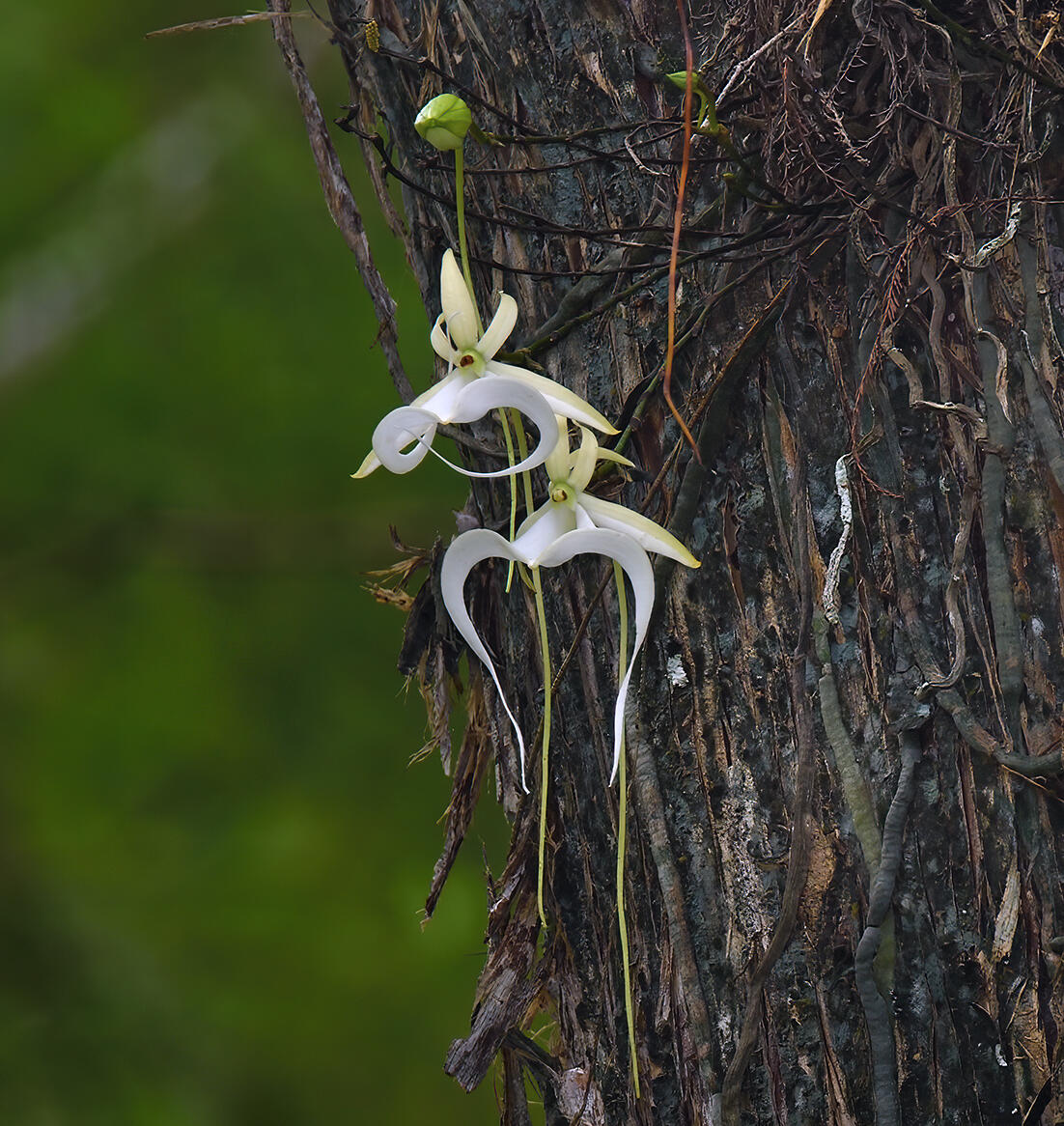
Embark on a journey to the humid, enigmatic realms of Florida’s swamps, where an extraordinary botanical phantom lurks. This is the Ghost Orchid, a leafless wonder that defies the norms of its floral kin with an almost spectral presence.
Unlike typical orchids, the Ghost Orchid boasts no leaves, depending solely on its photosynthetic roots which masterfully camouflage with the tree bark it inhabits. It’s a living game of hide and seek, with the orchid playing the role of a hidden gem in nature’s vast treasure trove.
Cultivating this ethereal beauty is a pursuit for the passionate and patient. This orchid is not just challenging to grow; it’s a horticultural enigma. Thriving on the purest of waters, like rain or distilled, the Ghost Orchid demands high humidity and meticulous care. It’s a true diva of the botanical world, requiring daily misting and precise light conditions to flourish.
So, should you find yourself in the lush swamps of Florida, keep your eyes open for this elusive botanical beauty. The Ghost Orchid represents more than a rare plant; it embodies the wild and mysterious heart of nature. It stands as a reminder of the incredible, often hidden wonders that reside in the less trodden paths of our world, urging us to seek and cherish these natural marvels.
9. Parrot’s Beak (Lotus berthelotii)
Step right into the vibrant world of the Parrot’s Beak, a botanical marvel that’s as intriguing as it is beautiful. Officially known as Lotus berthelotii, this plant is a true spectacle of nature, boasting a flamboyant display that’s hard to miss.
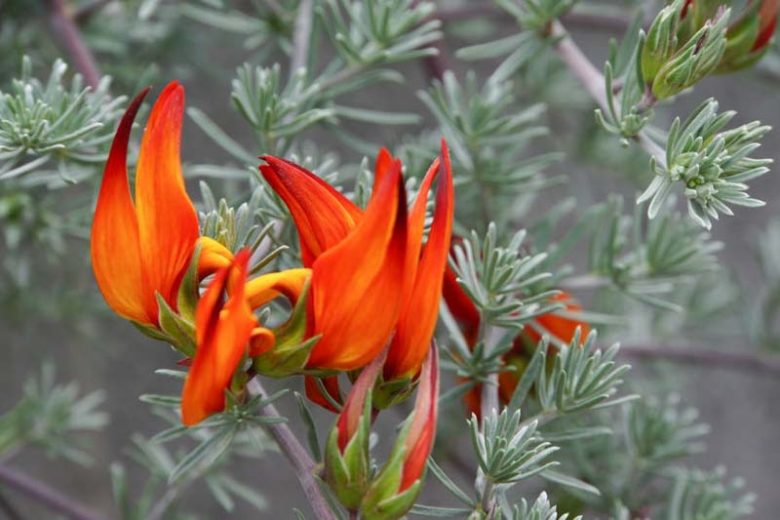
Imagine a plant that’s not just a feast for the eyes but a puzzle for the mind. The Parrot’s Beak, with its striking orange-red to red flowers, shaped like upward-facing beaks, is a wonder of the plant kingdom.
Native to the Canary Islands, this evergreen prostrate shrub or subshrub grows to a modest 20 cm, spreading outwards with a creeping or trailing habit. Its leaves, divided into slender leaflets and densely covered with fine silvery hairs, add to its allure.
Now, let’s dive into its pollination mystery. Unlike many plants that rely on insects for pollination, the Parrot’s Beak has a different tale. It was once thought that sunbirds, now extinct in the Canary Islands, were its primary pollinators. However, recent studies suggest that non-specialist flower-visiting birds, particularly the Canary Islands chiffchaff, play a crucial role in its pollination. This adaptation to infrequent pollination by birds, such as extended flower lifespans, highlights the plant’s resilience and adaptability.
Despite its captivating beauty, the Parrot’s Beak faces a grim reality. It’s nearly extinct in the wild, with habitat loss and climate change posing severe threats. Yet, it remains a popular ornamental plant, offering a glimmer of hope for its conservation.
10. Dancing Plant (Codariocalyx motorius)
Imagine a world where plants don’t just grow, they dance. Enter the realm of Codariocalyx motorius, commonly known as the Telegraph Plant or Dancing Plant. This tropical Asian shrub, a member of the illustrious Pea Family, stands in a league of its own as one of the few plants capable of rapid movement.
This plant’s dance is more than just a whimsical quirk; it’s a strategic masterpiece. When the sun is high and the temperature rises above 72°F, the Dancing Plant begins its ballet. It’s not just aimless movement; each swivel and twist of its small, lateral leaflets is a calculated step to maximize sunlight absorption. This plant is a follower of light, dynamically adjusting its leaflets throughout the day to bask in every ray, ensuring optimal photosynthesis.
Found from the stretches of Bangladesh to Vietnam, and even gracing the remote Society Islands, the Dancing Plant is not just a visual treat. Its rapid movements could be a clever defense mechanism, either to deter predators or to mimic fluttering butterflies, preventing them from laying eggs on its leaves. This plant is not just a dancer; it’s a master of deception and survival.
The plant’s common name, ‘Telegraph Plant,’ is derived from the mesmerizing rotation of its leaflets, echoing the motions of a semaphore telegraph. These rhythmic movements are like a natural Morse code, a message from nature that we’re yet to decipher fully.
Even Charles Darwin was captivated by this plant, detailing its intriguing movements in his 1880 work, “The Power of Movement in Plants.” The Dancing Plant is not just a botanical oddity; it’s a celebrity in the plant world, fascinating scientists and enthusiasts alike for centuries.
11. Kadupul Flower (Epiphyllum oxypetalum)
As a cactus species, it thrives in moonlit serenity, blossoming in darkness and withering at dawn’s first light, this is why it’s also known as the “Queen of the Night.”
In its nocturnal dance, th e Kadupul’s sprawling stems cradle blooms that are a visual and olfactory feast, stretching up to 30 cm in length. Native to Southern Mexico and South America, its rarity lies in its ephemeral bloom, creating a stunning contrast against the night sky and vanishing as quickly as it appears.
Cultivating the Kadupul Flower is a journey of patience, yielding fragrant blooms from late spring through summer. It holds a revered place in many Asian cultures for its medicinal properties, used in treating respiratory ailments and believed to possess pain-reducing qualities.
Enshrouded in myths and legends, the Kadupul Flower symbolizes ephemeral beauty, encapsulating life’s fleeting moments. Witnessing its bloom is a magical, once-in-a-lifetime encounter with nature’s elusive mystery, leaving an indelible impression of a night where the air is sweet with its intoxicating aroma, and a flower performs its moonlit ballet, only to vanish with the dawn.

12. Franklinia alatamaha
We start now a botanical adventure to discover the Franklin Tree, Franklinia alatamaha, a rare gem in the world of trees. This unique species, native to the Altamaha River valley in Georgia, USA, stands as a testament to enduring friendship and botanical passion, named in honor of Benjamin Franklin by the Bartrams.
The Franklin Tree, now extinct in the wild since the early 19th century, thrives as a cultivated ornamental tree. It’s a deciduous beauty, growing up to 10 meters tall, and is celebrated for its fragrant white flowers, reminiscent of Camellia blossoms, with a scent evoking orange blossoms or honeysuckle. The tree’s striking symmetrical, somewhat pyramidal shape, and its vibrant autumn foliage, turning bright orange-red, add to its ornamental allure.
The last wild sighting of this tree was in 1803, with extinction possibly due to environmental factors like fire, flood, and fungal diseases introduced with cotton cultivation. Its survival today is thanks to the foresight of William Bartram, who collected its seeds in the 18th century. Remarkably, all Franklin trees in existence today are descendants of those seeds, now cultivated in over 1000 sites globally, including botanical gardens and private homes.
The Franklin Tree is not just a botanical jewel; it’s a living piece of history and a symbol of conservation. Its story reminds us of the fragility of nature and the importance of preserving botanical diversity. As we marvel at the Franklin Tree’s beauty and resilience, let’s remember the role each of us plays in protecting the natural world.
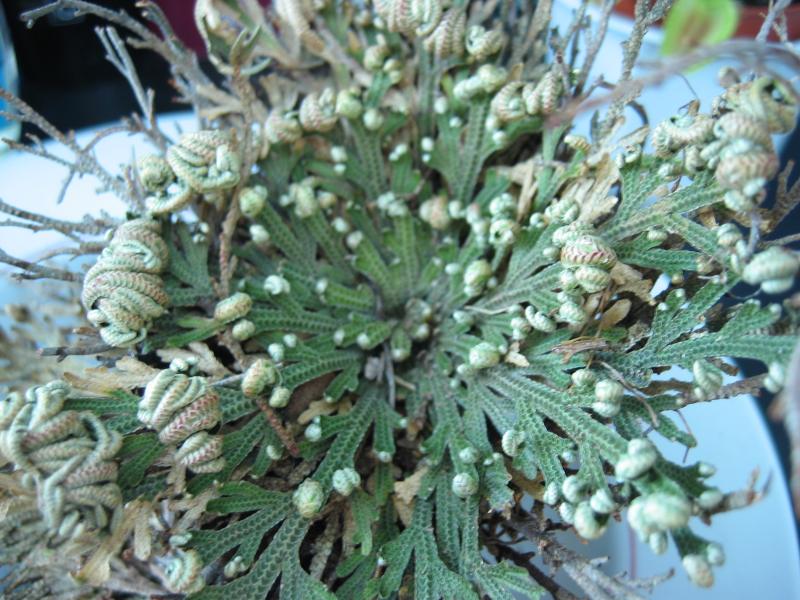
13. Selaginella lepidophylla (Resurrection Plant)
Embark on a journey to the Chihuahuan Desert, where the Selaginella lepidophylla, known as the Rose of Jericho, defies the harshest of environments. This remarkable resurrection plant can survive almost complete desiccation, losing up to 95% of its moisture and curling into a tight ball during dry spells. When exposed to moisture, it miraculously unfurls its fronds, resurrecting in a display of vibrant green vitality.
The Rose of Jericho has adapted to prolonged drought by entering a dormant state, synthesizing trehalose, a sugar that protects its tissues from damage. This incredible survival mechanism allows it to revive and continue its life cycle, even after years without water. Its resilience is further demonstrated as it can detach from its roots and tumble across the desert, rehydrating and taking root in new locations when encountering moisture.
As a sporophyte, the Rose of Jericho doesn’t produce flowers or seeds but reproduces through spores. This unique characteristic, coupled with its astonishing ability to survive extreme conditions, has made it a subject of fascination and study. In historical and cultural contexts, it was used by Spanish missionaries in the New World as a symbol of rebirth and has been utilized in various medicinal and spiritual practices.
The Rose of Jericho is more than a plant; it’s a symbol of resilience, hope, and the extraordinary adaptability of life.
14. Traveler’s Palm
Imagine stumbling upon a natural compass, a living beacon guiding weary travelers through Madagascar’s lush landscapes. This is the Traveler’s Palm, scientifically known as Ravenala madagascariensis, a close kin of the bird-of-paradise, yet often mistaken for a palm. Its striking fan of leaves, sprawling east to west, whispers legends of serving as a rudimentary guide for direction. However, the palm’s real charm lies in its hollow leaf bases, nature’s reservoirs, each capable of cradling a quart of rainwater, a boon for any parched traveler.
Its towering presence, reaching up to 40 feet, crowned with 30-35 large, fan-shaped leaves, each a magnificent 10 feet in length, paints a picturesque scene. These leaves, transitioning in color from a fiery orange at the base to a vivid green at the tips, are not just a visual treat but also a life-sustaining source. They can store rainwater, an invaluable resource in times of drought, a feature that inspired its name.
The Traveler’s Palm’s flowers, nestled between leaf axils, might not rival the showiness of its relatives but make up for it with their unique charm. These blooms, large and wrapped in stout green bracts, are a magnet for sucrose-rich nectar, yet remain enigmatically closed, like treasure chests guarding their riches. This peculiar trait is a nod to its exclusive relationship with its pollinators, the lemurs of Madagascar. In a dance of nature, lemurs pry open the blooms to sip the nectar, inadvertently dusting themselves with pollen and aiding in the plant’s reproduction. The result? Seeds encased in stunning blue arils, a sight to behold.
The Traveler’s Palm, thriving in the humid lowlands and montane forests of Madagascar, is not just a plant but a symbol of interdependence in nature. Its coevolved relationship with lemurs underscores the delicate balance in our ecosystems.

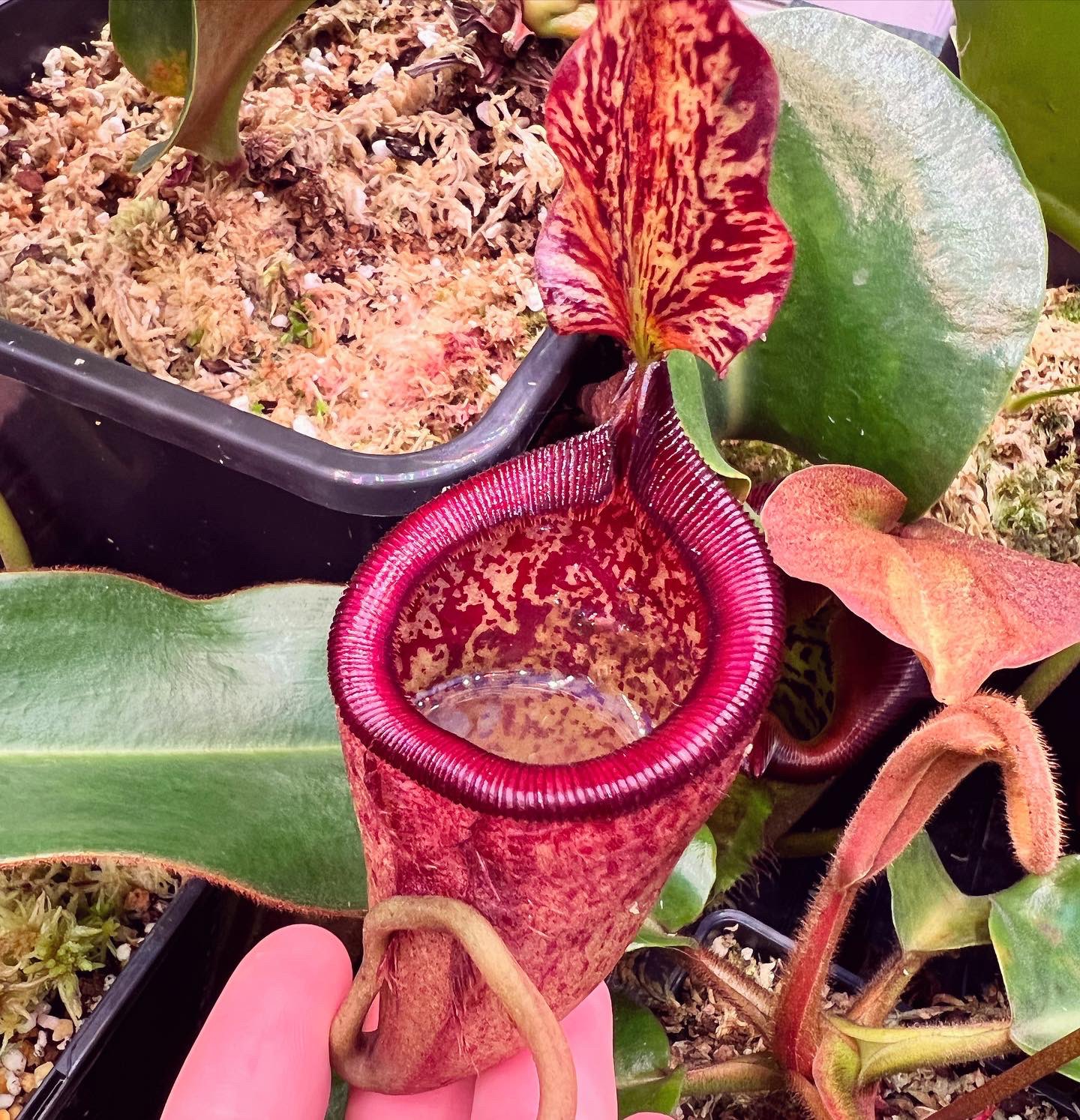
15. Nepenthes attenboroughii (Pitcher Plant)
Venture into the remarkable realm of Nepenthes attenboroughii, a carnivorous marvel named in honor of the esteemed Sir David Attenborough. This intriguing species, discovered in 2007 on the slopes of Mount Victoria in Palawan, stands as a majestic predator of the plant kingdom.
Envision these gigantic, bell-shaped pitchers, some of the largest in the Nepenthes genus, reaching up to 30cm in height. These are not mere pitchers; they are natural masterpieces of trap design, varying in color and shape, with their upright lids perpetually open, silently awaiting their next unsuspecting prey. In the wild, these formidable traps have even been known to digest small mammals, like shrews.
Yet, this plant symbolizes more than its predatory prowess; it’s a poignant emblem of nature’s fragility. Critically endangered, primarily due to limited distribution and the looming threat of poaching, Nepenthes attenboroughii underscores the delicate balance of our ecosystems. It’s a plant that speaks volumes about the importance of conservation, one that should only be sourced from reputable growers, highlighting the crucial role of responsible horticulture.
Cultivating Nepenthes attenboroughii is an exercise in patience and precision. Contrary to its slow-growing reputation, under the right conditions, it can flourish. Preferring ultramafic soil and thriving in a range of specific temperatures, this highland species demonstrates a remarkable growth capacity, especially when provided with bright light, decent airflow, and a diet of fertilizers or dead bugs in its pitchers.
16. Baobab (Adansonia digitata)
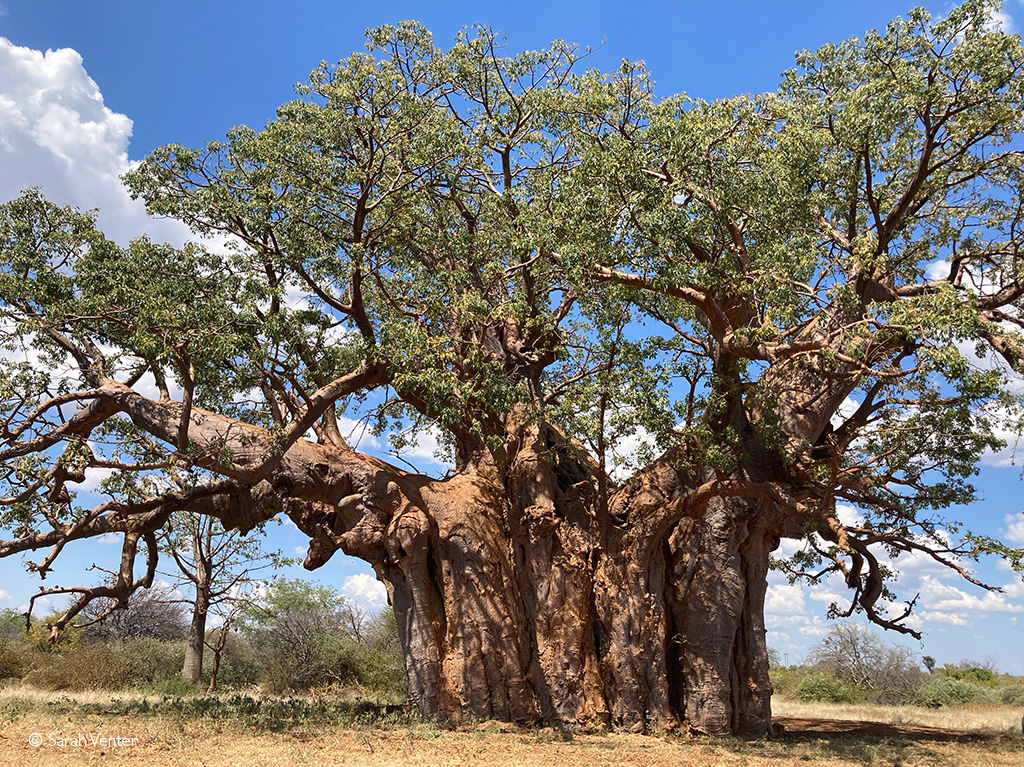
Behold the Baobab, a towering icon of resilience and life in the African savannah, where little else thrives. A living relic, the Baobab predates both mankind and the continental drift, standing as a testament to over 200 million years of Earth’s history. Picture the Baobab, reaching skyward up to 30 meters, its massive girth spanning up to 50 meters. These trees are not just physical landmarks but also cultural beacons, central to many Indigenous African communities and their folklore.
As dusk falls, witness a spectacular show – the Baobab’s large, white flowers bloom rapidly, a visual dance that can be seen with the naked eye. The Baobab’s fruit is a true marvel – the only fruit in the world that dries naturally on the branch. After basking in the sun for six months, it transforms into a nutrient-rich powerhouse. The Baobab is not just a source of sustenance but a cornerstone of entire ecosystems. Its massive root system supports soil health and biodiversity, providing shelter and water to a myriad of wildlife.
Throughout Africa, the Baobab is revered, often serving as a communal gathering spot, a keeper of stories and rituals. Its bark, leaves, and fruit are integral to various traditional remedies and practices, symbolizing a deep, spiritual connection between people and nature. Sadly, these sentinels of the savannah face threats from climate change, with several ancient Baobabs succumbing in recent years. However, the Baobab continues to stand tall, a beacon of hope and a reminder of nature’s enduring strength and adaptability.
17. Welwitschia mirabilis
Imagine a plant that looks like it’s straight out of a sci-fi movie, thriving in one of the harshest environments on Earth. That’s Welwitschia mirabilis, native to the Namib desert of southwestern Africa, this plant is a living fossil, a lone survivor from an ancient lineage of plants. Picture a giant radish-like base with just two broad, flat leaves that keep growing throughout the plant’s life. These leaves, often frayed at the ends due to desert winds, can stretch up to 3 meters!
Welwitschia mirabilis isn’t just about its bizarre appearance; it’s a testament to endurance. Some of these plants are estimated to be between 1,500 to 2,000 years old! How do they manage to survive with less than 100 mm of annual rainfall? It’s a mystery that continues to baffle scientists. This plant has seen civilizations rise and fall, all while clinging to life in the barren desert sands.
The reproductive system of Welwitschia is as unique as its lifespan. It produces cones, with male and female cones growing on separate plants. The male cones are smaller and produce pollen, while the female cones are larger and bear seeds. But here’s the twist: apart from the two main leaves, the only other leaves it ever produces are a pair of seed leaves that wither away in less than 18 months, and a pair of scale-like leaves that protect the stem tip.
Beyond a botanical wonder, it’s a symbol of enduring survival, offering a glimpse into Earth’s prehistoric past. In the vastness of the Namib, Welwitschia stands as a testament to life’s resilience, a bridge to bygone eras, captivating those who behold its ancient beauty and enduring strength.

18. Dracula Orchid
Welcome to the mysterious and enigmatic world of the Dracula Orchid, a botanical marvel that could easily be the star of its own gothic tale. Native to the mist-shrouded mountains of Mexico, Central America, Colombia, Ecuador, and Peru, the Dracula Orchid, literally meaning “little dragon”, conjures images of the mythical Count Dracula himself. With a startling resemblance to blood-red dragons and an equally dramatic flair, these orchids are a sight to behold.
But the Dracula Orchid isn’t just a feast for the eyes. This plant thrives in the cool, shadowy underbelly of the forest, shying away from the harsh sunlight, much like its fictional namesake. Picture this: a plant so unique, it doesn’t even need soil to grow! Clinging to tree barks in dense, wet rainforests, the Dracula Orchid is an epiphytic marvel, making its home in the air rather than the ground.
Now, let’s talk about those flowers. If you thought the name was dramatic, wait till you see the blossoms. These aren’t your typical garden-variety blooms. The Dracula Orchid’s flowers are a bizarre blend of animal and plant, with some bearing an uncanny resemblance to monkeys’ faces, and others looking like dragons or smiling mouths. It’s nature’s own masquerade ball! These flowers are so adept at mimicry; they even smell like mushrooms to attract their primary pollinators, the drosophilid flies.
Growing these orchids might seem like a task for the brave-hearted, but fear not! They may prefer cooler temperatures and high humidity, but they can also thrive indoors, especially in a bathroom with less-than-optimal light. When in bloom, they transform into spooky yet mythical specimens, each a testament to the grower’s patience and care.
19. Chocolate Cosmos (Cosmos atrosanguineus)
Discovered in the mid-1800s, this plant’s allure lies not just in its stunning deep red petals and velvety texture, but also in its tantalizing chocolate scent, making it a favorite among gardeners and butterflies alike.
The Chocolate Cosmos are true sun worshippers, thriving best in warm, sheltered spots where they can bask in the sun’s glory all day long. In cooler northern areas, giving them a head start indoors is a savvy gardener’s trick. But beware, these are tender perennials, only winter-hardy in zones 9 to 11. In less forgiving climates, they are often treated as annuals or their tubers are stored indoors during the colder months.
The Chocolate Cosmos stands tall at 23-30 inches, with an upright yet spreading habit, painting a picturesque scene in any garden. Their captivating daisy-like flowers, measuring 1-2 inches across, emit a vanilla-chocolate aroma that is strongest on warm, sunny days – a true sensory delight!
For those of you embarking on your Chocolate Cosmos journey, remember, this isn’t just a plant, it’s a sensory experience. With its enchanting fragrance and striking appearance, the Chocolate Cosmos is more than just a flower; it’s a bridge to a world where nature and dessert collide in the most delightful way. Whether you’re a seasoned gardener or a curious newbie, this plant promises to be a standout feature in your garden, evoking the charm and mystery of its native Mexican landscapes with every bloom.
:max_bytes(150000):strip_icc()/chocolate-cosmos-profile-5181704-hero-9e7d38b17a7146c981ee45dc19e87907.jpg)
20. Bee Orchid (Ophrys apifera)
This perennial herbaceous plant, belonging to the Orchidaceae family, is a living testament to nature’s ingenuity. Found across central and southern Europe, North Africa, and the Middle East, the Bee Orchid is a marvel of evolutionary adaptation.
Standing between 15 to 50 centimeters tall, the Bee Orchid develops rosettes of leaves in autumn, slowly growing through winter and bursting into bloom from mid-April to July, depending on the region. Each flower is a work of art, with three large, purple sepals and a trilobed labellum that remarkably mimics the abdomen of a bee. This clever design is not just for show; it’s a strategy to attract male bees for pollination, though the orchid itself is a master of self-pollination, particularly in areas where its bee counterparts are scarce.
But here’s the twist: the Bee Orchid’s flower, resembling a female bee, lures male bees with the promise of mating and a nectar feast – a double illusion, as the orchid produces neither! In areas like the UK, where the specific species of bee doesn’t reside, the orchid self-pollinates, a unique capability in its genus. The windblown pollen from its drooping anthers achieves this feat of solitary reproduction.
Flourishing in semi-dry turf, grassland, or calcareous dunes, the Bee Orchid is a master colonizer. It prefers well-drained soils and can often be found in human-disturbed sites, like old quarries or roadside verges. Despite its deceptive nature, this orchid has a certain charm, with its flowers varying shades of pink, occasionally white, and its furry, warm brown petals that convincingly resemble a visiting female bee.
So, if you’re ever in Bedfordshire, the county flower of this region, or exploring the grasslands of the UK’s southeast, east, and midlands, keep an eye out for this clever little orchid. Its story is a fascinating reminder of the complex relationships and survival strategies in the natural world.
21. Puya Raaimondii
Embark on an adventure to the high Andes of Bolivia and Peru, where the Puya raimondii, also known as the Queen of the Andes, reigns supreme. This botanical titan, the largest of all Bromeliads, is a spectacle of the plant world. Imagine a plant that waits for 80 years or more just to bloom, creating a towering flower spike that can reach a staggering 25 feet tall. This is nature’s patience and grandeur at its finest.
Native to altitudes between 3200 and 4800 meters, the Puya raimondii forms a massive rosette of stiff, broad leaves atop a stout trunk up to 7 feet tall. The sight of this plant is like witnessing a green giant waking from an eons-long slumber. Its trunk can grow to 5 meters tall, supporting about two hundred linear leaves, each up to 1.25 meters long. When it finally decides to bloom, a single plant produces up to 20,000 flowers in a three-month period, a rare and unforgettable spectacle.
But the life of the Queen of the Andes is not without its challenges. After its first and only bloom, this extraordinary plant dies, a dramatic finale to an already astonishing life. This semelparous nature, coupled with its incredibly long lifespan of approximately 80 years, makes Puya raimondii a true wonder of the plant kingdom. It’s a plant that has intrigued botanists and nature enthusiasts alike, with adaptations that continue to baffle scientists. The Queen of the Andes is a master of survival in one of the most extreme environments on Earth.
Despite their resilience, these magnificent plants face the threat of extinction due to habitat loss and climate change. Their wild populations have dramatically reduced, making them a rare and endangered species. Yet, in places like the UC Botanical Garden, you can witness the magnificence of the Queen of the Andes in bloom without having to travel to the remote Andean highlands. This plant is not just a marvel of nature; it’s a symbol of endurance and a reminder of the extraordinary adaptability of life.

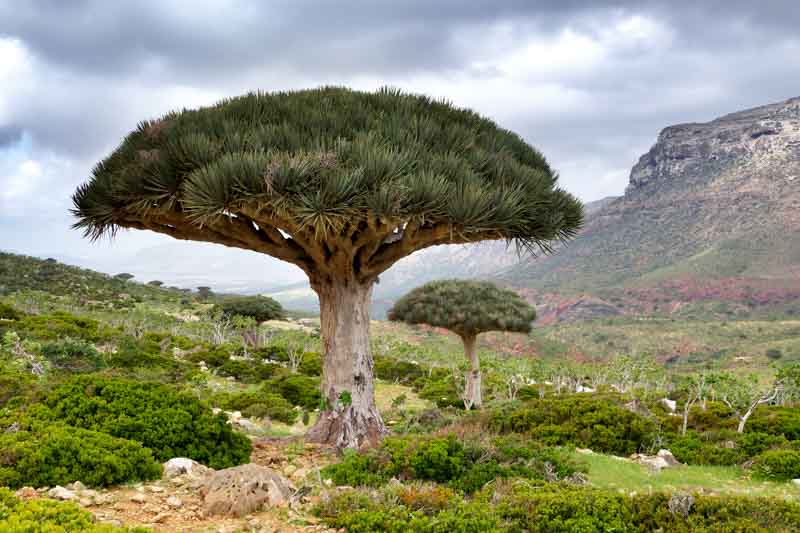
22. Dragon’s Blood Tree (Dracaena cinnabari)
Resembling a scene from a fantasy novel, these trees boast an otherworldly appearance with their umbrella-shaped crowns and spiny leaves, standing as sentinels in a harsh desert landscape.
Steeped in centuries of myths and legends, the Dragon’s Blood Tree holds a special place in cultures spanning from India to Greece. Its lifeblood, a crimson sap, was believed to be the literal blood of dragons, endowed with magical and medicinal powers. The sap of these stoic trees has been a coveted resource throughout history, finding its way into everything from violins to manuscripts, and even used in mummification processes.
But the Dragon’s Blood Tree is more than a mythical marvel. It plays a pivotal role in the ecosystem of Socotra, an island of the Republic of Yemen in the Indian Ocean, providing vital shelter and moisture to other species in this arid environment. The tree’s unique growth pattern, where branches bifurcate repeatedly, culminates in a majestic crown that captures moisture from the surrounding air, nurturing life in its shade.
However, this ancient tree is facing modern threats. Habitat loss, climate change, and human activities are causing a decline in its numbers. Recent research suggests that without intervention, these trees could face an alarming reduction, if not extinction.
23. Rainbow Eucalyptus (Eucalyptus deglupta)
Nature’s artistry is vividly embodied in the Rainbow Eucalyptus, a towering tree that transforms ordinary landscapes into canvases of vibrant hues. Native to the tropical rainforests of Papua New Guinea, Indonesia, and the Philippines, this eucalyptus species stands out with its stunningly colorful bark. The tree’s most striking feature, its multicolored bark, is a natural wonder that often elicits disbelief. The bark starts off bright green when first exposed and then ages into a medley of reds, oranges, purples, and finally browns before being shed and regenerating, a process reminiscent of peeling off layers to reveal new colors.
Not just a visual marvel, the Rainbow Eucalyptus plays a crucial role in its ecosystem. Despite its flamboyant appearance, the tree has a high commercial value for a seemingly mundane product: its bark is an excellent source for pulpwood, used to make white paper. It dominates pulpwood plantations due to its natural resistance to pests and diseases and its rapid growth, sometimes gaining up to three feet per year. The tree’s leaves, containing aromatic oil glands, contribute to its distinct fragrance, although it does not produce as much oil as other eucalyptus species.
Unfortunately, the Rainbow Eucalyptus faces significant threats in its native habitat. Listed as vulnerable by the International Union for the Conservation of Nature, it suffers from habitat fragmentation and a declining population, attributed to logging and use for firewood.
The adaptability of the Rainbow Eucalyptus is evident in its growth outside its native range. In frost-free climates such as Hawaii and Southern California, it has been planted as an ornamental tree, adding a tropical flair to urban settings. However, the bark colors are not as pronounced outside its natural habitat, underscoring the importance of conserving its original rainforest environment.
24. Youtan Poluo
Imagine stumbling upon a flower so rare, it’s shrouded in mystery and legend. Meet the Youtan Poluo, a minuscule marvel that’s more than meets the eye. This tiny, parasitic flower, no bigger than a pinhead, holds secrets that have baffled botanists for years. Is it a moss? A fungus? Its true nature remains a puzzle.
The Youtan Poluo, a tiny, parasitic flower, has been a subject of both fascination and mystery. Found growing in Viet Linh on an aroid palm leaf, this flower measures just 1mm in diameter and emits a mild, sandalwood-like fragrance. Despite its small size, the Youtan Poluo has sparked significant interest due to its elusive nature. Botanists are still puzzled, unable to determine whether this plant is a moss or a fungus.
Misunderstandings and Sightings: Often confused with the eggs of lacewings, which lay their eggs in thread-like structures, the Youtan Poluo was notably sighted in 2010 by a Chinese nun in Jiangxi province. Initially mistaken for insect eggs, these white flowers were later identified as the Youtan Poluo, blooming and emitting a fragrance.
The Youtan Poluo is steeped in legend and symbolism. Believed to bloom only once every 3,000 years, it’s said to herald the arrival of a royal king. In Buddhist scriptures, these flowers symbolize immortality and are thought to be a reincarnation of Lord Buddha. This belief is shared in both Chinese and Indian folklore, where the flower is associated with divine and auspicious events.
25. Dawn Redwood (Metasequoia glyptostroboides)
This ancient tree, once a mere shadow in the fossil record, was miraculously rediscovered in a serene Chinese valley, turning myth into a living, breathing marvel. It’s a tale of survival that echoes through the millennia, a whisper from the age of dinosaurs.
Imagine a tree that throws a seasonal masquerade, cloaking itself in lush green in spring, only to transform into a golden-hued sentinel in autumn. The Dawn Redwood is a deciduous enigma in a family of evergreens, a conifer that dares to be different. Each needle-drop in fall is like a time-traveler’s footprint, tracing back to an era when these giants ruled the earth.
But there’s more to this tree than its prehistoric pedigree. The Dawn Redwood is a globetrotter, a botanical ambassador that has gracefully adapted from its secluded Chinese origins to the varied landscapes of the world. It’s a living lesson in adaptability, thriving in climates far removed from its ancient roots. In your backyard or local park, this tree stands as a testament to nature’s enduring spirit, a bridge between the ancient and the modern.
From the colossal Corpse Flower to the ever living Welwitschia mirabilis, these 25 plants are nature’s masterpieces, each with a story that fascinates and inspires. Which of these botanical wonders captivates you the most? Share your thoughts in the comments below.