
Who is the Richest Athlete of all Time? Exploring Ancient Sports Wealth: Gaius Appuleius Diocles
In the realm of modern sports, in football, or soccer in the US, the likes of Cristiano Ronaldo, Lionel Messi, and Kylian Mbappé are earning staggering sums. According to Forbes, Ronaldo tops the list with an annual income of $136 million, followed closely by Messi at $130 million and Mbappé at $120 million. In basketball, LeBron James doesn’t fall too short either at $119.5 M per year!
That’s without accounting for the recent transfer of Neymar Jr to Al Hilal in Saudi Arabia, where he will get paid… $300 million a year.
These figures might sound incredible, but I’m about to introduce you to an athlete whose wealth puts even these modern legends to shame.
The Richest Athlete in History? Gaius Appuleius Diocles
Meet Gaius Appuleius Diocles, a Roman chariot racer from 104 AD, with his earnings making today’s top athletes green with envy.
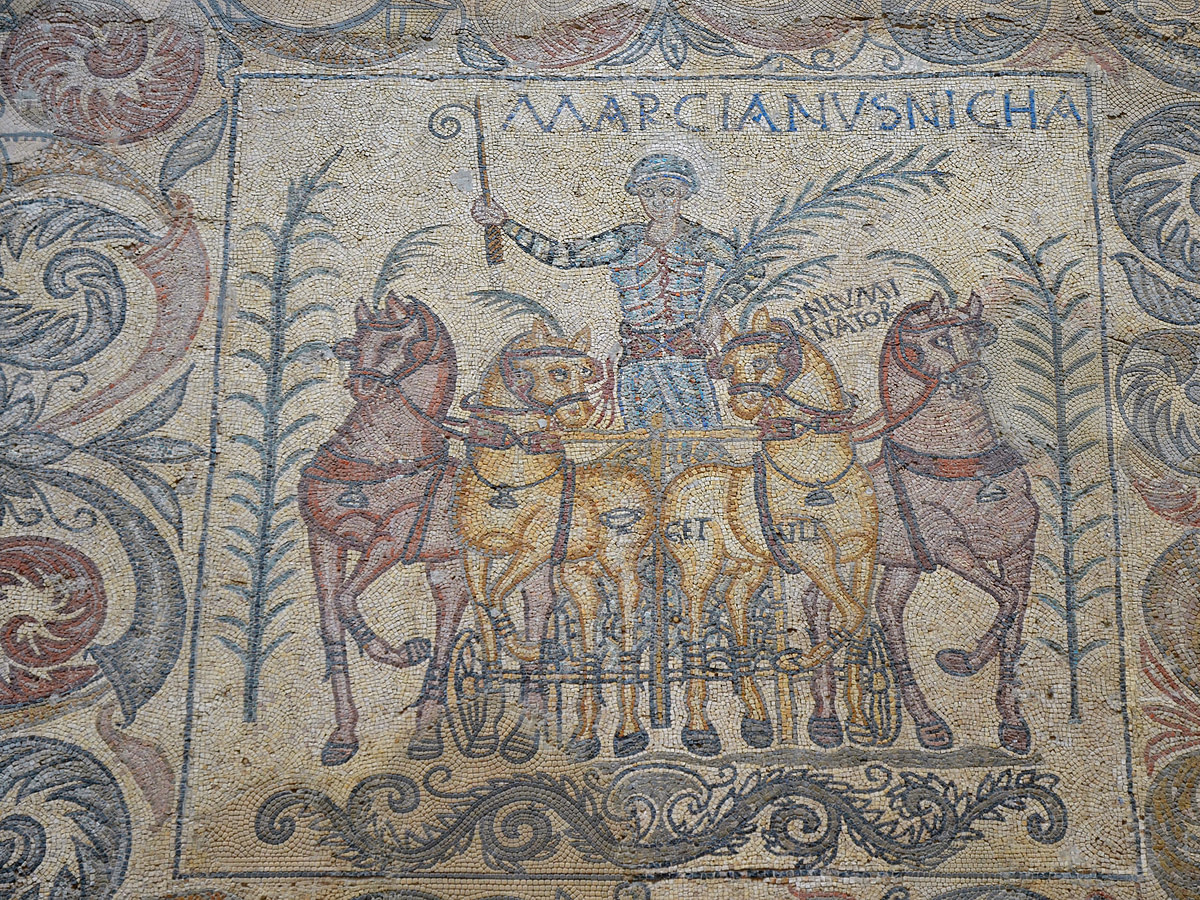
The Origin of Wealth: A Chariot Racer’s Story
But what was Gaius’s story, and where did his wealth come from?
It’s 104 AD in Lusitania, an Imperial province, now between modern-day Portugal and Spain. A young man named Gaius Appuleius Diocles is born. Little did anyone know that he would become one of the richest athletes in history.
Chariot Racing in Ancient Rome
Gaius Appuleius Diocles started his career as a chariot racer in Rome at the age of 18 with four-horse chariots.
Gaius’s Journey to Wealth: The Reds
Most Roman charioteers belonged to one or another of four factions. These were social and business organizations that raised money to sponsor the races. These factions, normally divided into 4 colors; red, white, blue, and green, offered security to members in return for their loyalty and contribution.
Gaius started joining the Whites, but success didn’t come so easy.
After two years with them, Gaius moved to the Greens, where he struggled with poor performances and injuries. But he didn’t give up. Three years later, he joined the Reds, where his career took a remarkable turn.

Legacy of Greed and Glory
Gaius remained with the Reds for fifteen years, winning over one thousand races before retiring at the age of 42.
This was no easy feat. Gaius Appuleius Diocles had to survive seven laps with twelve competitors, all while navigating through chaos and danger. Chariot racing was a brutal sport, with many perishing even on the first race.
Tools of the Trade
The charioteer’s equipment consisted of a leather helmet, shin guards, a chest protector, a jersey, whip, and a curved knife.
Gaius’s Unconventional Racing Style
In order to achieve these incredible results, it’s likely that Gaius became a veteran who found ways to, simply, survive.
Gaius won 815 times by leading from the start; however, on many other occasions, he would rather hang back, allowing chaos to unfold among the racers in front of him, to then pull ahead in the last minute for a clear win.
He had participated in a total of 4,257 races, placing first in 1,462 and second in 1,438.
History Preserved in Stone and Texts
We know all these details thanks to 2 different texts that speak about Diocles feats. The first one in a tombstone from Rome, the city of his triumphs, which summarized his professional career and his unmatched achievements.
The second text comes from the Temple of Fortuna Primigenia in Palestrina, about 35 kilometres (22 miles) east of Rome, where Gaius decided to retire for the rest of his days.
Several monuments were erected in his honor, including a statue in his birth city, although only written references are available to date.
A Modern Valuation: Gaius’s Diocles’s True Wealth
Now, to the question that you have been wondering throughout the video: how wealthy Gaius Appuleius Diocles really was? By today’s standards, some estimates place his earnings at over $15 billion, easily making him the highest-paid athlete of all time.
It’s not clear, however, how much Gaius had to share with his team. From horse maintenance, to training, repairs, team contributions etc. These are costs that we need to account for, and it’s impossible to know exactly how much Gaius managed to net at the end.
The Videos and articles that you will find online come from one specific source, which, under scrutiny, make the $15 billion estimate hard to get. Calculating ancient wealth using modern-day currency isn’t particularly reliable, as it all gets lost in translation.
The Roman Empire was a vastly different economy, and the lifestyle and costs of that era were incomparable to modern times.
So… How much Diocles really made then? We know from the texts that we have discussed earlier that Diocles won in total 35,863,120 sesterces.
Now, let’s translate that wealth into today’s real terms. Back in Diocles’ time (remember that he was born in 104 AD) one sesterce was worth 1/100th of an aureus, a gold coin.
To give you an idea, the closest value we have for an aureus is Nero’s aureus, which was about 1/45th of a Roman pound, roughly equivalent to 7.27 grams of gold.
A single sesterce was valued at around 0.0727 grams of gold. Fast-forward to today, the current price of gold is approximately $61.82 per gram.
So, when we crunch the numbers, Diocles’ wealth in USD comes out to be 61.82 multiplied by (0.0727 times 35,863,120) dollars, which equals $161,180,122.29968.

The Unreachable Modern Athletes
Turns out that Neymar Jr is making almost x2 that… a year.
That being said, the key to Professor Struck article that most have been referring to for the total estimation are the words “appropriate comparison” and “today’s standards”. The $15 Billion number is to estimate how much $161Mn would have meant back then, in other words, how much you could afford.
Life of Luxury, Roman Style
Diocles was undeniably rich by Roman standards, perhaps easily ranking among the top 20 wealthiest individuals in Rome. However, it’s essential to remember that the richest man in Rome did not live a life of luxury comparable to today’s millionaires, let alone billionaires.
To put things in perspective, on average, people in ancient Rome and similar societies had a life expectancy at birth of around 20 to 30 years. Reaching old age (by today’s standards) was relatively rare in ancient times due to factors like disease, malnutrition, and limited medical knowledge and technology. Living your life back then was quite different and way more challenging.
Yet with $161Mn or $15Bn, it’s safe to assume that Gaius had a pleasant retiree life, well let’s say he could definitely afford it!

Ancient Sports Culture: Chariot Racing and Celebrity
Ancient Romans had a deep fascination with chariot racing, and it was an integral part of their entertainment culture. The charioteers were not only athletes but also celebrities of their time, and their victories or defeats could sway public opinion. Once again, you can see how things didn’t change when it comes to sports and athletes.
Gaius Appuleius Diocles remains a fascinating figure, a testament to the complex motivations of athletes throughout history.
Conclusion
In the end, Diocles’ story reminds us of what’s timeless in sports – the thrill of competition, the charisma of a remarkable athlete, and the excitement of watching someone beat the odds. His wealth, earned through sheer skill and determination, is a testament to how sports can capture our imaginations, no matter when they’re played or where they come from. It’s not only about the money, although it can certainly be a talking point for hours, no matter the sport.